Postcard From: The Poetry Out Loud 2013 Florida State Finals

by Tim Storhoff

On Saturday, March 9, forty-four high school students from across the state of Florida came to Tallahassee to compete in the Poetry Out Loud Florida State Finals. This year, the Poetry Out Loud program in Florida assisted nearly 20,000 Secondary-Level students in learning about poetry in their classrooms. Program outreach to Florida’s many school districts included suburban, inner-city and rural community schools around the state. Poetry Out Loud uses a pyramid structure that starts at the classroom level. Winners advance to a school-wide competition, then to a regional and/or state competition, and ultimately to the National Finals. Teachers at more than fifty Florida high schools completed this program through to the end, and forty-four schools sent one student winner each to represent their school in the State Finals competition.

The photos below depict the full and enlightening weekend these students had.

The forty-four students who competed on March 9.

Forty-four students who won the individual competitions at their own schools came to Tallahassee and competed on March 9.

The poetry-filled weekend began at the historic Knott House Museum on Friday night, where students were able to introduce themselves and share some of their own poetry.

The poetry-filled weekend began at the historic Knott House Museum on Friday night, where students were able to introduce themselves and share some of their own poetry.

Competing students, their families, and some teachers arrived to the R.A. Gray building in Tallahassee early on Saturday morning to register and prepare.

Competing students, their families, teachers and guests arrived to the R.A. Gray building in Tallahassee early on Saturday morning to register.

Competing students were given shirts, poetry books, CDs, and other giveaways provided by our gracious sponsors.

Competing students were given shirts, poetry books, CDs, and other giveaways provided by our gracious sponsors.

Recitations were judged on physical presence, voice and articulation, dramatic appropriateness, level of difficulty, evidence of understanding, overall performance, and accuracy.

Aaron Abiza from Hialeah Senior High School in Miami-Dade County chose “Lazy” by David Yezzi for his first poem. Recitations were judged on physical presence, voice and articulation, dramatic appropriateness, level of difficulty, evidence of understanding, overall performance, and accuracy.

After a full morning that included each student reciting their poem, the top 25 participants were chosen to advance to Round Two.

After a full morning that included each student reciting their poem, the top 25 participants advanced to Round Two.

During the lunch break, students had a chance to talk about their poems over pizza.
During the lunch break, students had a chance to talk about their poems over pizza.

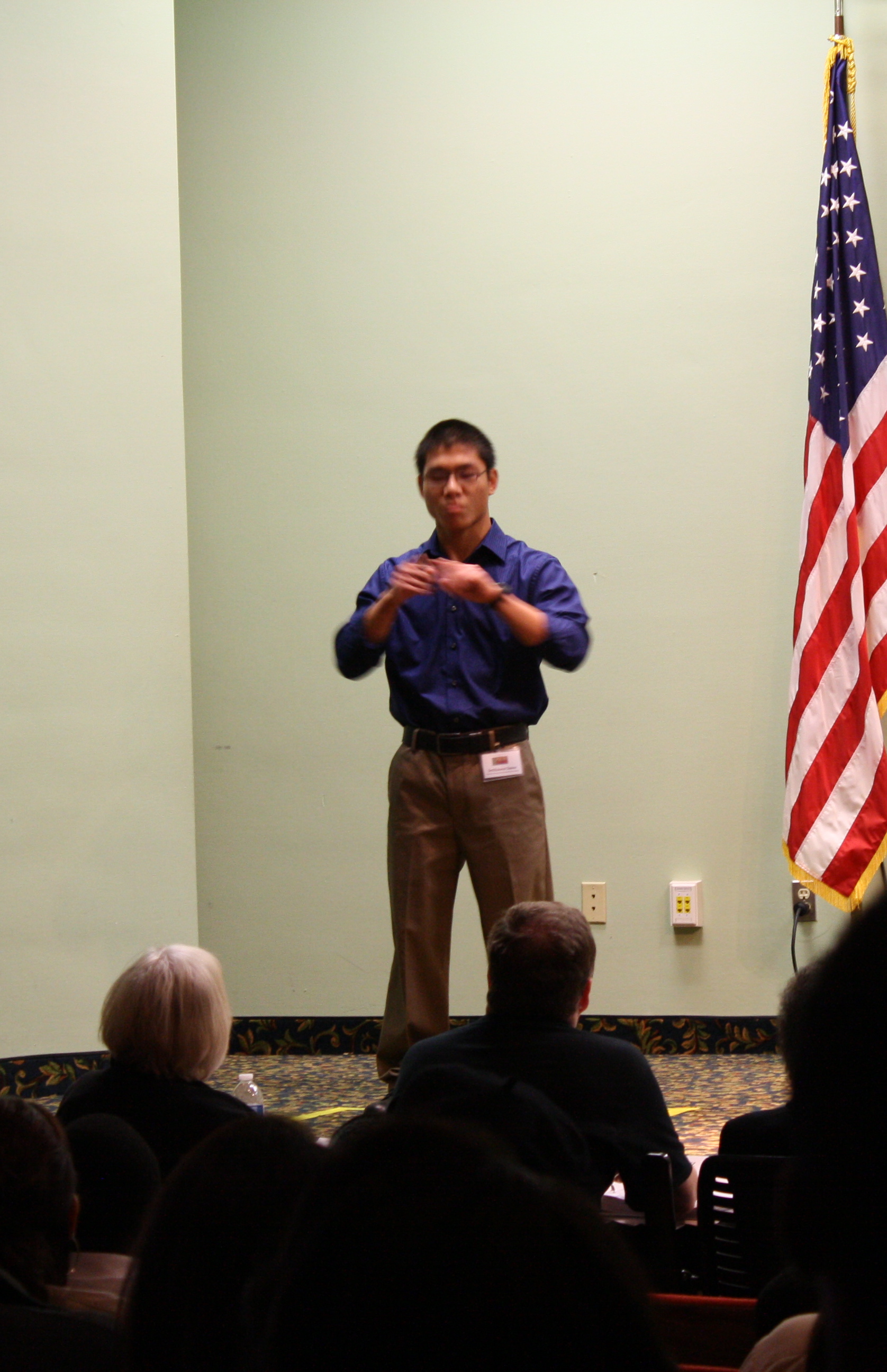
Seth Snow, who won the competition at the Florida School for the Deaf and the Blind in St. Augustine,  advanced to the second round and used ASL to share his poems.

Seth Snow, who won the school-wide competition to represent the Florida School for the Deaf and the Blind, advanced to the second round and used ASL to share his poems.
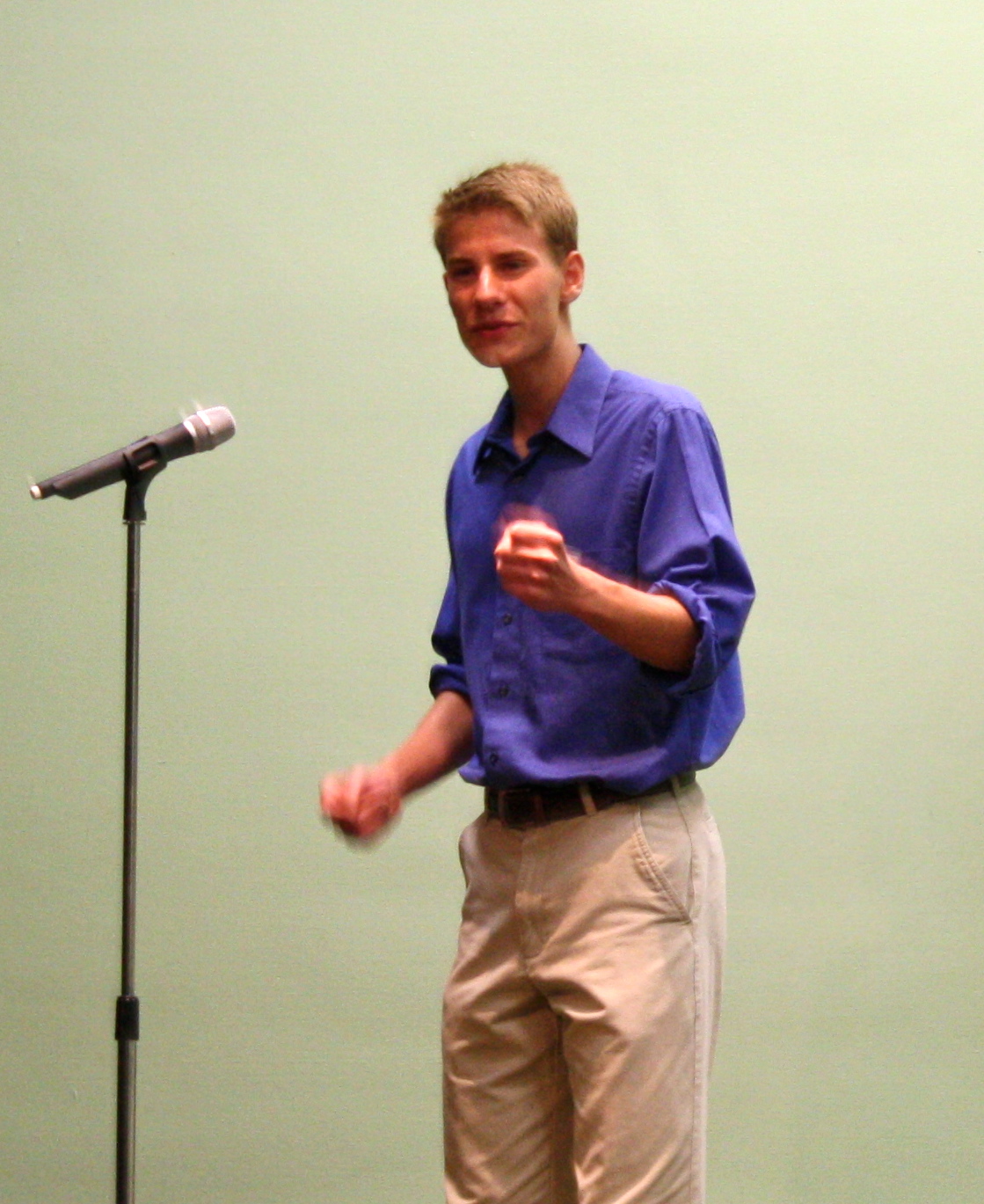
Rhen Davis from Bucholz High School in Alachua County recited "The End of the World" by Dana Gioia. This program encouraged students like Rhen to learn public speaking skills, build self-confidence, and learn about their literary heritage.

Rhen Davis from Bucholz High School in Alachua County recited “The End of the World” by Dana Gioia. This program encouraged students like Rhen to learn public speaking skills, build self-confidence, and learn about their literary heritage.

In the afternoon, ten students were chosen to go on to the third and final round.

The judges selected ten students to go on to the third and final round.

Second place winner Ricky Vega-Bossa from Western High School in Broward County recited "The Charge of the Light Brigade" by Alfred Lord Tennyson during the final round.

Second place winner Ricky Vega-Bossa from Western High School in Broward County recited “The Charge of the Light Brigade” by Alfred Lord Tennyson during the final round.

The 2013 Poetry Out Loud Florida State Finals champion Kourtney Brooker, reciting her poem during the final round.

The 2013 Poetry Out Loud Florida State Finals champion Kourtney Brooker, reciting her poem during the final round. Kourtney will go on to represent Florida in the National Finals in Washington, D.C.

When the competition was all said and done, everyone had the chance to socialize during a reception before going their separate ways.

When the competition was all said and done, everyone had the chance to socialize during a reception before going their separate ways.

Participation in this program requires commitment from teachers and parents, and many teachers take on this process in addition to their regular duties because of how strongly they value the program and because of the results they see in their students. These results go beyond the literary knowledge, public speaking skills, and self-confidence already mentioned. John Coleman, in the Harvard Business Review, has recently written about the benefits of poetry for professionals, and now these Poetry Out Loud students can reap those benefits. Coleman argues:

For one, poetry teaches us to wrestle with and simplify complexity. Harman Industries founder Sidney Harman once told The New York Times, “I used to tell my senior staff to get me poets as managers. Poets are our original systems thinkers. They look at our most complex environments and they reduce the complexity to something they begin to understand.” Emily Dickinson, for example, masterfully simplified complex topics with poems like “Because I could not stop for Death,” and many poets are similarly adept. Business leaders live in multifaceted, dynamic environments. Their challenge is to take that chaos and make it meaningful and understandable. Reading and writing poetry can exercise that capacity, improving one’s ability to better conceptualize the world and communicate it — through presentations or writing — to others.

Additionally, poetry can help people develop a more acute sense of empathy, foster creativity, and teach us to infuse life with beauty and meaning. Through engagement with poetry, these students will be better prepared to tackle professional challenges when they arise.

You can learn more about Poetry Out Loud by visiting the national recitation contest’s website at http://poetryoutloud.org. Teachers interested in participating in Poetry Out Loud next year should watch for updates at http://www.florida-arts.org/programs/poetryoutloud/. Thank you to all of the partners and sponsors who made this event possible, including the National Endowment for the Arts, the Poetry Foundation, Citizens for Florida Arts, the Sign Language Resource Center, Habana Boardwalk, Quality Inn & Suites, Subway, and Anhinga Press. We want to wish Kourtney the best of luck as she goes on to compete against all the other state champions in Washington, D.C. in April!

All photos by Tim Storhoff
Culture in Florida: February

Culture In Florida

by Tim Storhoff

Culture In Florida is a monthly news roundup to show our state’s wonderful diversity, spotlight the organizations and artists that contribute so much to our communities, and stress the comprehensive benefits of arts and culture to Florida’s economy and quality of life.

February went by quickly, but it was another busy month for arts and culture across the state, and as we look forward March will have even more events. Florida Heritage Month takes place from March 15 to April 15, so watch for events taking place statewide.

The many arts and culture events available in the Florida Keys received some well-deserved media attention this month, as articles have spotlighted the importance of arts grants for putting artists in schools and how the Florida Keys offer visitors and residents ‘more than t-shirts and beer’:

The Florida Keys are more than sunshine and saltwater, frozen drinks and four-day cruises. The island chain has always beckoned to a legendary roster of writers, painters, performers and artists, and still calls endlessly to others who appreciate those endeavors.

Artist Mario Sanchez, playwright Tennessee Williams and author Ernest Hemingway never heard the term “cultural tourism,” and certainly weren’t aware that they were giving birth to a new industry while they lived and worked at the intersection of the Atlantic and Gulf. But the arts have become more than a passion in the Florida Keys. They’re an industry — a cultural tourism industry, which has been steadily gaining momentum in Monroe County.

Other cities and areas have also been working to stress the importance of arts and culture in their communities. The DeLand City Commission has partnered with the Florida Museum of Art in the hopes of  incorporating public art and redevelopment projects to encourage economic development. The city of Bradenton is using the unique Village of the Arts — billed as Florida’s largest art colony — in a renewed effort to draw tourists to the area, particularly those with an artistic bent. In Boynton Beach the city spotlighted the fifteen large kinetic art sculptures that were installed over the last year, and St. Augustine has been celebrated as a world-class art and music destination.

The famous Florida Highwaymen were busy throughout February with the Third Annual Original Highwaymen Weekend Extravaganza that took place in Davenport at the end of the month, and a special event featuring the artists and their paintings at the Museum of Florida History on February 5.  The Florida Highwaymen was a group of 26 black artists who studied painting together and took their unique, colorful paintings of Florida landscapes to sell on the road and door-to-door during a time when many galleries would not let them display their work. Famous Highwaymen paintings have included serene sunsets, sleepy Florida rivers, arching palm trees, crashing ocean waves and bright red palmetto trees. 

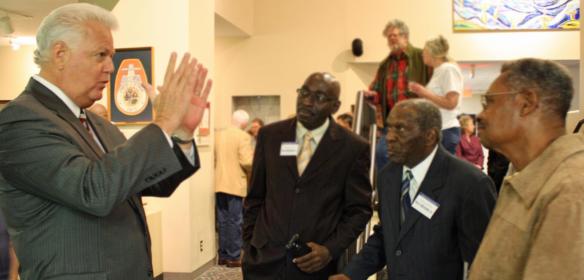
Florida Secretary of State Ken Detzner with members of the Florida Highwaymen during the February 5 event at the Museum of Florida History.

Florida Secretary of State Ken Detzner with members of the Florida Highwaymen during the February 5 event at the Museum of Florida History. Image courtesy of the Museum of Florida History.

This month, the Cummer Museum of Art & Gardens remembered Robert W. Schlageter, who grew the institution from a small, locally focused museum to one with a collection spanning 4,000 years of art history. He died Feb. 2 in Clearwater at the age of 88. The Norton Museum of Art has had an Annie Leibovitz exhibition on display all month that will continue through June 9. There have been numerous exhibitions and events statewide related to Viva Florida 500, such as the dedication of the Wild About Wildflowers public art display in Delray Beach, the OLA Film festival took place in Orlando, and the Anna Lamar Switzer Center for Visual Arts in Pensacola featured an exhibition of underwater photographs by Karen Glaser in “The Mark of Water, Florida’s Springs and Swamps.”

The Florida State Fair took place in February, with arts and culture featured as an important element in the fair’s events. Numerous awards for artwork were given out. Commissioner Putnam recognized Reid Risner, the winner of Florida’s 500th Anniversary Youth Fine Arts Competition. More than 200 Florida students submitted entries of fine artwork representing the history of Florida agriculture. The competition’s finalists will be on display for the duration of the fair, along with the winners of Florida’s 500th Anniversary Youth Coloring Competition. A new museum at the fair was also unveiled, “Florida Cattle Ranching: Five Centuries of Tradition.”

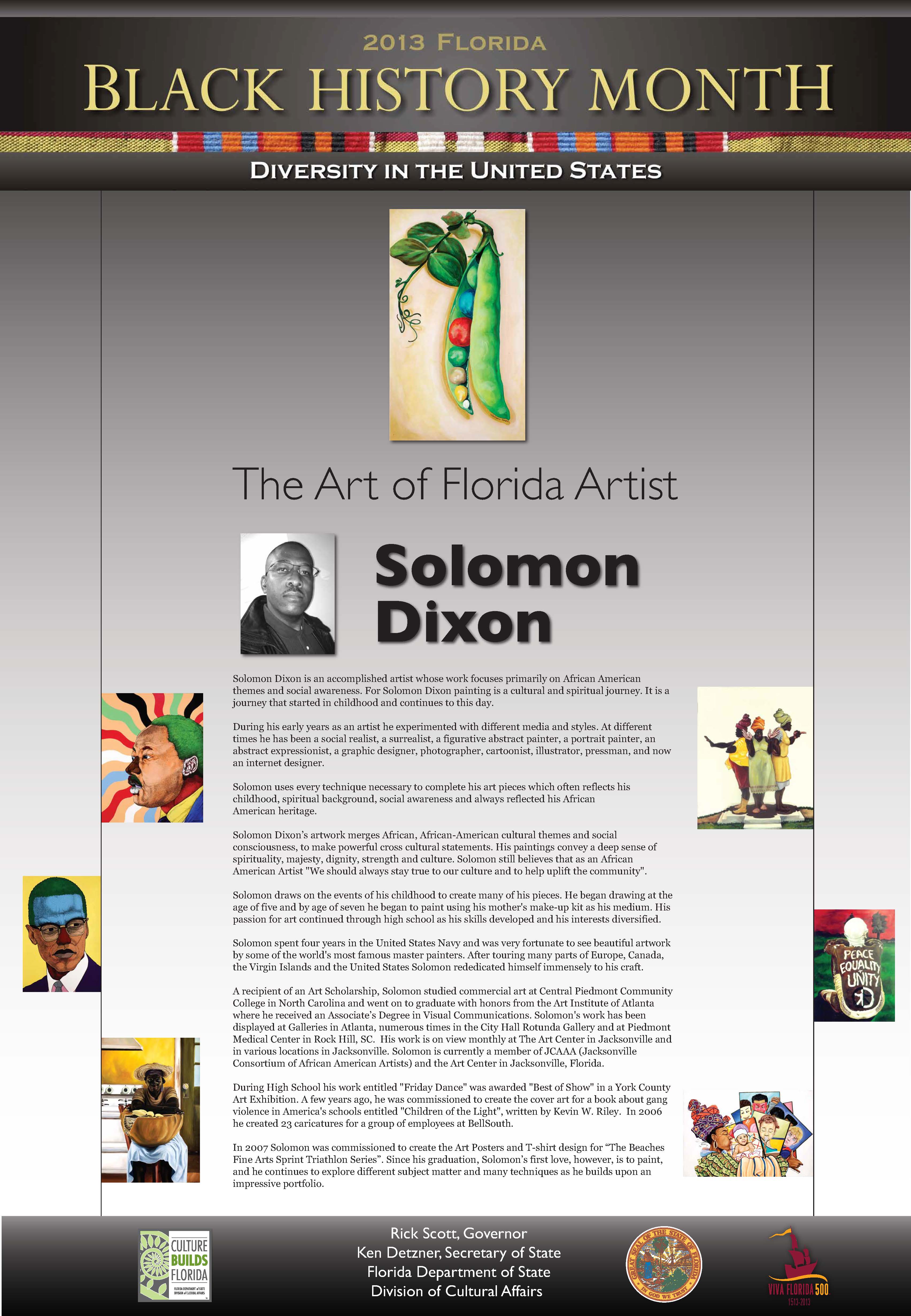
Solomon Dixon was chosen as the featured Florida artist for Black History Month 2013.

Solomon Dixon was chosen as the featured Florida artist for Black History Month 2013.

February was Black History Month, and numerous events took place across the state to honor the contributions of African Americans through arts and culture. The First Lady of Florida chose Solomon Dixon as the featured artist for this year.

There’s a lot going on in March. The state finals for Poetry Out Loud will take place in Tallahassee on March 9. Also remember to keep up with the Florida Heritage Month calendar and submit  events that are significant to Florida heritage, arts or culture, open to the public, and appropriate for audiences of all ages. You can also check for upcoming happenings at Art & Gator’s Event and Festival Calendar and the Viva Florida 500 calendar.

Florida Heritage Month will take place from March 15 to April 15.

Florida Heritage Month will take place from March 15 to April 15.

Spotlight On: The Musical Legacy of George Soffos

by Tim Storhoff

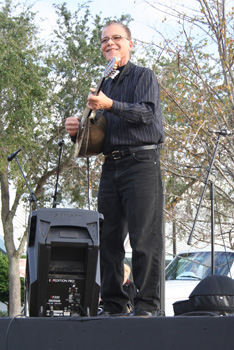
George Soffos. Image courtesy of the Florida Folklife Program.

George Soffos. Image courtesy of the Florida Folklife Program.

Florida’s Greek and musical communities lost an important member and resource last month when master bouzouki player George Soffos passed away. Soffos was widely considered to be the best bouzouki performer in the United States, and he actively shared his musical talents as a performer and instructor across the state.

George Soffos was born on November 6, 1953. The youngest of five children, he grew up in Warren, Ohio. His Greek ancestry could be traced through his father, who was from Asklipio, Rhodes, and his maternal grandparents from Katavia, Rhodes. All three of his older brothers pursued careers in the music industry. When he was fifteen, his parents sent him to study with John Tatasopoulos, the most highly regarded bouzouki player of his day, in Washington DC. Soffos spent two years studying and playing with Tatasopoulos in clubs in the DC area, and at seventeen he began his career as an independent headliner in bouzoukia (Greek night clubs) in cities across the United States. He also toured internationally, performing in Montreal, Toronto, and numerous Greek cities, as well as in countless festivals and other special events throughout the U.S. Mr. Soffos’s career included performances on several recordings for Greek and Greek American artists, including Nikos Kritikos, George Evagoras, Hrach Yacoubian, and Grigoris Maroulis. He frequently provided instrumental backing for Greek singing stars, such as Marinella and Rita Sakelariou, when they toured in the U.S.

After relocating to the Tarpon Springs area in the late 1990s to be near family, Mr. Soffos became the most sought-after performer at local Greek bouzoukia and festivals—and thus a valued community member in an area with a strong Greek cultural presence. Tarpon Springs has a higher percentage of Greek Americans than any other city in the country. The first Greek immigrants began arriving in the 1880s to work in the local sponge harvesting industry, and the city has maintained a strong Greek tradition ever since. Multiple Greek cultural events and festivals are held there each year including the Epiphany celebration, which draws thousands of visitors every January. Soffos was an active part of this Greek community. He became a mentor to many younger musicians by teaching bouzouki classes through the City of Tarpon Springs, which encourages the preservation of Greek community arts.

http://www.youtube.com/watch?v=zrmSxQKRXdo

Soffos continued the tradition of the bouzouki player as custodian and guardian of traditional Greek musical culture. The bouzouki is a Greek stringed instrument in the lute family that produces a sound reminiscent of a low-pitched mandolin. The instrument came to Greece through Turkey in the early twentieth century, but it had multiple precursors such as the Greek tambouras. The bouzouki is the central instrument in rebetiko, or Greek folk music, that underwent a popular revival starting in the 1950s. It has since been used to accompany a wide range of traditional and popular Greek genres, and an Irish variant recently became an important part of Irish traditional music. When Greek immigrants came to the United States in large numbers in the late nineteenth and early twentieth centuries, they brought their musical traditions with them, and following the revival of rebetiko songs in the fifties, a number of the top Greek bouzouki players came to the U.S., including Soffos’s teacher John Tatasopoulos. George Soffos continued this rich tradition and helped to see it flourish in Florida.

Mr. Soffos recently began to experience the recognition his playing deserved.  He received a Florida Folk Heritage Award in 2011, and was designated a master artist in the Florida Folklife Apprenticeship Program in 2011-12. George Soffos was most recently selected as a recipient for the 2013 Individual Artist Fellowship in the Folk and Traditional Arts discipline, but he passed away after suffering a heart attack on January 8, 2013 at the age of 59.

His career spanned diverse contexts for music making in the Greek American community. He was a regular fixture in festivals and cultural events in Florida and across the country, and he shared his musical talents by teaching young musicians and establishing professional relationships with other performers. It could be said that George Soffos’s life represents the history of Greek music in America over the last four decades, and his contributions to Greek music in Florida will continue to be heard for many years.

Culture in Florida: January

Culture In Florida

by Bob Evans

Culture In Florida is a monthly news roundup to show our state’s wonderful diversity, spotlight the organizations and artists that contribute so much to our communities, and stress the comprehensive benefits of arts and culture to Florida’s economy and quality of life.

7 Days of Opening Nights

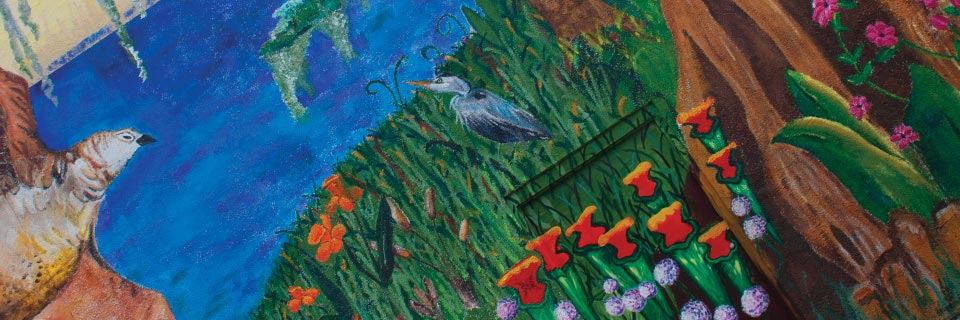
Portion of a mural on Gaines Street in Tallahassee celebrating 7 Days of Opening Nights (Photo used with permission from http://www.sevendaysfestival.org)

Happy New Year! January has been quite an exciting month for arts and culture around the state.

First up for 2013 are the many events surrounding Viva Florida 500. This statewide initiative led by the Florida Department of State, under the leadership of Secretary of State Ken Detzner along with Governor Rick Scott, highlights the 500 years of historic people, places and events in present-day Florida since the arrival of Juan Ponce de León to the land he named La Florida in 1513For a complete listing of events, including options to filter by type of event and location, visit http://www.vivaflorida.org/Events/. Make sure to check out all of the events in your area!

The Bonita Springs Historical Society, in partnership with the City of Bonita Springs, is sponsoring a 14 week series of Florida history programs at the Bonita Springs Community Center. Each Wednesday at 2 p.m. and again at 7 p.m., program presenter David Southall will introduce a different historical era along with the interesting characters and events that influenced those times with a Florida perspective.

The Cummer Museum of Art & Gardens in Jacksonville has assembled about 40 pieces of Florida art in a new exhibition, “La Florida,” showcasing art in Florida from the past 500 years. The pieces range from jewelry of the 1500s to contemporary works by Florida artists. The exhibition will continue until October 6th.

The Marcus Roberts Octet

The Marcus Roberts Octet will present the music of Jelly Roll Morton (photo used with permission from http://www.sevendaysfestival.org)

Seven Days of Opening Nights is Tallahassee’s premier performing arts festival, promoting Florida State University’s commitment to the arts. This year, the festival welcomes Christopher Heacox as its new director. Two new murals on Gaines Street are representing the celebration of community inspired by the festival, which continues through February. Notable performances at this year’s festival are the stunningly virtuosic violinist Hilary Hahn, the innovative and visceral choreography of Abraham.In.Motion, and many others.

The 30A Songwriters Festival took place over the weekend of January 18-20 in Walton County and brought over 125 musical acts and throngs of tourists to the area. This event has been growing each year to become one of the best regarded music festivals in the country. Everyone in Florida should be sure to check out the many art and music festivals that take place around the state, such as those in St. Augustine and Lee and Collier Counties.

Thomas Nestor, a St. Petersburg music promoter, is racing to raise funds to convert a historic YMCA building into a concert venue, music museum and space for after-school programs. His success hinges on his ability to secure the necessary $1.4 million in donations to purchase the structure within the next month.

Music is such an important part of a comprehensive education, which is the reason that students at Florida A&M University took the time to create a CD that encourages students to do well on the FCAT, Florida’s statewide standardized test. The Character Center is selling the album for $10 to raise money for its summer camp.

Opening any business during a recession can be tricky, but the Art Gallery of Viera is flourishing. From its new, larger location at The Avenue, the gallery presents exceptional educational programs in myriad media, suitable for all ages. To keep its standards at peak, the gallery only accepts top-quality local artists for membership. The Plum Art Gallery in St. Augustine is also exhibiting local and regional artists through the end of March.

Richard Blanco, a Floridian, made history this month by being the youngest poet to serve as the poet for the inauguration of President Obama. Blanco is also the first inaugural poet who is Latino and openly gay. He personally delivered his poem “One Today” in front of the U.S. Capitol on January 21st.

Manatee at Wakulla Springs State Park

A manatee making its winter home at Wakulla Springs State Park (photo by Bob Evans)

Finally, if you haven’t been, head over to Wakulla Springs State Park for a chance to see the manatees, Florida’s state marine mammal. The manatees have been making their winter home in the state park for the past 5 years or so, drawn to the water which remains between 68 and 72 degrees Fahrenheit year round. Orange City and Blue Spring State Park hosted the 28th annual Blue Spring Manatee Festival on the 26th and 27th, with events celebrating the endangered creatures.

Upcoming:

Remember: February is Black History Month. Governor Rick Scott, Lt. Governor Jennifer Carroll, and First Lady Ann Scott today invite students in kindergarten through 12th grades to participate in the Florida Black History Month art and essay contests. They also invite students, parents, teachers and principals to nominate full-time African-American educators in elementary, middle or high schools for the Black History Month Excellence in Education Award.

Check out these calendars of events from South Florida, Florida State University, and the Nassau County Library System

Postcard From: The Creative Capital Professional Development Workshop

by Tim Storhoff
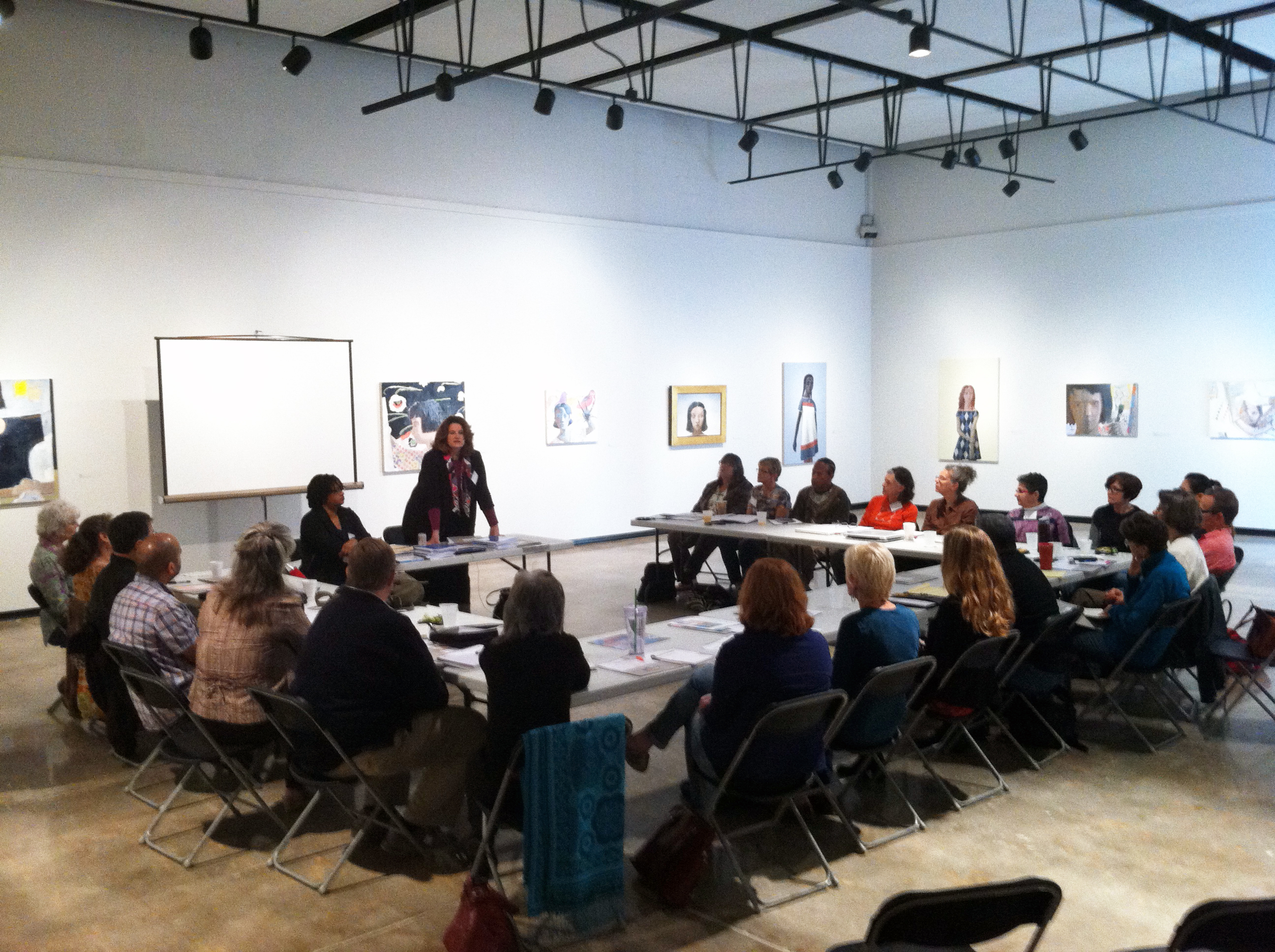
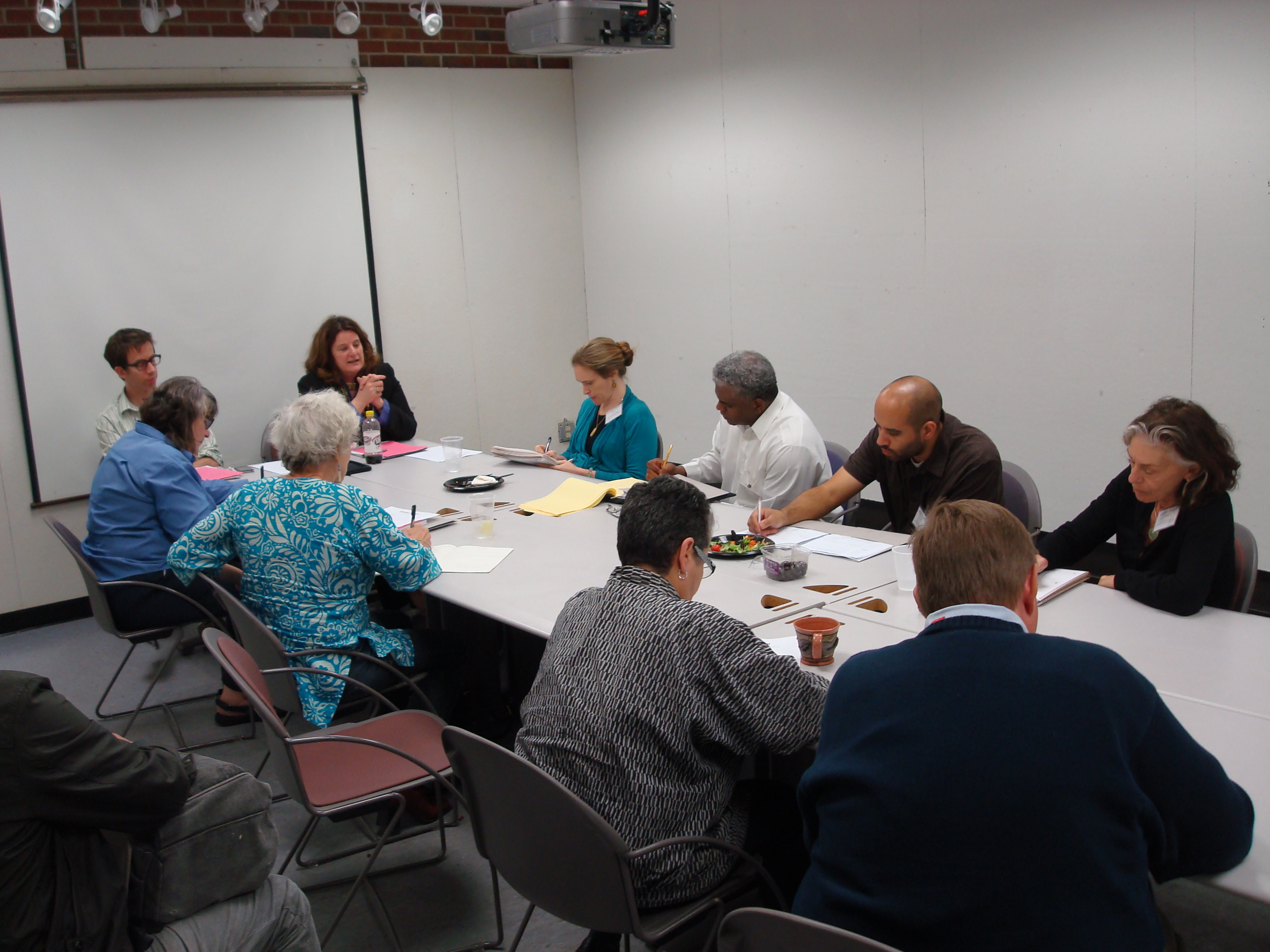
This past weekend, the Florida Division of Cultural Affairs along with Citizens for Florida Arts, Inc. partnered with the Creative Capital Foundation to offer a Professional Development Workshop to 24 artists from across the state of Florida that work in a variety of disciplines. This intensive two and a half days were a crash course in self-management, strategic planning, fundraising and promotion. The full weekend of lectures, peer critiques, one-on-one consultations, and interactive exercises took place in the beautiful University Gallery and nearby classrooms at the University of Florida in Gainesville.

The workshop leaders included Colleen Keegan, Aaron LandsmanJackie Battenfield (if you’re near Sarasota, check out Jackie’s exhibition at the Allyn Gallup Contemporary Art gallery on display through February 9), César Cornejo, and Beverly McIver. For more information, you should check out Jackie’s book The Artist’s Guide: How to Make a Living Doing What You Love as well as the HBO Documentary Raising Renee about Beverly. By sharing their personal experiences and numerous resources, these artists and administrators provided the tools and methods that will help attendees manage the business side of their art with greater efficiency and results, allowing them to expand their skills and build more sustainable careers.

Here are some photos I took to chronicle this exciting and constructive weekend:

CC01

"A bigger dream is much easier to achieve than a small dream, because it is inspiring."

“A bigger dream is much easier to achieve than a small dream, because it is inspiring.”

Beverly McIver explains how she worked towards achieving her own goals during the Strategic Planning session.

Beverly McIver explains how she worked towards achieving her own goals during the Strategic Planning session.

Participating artists enjoying lunch outside the gallery.

Participating artists enjoying lunch outside the gallery.

Workshop leaders and artists were able to share stories and discuss their work.

Workshop leaders and artists sharing stories and discussing their work.

Participating artist Julia Morrisroe describes an upcoming exhibition during Targeted Marketing.

Participating artist Julia Morrisroe describes an upcoming exhibition during Targeted Marketing.

Here are the results we came up with during our Targeted Marketing brainstorming session.

Here are the results we came up with during our Targeted Marketing brainstorming session.

"We want to dispel the myth we often tell ourselves that we are lucky to be artists, and because of that we don't deserve to be paid well. A passion for what you do should not preclude being paid."

“We want to dispel the myth we often tell ourselves that we are lucky to be artists, and because of that we don’t deserve to be paid well. A passion for what you do should not preclude being paid.”

Artists and workshop leaders enjoying the beautiful weather we had by meeting outside.

Artists and workshop leaders take advantage of the beautiful January weather by meeting outside.

Participating artist RIchard Seidel thanks the workshop leaders for the uplifting weekend.

Participating artist Richard Seidel thanks the workshop leaders for the uplifting weekend.

Creative Capital is a national nonprofit organization dedicated to providing integrated financial and advisory support to artists pursuing adventurous projects in five disciplines: Emerging Fields, Film/Video, Literature, Performing Arts and Visual Arts. Working in long-term partnership with artists, Creative Capital’s pioneering approach to support combines funding, counsel and career development services to enable a project’s success and foster a sustainable practice for its grantees. In its first decade, Creative Capital has committed more than $20 million in financial and advisory support to 325 projects representing 406 artists, and has reached an additional 3,700 artists around the country through its Professional Development Program.

The Division of Cultural Affairs partnered in presenting this program because we firmly believe that providing support and resources to Florida’s Individual Artists helps all of Florida’s cultural landscape. The Division has offered professional development opportunities like this workshop for Florida artists since 2006. Through these opportunities, over 250 artists have been trained in career-building skills such as marketing, time management, fundraising, and strategic planning. Additionally, the Division offers one grant program for individual artists, the Individual Artist Fellowship Program. The Fellowship Program provides monetary fellowships to Florida Artists to support their work and careers and to recognize the outstanding talent and artistic contributions of Florida artists. Individual artists enrich our communities and the world around us, and their works highlight our state’s diversity and create connections to our history. Spending time with these artists and learning about their endeavors during the workshop reminded all of us that Florida is a special place to live and work.

Thank you to everyone for a wonderful weekend! We are especially grateful to the workshop leaders from Creative Capital and the helpful staff and administrators at the University of Florida College of Fine Arts. We look forward to seeing where these artists take their careers from here!

Spotlight On: Enid Shomer’s The Twelve Rooms of the Nile

by Tim Storhoff

Shomer Twelve Rooms of the NileEarly on in Enid Shomer‘s professional writing career, she won the Florida Division of Cultural Affairs Individual Artist’s Fellowship for literature. Last month, Enid’s first novel The Twelve Rooms of the Nile was named by NPR as one of 2012’s best works of historical fiction. The book tells the story of Florence Nightingale before she came to prominence during the Crimean War and Gustave Flaubert before he began writing Madame Bovary. According to the book’s description, “She is a woman with radical ideas about society and God, naive in the ways of men. He is a notorious womanizer, involved with innumerable prostitutes. But both are at painful crossroads in their lives and burn with unfulfilled ambition.” On a trip along the Nile in 1850, these two travelers ignite an unlikely friendship and share some of their deepest secrets and most fervent hopes, all colored by the exotic backdrop of mid-nineteenth century Egypt.

In the following video from publisher Simon and Schuster, you can hear Enid describe her inspiration for the novel:


Shomer has had her poetry and fiction published widely, and her work has appeared in The New YorkerThe AtlanticParis ReviewBest American PoetryBest New Stories from the South and many other magazines as well as more than seventy anthologies and textbooks. As a Visiting Writer, Shomer has taught at the University of Arkansas, Florida State University, and the Ohio State University, where she was the Thurber House Writer-in-Residence. In 2002, Shomer became the Poetry Series Editor for her former poetry publisher, the University of Arkansas Press. Most recently, she has taught in the MFA program at Ashland University and the University of Tampa.

As a three-time DCA Individual Artist’s Fellowship recipient, I asked Enid about the impact that the small but prestigious awards had on her career. She said:

When I won my first Individual Artist’s Fellowship, it was not only financially helpful; it also reinforced the choice I had made to put everything else aside and “go for” a career as a full-time writer. Five years later (by this time I had published a book of poetry) a second grant enabled me to work on a project that became my first book of fiction, Imaginary Men, which won the Iowa Short Fiction Award and the LSU/Southern Review Award, both given annually for the best first collection of fiction by an American writer.

Of course, three state grants totaling $15,000 over a lifetime cannot change anyone’s economic status, but it is enough money to invest in a good computer, to cover the cost of office supplies, clerical help, printing, even travel to meet one’s agent or for research, and so forth. Equally important for me was the impact of other peoples’ confidence in my own talent. Poets and fiction writers work in isolation. It is the vote of approval and most of all the interest of one’s peers—the judges and the Arts Council—in one’s work that makes these grants so meaningful. I felt incredibly grateful, even indebted, to my home state, an obligation I discharged by serving as a judge three times on the Literature panel.

The Florida Division of Cultural Affairs would like to congratulate Ms. Shomer on the success of The Twelve Rooms of the Nile and thank her for the contributions she has made to Florida’s literary community.

You can also read the first chapter of the novel and listen to comedian and writer Russell Kane interview Ms. Shomer for BBC Radio hereThe Twelve Rooms of the Nile is now available for purchase in your local bookstores and online. Learn more about our Individual Artists Fellowship at the Division of Cultural Affairs website.

Culture in Florida: December

Culture In Florida

by Tim Storhoff
Culture In Florida is a monthly news roundup to show our state’s wonderful diversity, spotlight the organizations and artists that contribute so much to our communities, and stress the comprehensive benefits of arts and culture to Florida’s economy and quality of life.

December kicked off with Art Basel in Miami Beach. Beyond being a successful and high-profile arts event, it also did a lot to give back to the surrounding community. A number of artists who came to the area for Art Basel stuck around to restore murals in West Grove. Keif Schleifer, an arts advocate and sculptor from Atlanta who organized the effort, said, “We’ve been humbled by this community and the kids who’ve been painting with us since the day we arrived. I see Art Basel as more than an event of the moment. It’s a meeting ground for people to come together and grow something bigger that continues.” Art Basel has also helped transform the nearby Wynwood neighborhood into a more vibrant area for visitors, and the neighborhood’s connection to Art Basel was covered in the New York Times. Those interested in learning from Art Basel’s success should check out 8 Tips for Courting Influencers the Art Basel Way from the pARTnership Movement.

Art Video on December 5, 2012 during Art Basel 2012.  (Photo by John Parra/Getty Images for Art Basel Miami 2012, Courtesy of Art Basel)

Art Video on December 5, 2012 during Art Basel. (Photo by John Parra/Getty Images for Art Basel Miami 2012, Courtesy of Art Basel)

Other events across the state have been big hits this month too. This includes the Bradenton Blues Festival (mentioned last month), which sold 3126 tickets and exceeded expectations for its first year. Boynton Beach has continued its rebranding campaign with the opening of the Plein-Air Exhibition in the Boynton Beach Library. Many events centered around the holidays. The very first Christmas celebration in North America was held in Florida, and that holiday spirit continues today. Three million lights helped make St. Augustine’s historic district sparkle, the Thomas Edison & Henry Ford Estates held their annual Holiday Nights, and the Tampa Theatre had a packed showing of It’s a Wonderful Life. Many other holiday events related to Christmas, Hanukkah, and Kwanzaa were held across the state that incorporated the performing and visual arts in various ways.

We want to acknowledge all of the Florida arts and culture organizations that have recently had success receiving grants. The Miami City Ballet received a $5 million grant from the John S. and James L. Knight Foundation. The grant, which will come in $1 million increments over 5 years, is the largest the company has received in its 27-year history. Sixteen Florida Organizations also received ArtWorks Grants from the National Endowment for the Arts worth a total of $412,000. Additionally, the group Citizens Interested in the Arts (CIA) donated $1 million to thirty visual and performing arts organizations in South Florida for the year 2013. On an individual level, Viera resident David Saylor received a great honor when his photo “Discovering Limits” was chosen in Canon’s “Project Imaginat10n” contest to be the inspiration for short films by celebrity directors.

This has been an exciting month for museums across the state. The Safety Harbor Museum and Cultural Center celebrated its Grand Opening after closing in March for a complete remodeling and repurposing, and the staff at the Elliott Museum in Stuart started moving items into their new building set to open March 2, 2013. The Polaseck Museum in Winter Park has acquired a bust of Woodrow Wilson, created by Albin Polasek himself, that was targeted for destruction by the Nazis. This piece of art was believed to have been destroyed during World War II but is now on display in the museum. In Sarasota, the Ringling Museum opened a new exhibition featuring sixteenth century Venetian art by Paolo Veronese, and the Norton Museum of Art in West Palm is exhibiting the work of Sylvia Plimack Mangold, an American painter known for her landscapes and “portraits” of trees, as part of the museum’s effort to highlight the contributions of women artists. In a special article for the Gainesville Sun, Rebecca Nagy, director of the Harn Museum of Art at UF, asked how brick and mortar museums can stay relevant in the digital age.

The Norton Museum of Art in West Palm Beach. Photo by Wally Gobetz and made available by a CC BY-NC-ND 2.0 license.

The Norton Museum of Art in West Palm Beach. (Photo by Wally Gobetz and made available by a CC BY-NC-ND 2.0 license.)

With the New Year comes the official start of Viva Florida 500, the commemoration of Florida’s 500th anniversary so be on the lookout for related events in January and all year long. Looking forward, the Miami New Times presented “Nine New Years Resolutions for Miami’s Arts Community” and the Carrollwood Cultural Center is already preparing for a busy winter season starting in January.

Happy New Year from everyone at the Division of Cultural Affairs, and we hope that 2013 brings you health, happiness, and many opportunities to experience and share the great arts and culture events Florida has to offer!

A Day in the Life: Composer Chuck Owen, Individual Artist Fellowship Recipient

by Tim Storhoff
While Chuck Owen directs the Center for Jazz Composition at the University of South Florida School of Music in Tampa, his compositions reflect a musical taste that include many genres alongside jazz. He has said, “Years of classical piano training, performance with jazz rock/funk bands as a trombonist, and ongoing appreciation of American folk music traditions as well as those from many other countries – particularly in Latin America & Europe – have all shaped my outlook as a composer. Although I never set out with the notion of forcibly trying to ‘fuse’ these elements – I delight in playing with what, at least to me, seems like their natural intersections.” In playing with these intersections, Owen has amassed an evocative and delightful body of work.

Individual Artist Fellowship Recipient Chuck Owen. Photo used by permission of Chuck Owen.

Individual Artist Fellowship Recipient Chuck Owen. Photo used by permission of Chuck Owen.

Many of Owen’s compositions have been performed by Jazz Surge, his big band founded in 1995. Additionally, he has composed for the Smithsonian Jazz Masterworks Orchestra, Netherlands Metropole Orchestra, Tonight Show Orchestra, Cincinnati Pops Orchestra, Dave Liebman Big Band, and Roger Williams. His compositions have won him previous Individual Artist Fellowships from the Florida Division of Cultural Affairs, an ASCAP/IAJE Commission in honor of Louis Armstrong, and a John Simon Guggenheim Memorial Fellowship. He has also served as a panelist for major awards, most recently chairing the Pulitzer Prize in Music panel in 2011. In addition to composition, Owen is a dedicated educator who has received numerous accolades for his teaching at USF and served as President of the International Association for Jazz Education from 2006 to 2008.

Owen received his BM from North Texas State University and an MA in orchestral conducting from California State University-Northridge. While both of these degrees included formal composition instruction, Owen claims he has primarily grown and continues to grow musically through listening and studying the scores of great works while remaining actively engaged with other musicians, composers, and students. He said, “As a jazz composer, I feel one of the greatest educational experiences I had was years of gigging as a professional pianist. Since so much of jazz performance practice extends beyond written notation, there simply is no substitute for a jazz composer.”

Recently, Owen has devoted much of his time to the creation and release of his project River Runs: A Concerto for Jazz Guitar, Saxophone, and Orchestra, which will be issued in early April 2013 on Summit Records. He describes this composition below:

“The product of a 2009 Guggenheim Fellowship, this concerto spans 5 movements and runs almost an hour in length.  I drew on a lifetime love of rivers as well as specific raft/canoe trips for inspiration. Each movement is linked to a specific river but also tries to portray characteristics of the rivers. While it’s clearly a mixed genre piece – incorporating aspects of jazz, contemporary classical, American folk, and other musics; I’ve tried to retain the loose, improvisational feel of jazz throughout.” The movements of the piece are:

  • Prologue – Dawn at River’s Edge  1:54
  • Mvmt. I – Bound Away  17:53  Greenbrier & New Rivers (West Virginia)
  • Mvmt. II – Dark Waters, Slow Waters   12:37 Hillsborough River (Florida)
  • Mvmt. III – Chutes and Wave Trains  11:29  Chattooga River (Georgia, South Carolina)
  • Mvmt. IV – Side Hikes – A Ridge Away  7:56  Green & Colorado Rivers  (Colorado, Utah, Arizona)
  • Mvmt. V – Perhaps the Better Claim  11:42  Salmon River (Idaho) – The River of No Return

This piece, which evokes a sense of place that stretches across the nation, also stretches Owen’s music into new areas, reaches new audiences, and has fostered new professional relationships with musicians outside the jazz world. Featured soloists for the recording are Jack Wilkins (tenor saxophone) and LaRue Nickelson (guitar). Also prominent though not in featured roles are Corey Christiansen (acoustic guitars), Rob Thomas (jazz violin), and Danny Gottlieb (drums). In addition, Owen used the members of the Jazz Surge big band (some of whom have been with him for over 15 years) as the core ensemble which he then surrounded with orchestral players – most of whom hail from the Florida Orchestra.

Watch for River Runs: A Concerto for Jazz Guitar, Saxophone, and Orchestra in April. To learn more about Chuck Owen’s career and hear some musical examples, go to http://www.chuckowen.com, and to learn more about the jazz program at USF, visit the program’s webpage here. We would like to congratulate Mr. Owen on his receiving another Individual Artist Fellowship from the Florida Division of Cultural Affairs, and we look forward to working with him over the next year.

Art Talk: Accessibility with Division Staff Member Maureen McKloski

By Tim Storhoff

Maureen McKloskiMaureen McKloski joined the Division’s staff in July of 2012. Prior to her work at the Division, she was the visual arts coordinator for Pyramid Studios, an art center serving developmentally disabled adults. She is a painter and restorer of fine art and antiques. Maureen earned Bachelor of Fine Art degrees in Art Education and Ceramics. As the Division’s Accessibility Coordinator, I wanted to ask her about the importance of accessibility in the arts.

Along with managing grant programs, overseeing arts in education and underserved communities, you are the Division’s accessibility coordinator. Accessibility is clearly important to all aspects of life, but what makes accessibility especially important to the arts?

Accessibility is a word that simply envelops and provides inclusion for all.  People with disabilities are as diverse as any people. They have diverse experiences, expectations, and preferences. They use diverse interaction techniques, adaptive strategies, and assistive technology configurations. People have different disabilities: auditory, cognitive, neurological, physical, speech, and visual — and some have multiple disabilities. Even within one category, there is extreme variation; for example, “visual disability” includes people who have been totally blind since birth, people who have distortion in their central vision from age-related degeneration, and people who temporarily have blurry vision from an injury or disease.

As we all age, we find ourselves utilizing more provided accessibility services, whether we fully recognize and label them as disabilities or not. We find that these considerations, when seamlessly integrated, are helpful to every user. Accessibility is especially important in the arts because it encompasses and directly affects everyone – whether they are an audience member, a listener, a patron or an artist.

The therapeutic aspects of art, whether we are actively or passively engaged, have the potential to greatly impact our physical, emotional, and mental well-being.  It also can have an economic impact on the individuals that create or perform art – opening up an opportunity for individuals to earn income, as well as benefit of increased revenue for arts communities that hold accessible and inclusive events.

The Division believes in the motto “Culture Builds Florida” and stressing the economic value the arts have for our state. How do you see accessibility relating to Culture Builds Florida? 

The arts are integral to the lives of our citizens. We appreciate them for their intrinsic benefits — their beauty and vision and how they inspire, soothe, provoke, and connect us. The arts ennoble us as people. They provide bridges between cultures. They embody the accumulated wisdom, intellect, and imagination of humankind. Government and private-sector support are essential to promote full access to and participation in exhibitions, performances, arts education, and other cultural events regardless of family income.  The arts are essential to the health and vitality of our communities and our nation. They improve the quality of life in our cities and towns. They enhance community development; spur urban renewal; attract new businesses; draw tourism dollars; and create an environment that attracts skilled, educated workers which build an innovative workforce.

Do you know what all of the Disability Access Symbols mean? Learn about them and download them for your own use at https://www.graphicartistsguild.org/resources/disability-access-symbols/

Do you know what all of the Disability Access Symbols mean? Learn about them and download them for your own use at https://www.graphicartistsguild.org/resources/disability-access-symbols/

If you could name just one or two low-cost things that arts organizations and businesses can do to improve their accessibility, what would they be?

Many organizations are already accessible in a number of ways.  One of the first things that an organization can do is to include appropriate accessibility symbols in all of their marketing materials – from brochures to email blasts. Another low-cost practice would be to provide large print versions of all printed material. Generally information is typed out in word format before included in a distributed format. If an organization changed the font and the font size, they could easily provide information in this format. Another low-cost practice would be to walk through their facility with a three-foot ruler or stick to make sure that all routes are easily accessible to wheelchairs and make sure that nothing blocks doorways or access to any of the facilities amenities.

Where should arts organizations and businesses go for more information about accessibility in the arts?

We have provided information to our grantees regarding their 504 plan, people first language, accessibility symbols, and more.  We are providing this information on our website, and the informative links there are continually updated. We are also providing a series of six webinars in 2013 for our constituents catered to their desire to learn more about and provide services to those individuals with disabilities in partnership with VSA. For more information on the upcoming webinars, subscribe to our e-mail list and like us on Facebook.

Culture In Florida: November

Culture In Florida

By Bob Evans & Tim Storhoff

With so much going on across the state of Florida in the world of arts and culture, we have decided to add a monthly feature to the Culture Builds Florida blog. By looking back at some of the cultural events and news stories that occurred each month, we hope that Culture In Florida will help show our state’s wonderful diversity, spotlight the organizations and artists that contribute so much to our communities, and stress the comprehensive benefits of arts and culture to Florida’s economy and quality of life.

Between political elections and the Thanksgiving holiday, November has been a busy month for Floridians. In a proclamation, President Barack Obama announced that November would be National Native American Heritage Month, and November 23 would be Native American Heritage Day. Various events featuring Native American art have been held across the state as a result. Additionally, First Lady Michelle Obama designated two Florida communities as Preserve America Communities: Bonita Springs and Flagler County. This designation will help bring an increased focus to these communities and draw visitors to their events. Over in Collier County, there were over 100 events as part of their “Celebrate the Arts Month,” which was designed to promote the area’s arts community and involve more residents and visitors in cultural activities.

The city of Bradenton has also been busy this month. Bradenton’s Riverwalk is working on rebranding itself as one of the “top riverfront communities in the nation in order to boost tourism.” With events like ArtSlam and the upcoming inaugural Bradenton Blues Festival, it’s well on its way. Headlining for the Bradenton Blues Festival is Grammy Award nominee Ruthie Foster, as well as Louisiana Music Hall of Fame inductee Kenny Neal and Southern Hospitality, led by Bradenton Beach resident Damon Fowler.

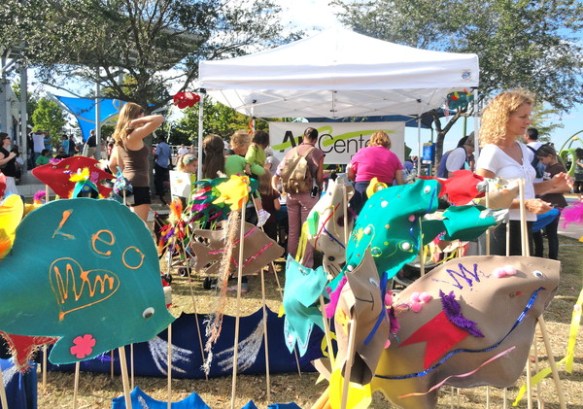
Visitors enjoying Bradenton's third annual ArtSlam this month. Photo courtesy of http://bradenton.patch.com

Visitors enjoying Bradenton’s third annual ArtSlam this month. Photo courtesy of http://bradenton.patch.com

A number of events were held to celebrate Arts and Health Month. From The Society for the Arts in Healthcare website, “Arts & Health Month is a time to host awareness-raising events and heighten media attention for [the] field.” Shands Hospital in Gainesville was host to three events to raise awareness and promote the healing process. The Musicians in Residence duo of Danielle DeCosmo and Cathy DeWitt have been playing music for patients, and Writer-in-Residence Barbara Esrig helped create oral histories with patients, families, and staff. A therapeutic paper-making workshop was also held, taking personally significant pieces of fabric and turning them into works of art.

November has also been a month of beginnings and openings. Artists in Hernando have a new gallery in which to exhibit their work thanks to a generous offer by newly-elected County Commissioner Nick Nicholson. Key West is in the middle of its inaugural Key West Film Festival, screening at the historic San Carlos Institute and the Tropic Cinema until Sunday, December 2nd. Over in Santa Rosa County, the Imogene Theater officially reopened, featuring an original play by local playwright Shay Moran.

Students in Florida have so many opportunities to experience and participate in arts and cultural activities year round, and this month was no different. Janie Howard Wilson Elementary students hosted artist Ruby Williams, who spoke about being successful, as well as her life as an artist. Thanks to a generous donation by Gibson Law Firm in Lake Wales and Miss Ruby herself, the students received two paintings for the school’s art collection. Seminole State College of Florida’s interior design students had the opportunity to decorate the Leu House Museum based on important figures in Central Florida history, such as Orlando Mayor Buddy Dyer, philanthropist Harriett Lake and former Florida Lt. Governor Toni Jennings. The display will run through December 31st. Palm Beach County high school students have the chance to win cash awards, thanks to a banned book essay contest hosted by the West Palm Beach Library Foundation. In conjunction with its upcoming exhibition, “Banned and Burned: Literary Censorship and the Loss of Freedom,” students will discuss in their essays how a banned book has influenced them, and why they feel that it should be protected. Essays must be 500-1,000 words and should be submitted by December 31st.

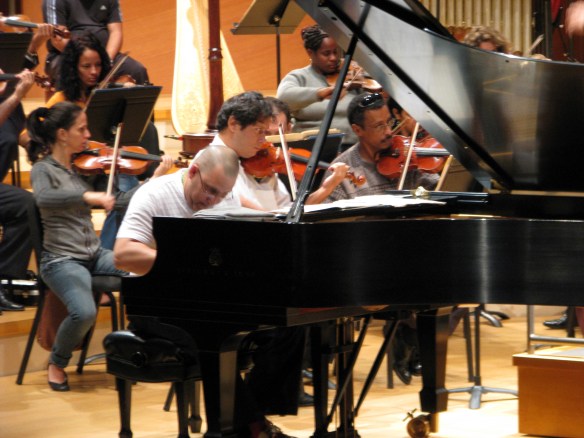
Ignacio “Nachito” Herrera rehearsing with the National Symphony Orchestra of Cuba. Photo provided by Tim Storhoff.

Ignacio “Nachito” Herrera rehearsing with the National Symphony Orchestra of Cuba. Photo provided by Tim Storhoff.

There were many events across the state of Florida that showcased the state’s diversity and functioned as cultural exchanges with other nations. One major newsworthy occurrence was the National Symphony Orchestra of Cuba concluding their first tour of the United States with multiple performances in Florida. The orchestra visited Daytona Beach, St. Augustine, Naples, St. Petersburg, Fort Pierce, and West Palm Beach during the month of November. Tim Storhoff, an Arts Consultant with the Florida Division of Cultural Affairs, attended multiple performances on the orchestra’s tour, and you can listen to his talk from the Kravis Center about their musical selections at the Arts Radio Network. HistoryMiami is featuring a somewhat related exhibition about the guayabera shirt’s evolution through Cuba, Mexico and the United States. “The Guayabera: A Shirt’s Story” runs through January 13. The annual Accidental Music Festival in Orlando also featured an exchange with the Symphonic Orchestra of Guanajuato, Mexico.

Upcoming in December:
Art Basel Miami Beach and its many satellite events run from December 6th through the 9th, featuring local young artists like Juan Fernando “Buddah Funk” Gomez. There will also be holiday music events going on throughout the month across the state, and as we approach New Years be on the lookout for Viva Florida 500 events, like this Wall of Florida History exhibit in Leesburg and the newly rechristened Gran Naranja kicking off 2013 in Miami.