Provided by Morikami Museum and Japanese Gardens
 Located in Delray Beach, the Morikami Museum and Japanese Gardens opened in 1977 with a mission “to engage a diverse audience by presenting Japanese cultural experiences that educate and inspire”. Drawing upon a century-old connection between Japan and South Florida, the museum has served as a cultural center for Japanese art exhibitions, tea ceremonies, educational outreach programs, and Japanese festivals. The Morikami Collections house more than 7,000 Japanese art objects and artifacts, including a 500-piece collection of tea ceremony items, more than 200 textile pieces and fine art acquisitions.
Surrounding the museum are 16 acres of expansive Japanese gardens with strolling paths, resting areas, a world-class bonsai collection and lakes teeming with koi and other wildlife. The gardens underwent a major expansion and renovation in 2001, and now reflect major periods of Japanese garden design, from the eighth to the 20th century, and serve as an outdoor extension of the museum. According to the garden designer, Hoichi Kurisu, each garden is intended to express the character and ideas of a unique counterpart in Japan without attempting to duplicate those gardens, and seamlessly flow together as one garden.
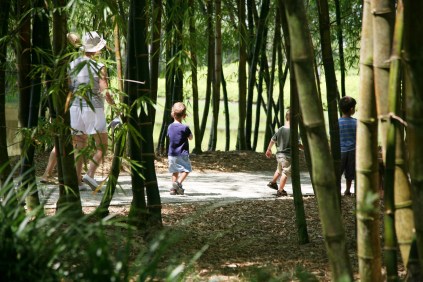 One of the many cultural programs that Morikami offers is their Stroll for Well-Being program. In 2006 Morikami received a grant from the Institute of Museum and Library Services to conduct a research study with Florida Atlantic University’s Christine E. Lynn College of Nursing. Researchers undertook the study to determine whether or not garden visits were as effective as, or more effective than, art therapy in relieving symptoms of depression in older adults. Art therapy has been shown to decrease depression in the elderly by allowing elders to express feelings of sadness and loss. The study showed that walking the gardens was as effective as art therapy in alleviating the symptoms of depression in older adults. As a result of this study, the Stroll for Well-Being program was born.
Stroll for Well-Being participants receive a complimentary year of unlimited visits to Morikami, a guided journal, and three sessions with a facilitator. Garden strolls begin following an initial group meeting with a facilitator to acquaint participants with how the program works and to distribute the guidebook/journals. The guidebook/journal presents several themed walks that identify points along the way at which to pause, reflect and experience a sense of ease. Walks are based on such themes as awareness, trust, possibility, joy and fulfillment, and are designed to elicit reflection on one’s life. Space in the guidebook/journal allows participants to record their thoughts on these and other topics. Participants in the program may visit the garden at any time during regular museum and garden hours as often as they wish, but are encouraged to visit at least twice a week during the first eight weeks.
 Over 1000 people have participated in the program since its public introduction in 2008 and since 2011, the program has been generously funded by Astellas Pharma US, Inc., which has allowed Morikami to offer the program free of charge to participants of nonprofit therapy groups including veterans, caregivers, cancer survivors and those experiencing chronic illness and grief, among others. Participants are initially offered three months of membership to Morikami and invited to attend three walks and meetings during this time. After this initial membership period, participants in the program have unlimited opportunities for up to a year to visit Morikami to leisurely stroll the garden path, and enjoy the peace and serenity that the garden has to offer. Strolling the garden itself is entirely a personal activity. Past participants have reported that the Stroll for Well-Being program has helped them to effectively reduce stress and alleviate sadness.
 In 2014, representatives from the program presented the research at the North American Japanese Garden Association Conference to great enthusiasm. Many gardens throughout the United States have implemented their own programs modeled after Stroll for Well-Being, showing that museums can be places of therapy and stress release in addition to being important cultural centers. Recently, Morikami began expanding the current program to add physical exercises and visualizations to the guided garden strolls, allowing participants to experience the calm and release of the garden whether they are able to attend in person or not.
More information about the research study and the Stroll for Well-Being program (including a manual for starting a similar program within your own organization) can be found on Morikami’s website: http://morikami.org.
Interested in seeing your organization featured on Culture Builds Florida? Please fill out this form: https://goo.gl/forms/3sMwuJWA3bM1orPl2.



 Founded in 1924 as the Jacksonville Fine Arts Society, MOCA Jacksonville is a private nonprofit visual arts educational institution and cultural institute of the University of North Florida. MOCA Jacksonville serves the community and its visitors through its mission to promote the discovery, knowledge and advancement of the art, artists and ideas
  of our time.
 Since its inception in 2017, Art Aviators has served hundreds of children throughout the region. From 2008 to 2015, Art Aviators was implemented in Duval County schools, and the curriculum was also adopted by the Coral Springs Museum of Art in South Florida. Today, the Museum of Contemporary Art Jacksonville offers free monthly workshops for families of the ASD community to enjoy as well as free spring and summer art camps. Art Aviators harnesses art as a powerful proven means of promoting expression and social interaction among children with ASD and their teachers, caregivers, and peers. It is our hope to be able to export this exciting curriculum to museums and organizations nationally to give them a resource to serve the ASD families in their communities.
 Emerald Coast Theatre Company exists to inspire, educate, and empower the community and artists of all ages to achieve the highest level of cultural excellence through collaboration, productions, and educational programs that promote lifelong learning and provide excellent, professional entertainment in the Emerald Coast Community. The company was founded in 2012 by husband-and-wife team, Nathanael and Anna Fisher, who serve as producing artistic director and associate
  artistic director, respectively.
 What started as an afterschool program with ten students at Destin Elementary has now grown to a comprehensive, multi-level education program with over 400 students enrolled per year, serving children in Okaloosa, Walton, and Bay counties. Four of the original ten students are still involved with the company, and ECTC has developed satellite programs at Gulf Coast State College in Panama City and at Rise Dance Center in Destin.
 Most of Emerald Coast Theatre Company’s camps and classes are production-based, meaning that every student enrolled has the opportunity to participate in a fully-staged production. The classes meet for two hours a week for ten to fifteen weeks. Nathanael and Anna are passionate about fostering community. The primary goal for ECTC is to create a space where children really feel like they “belong” and can explore and develop their creativity in a welcoming and safe environment.
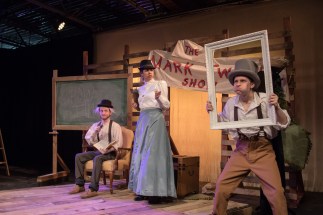 As they continue to grow and evolve, ECTC is committed to expanding beyond their immediate area and aims to reach schools in the north of the county, where there is a higher population of Title I schools. They have started a scholarship program to make theatre accessible to all children and are also actively seeking grants to help sponsor more Title I schools for their Theatre for Young Audiences program. They are also committed to reaching the growing homeschool population in the Destin area, and are continuing to expand their homeschool programming.
 DCA: Tell us a little bit about yourself.

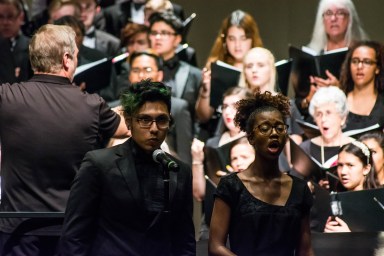


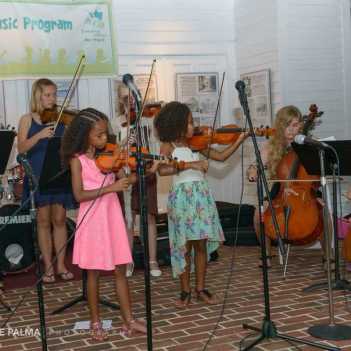
 Young Singers of the Palm Beaches’ CHOIR IN THE GLADES program for elementary school children in the Belle Glade area just completed its fifth season. Choir in the Glades “BellaVoce” middle school program at Lake Shore Middle School just completed season two. The elementary and middle school choirs each meet weekly and offer the children in Belle Glade tuition-free choral and music experiences, taught by music professionals. Transportation is offered, also free of charge, to all elementary school children from school to the rehearsal site.
 Culture Builds Florida