by Jennifer Hoesing
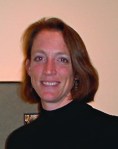 Grace Maloy is Executive Director of the Gadsden Arts Center in Quincy, Florida. Gadsden Arts Center provides exhibitions of fine art and art education to the people of Gadsden County, a rural county that is highly diverse culturally, racially and ethnically.
Gadsden Arts Center’s current exhibition, Dean Mitchell: Rich in Spirit, is on view through October 29, 2011. In addition, vernacular art from the Gadsden Arts Center collection is on view at the Gibbs Museum in Charleston, South Carolina through October.
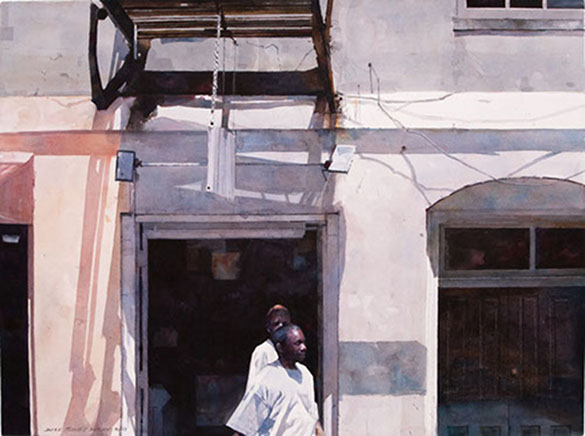
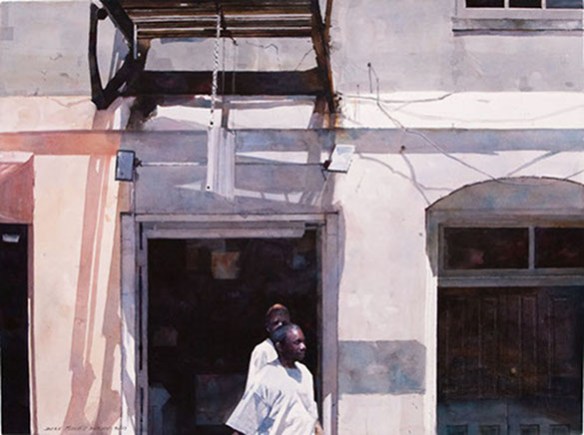 Sunshine in New Orleans by Dean Mitchell. Watercolor. 30 x 40 inches. Now on view at Gadsden Arts Center.
DCA: How long have you had a career in the arts? How long have you worked in Florida?
Maloy: I supposed my career in the arts began in early childhood. My mother and both of her parents were fine artists, and mom often told stories of her beloved father, Rocco, who was a graphic designer and illustrator by trade. Our house was filled with original art, paintings by family members, paintings, drawings, and prints by their artist friends, handmade books, hand-crafted furniture. Many of my grandparents’ artist friends, like watercolorist Henry Keller, went on to become well regarded in the history 20th century art.
Growing up in a family of artists meant the family was raised with a particular approach to life, that a good life is achieved by design, and there is unlimited beauty in our immediate environment to appreciate. Growing up with an artist’s sensibility means that we have enjoyed a depth of awareness of our environment and ourselves that some people may not have.
I also drew and painted pictures from early childhood, as a natural form of thought and expression. By high school, I was asking my parents to enroll me in college-level art and design classes and drawing portraits for friends on commission. My first degree is in studio art, but I went on to learn commercial design and illustration, as my grandfather did. For some reason, I felt an emptiness in the “working for a paycheck” life as a designer/illustrator, earned an Art Education Masters Degree, and taught high school art for a number of years. I love teaching art to teen-aged children, they are creative and thoughtful beyond measure.
All of this ultimately culminated in my present career as an arts administrator, a field I fell into without intent about 13 years ago, first as an Assistant Curator at the Center for the Arts, now known as the Vero Beach Museum of Art. What a fascinating field this is! We provide critical community services that are increasingly scarce. We are practical business managers, and at the same time, we are creative problem solvers and visionaries. We are inventing a field as we live it, responding to needs and challenges on an ever-changing basis. We are part of a larger family of nonprofit art professionals that move forward into an uncertain economy, seeing endless possibilities because the need is endless, rooted together in one foundation that is the expressive, unifying, thought provoking, enduring, healing, exciting power of art.
DCA: What is the single greatest contribution the Gadsden Arts Center makes to your community?
Maloy: I cannot really identify one overriding contribution. The Gadsden Arts Center completed a community survey last spring, with the aid of a highly experienced third party consultant, who spent about 100 hours interviewing members, donors, elected officials, and community leaders. Part of the process was to determine what they valued most highly in the Gadsden Arts Center. Their responses were the power of Gadsden Arts to draw diverse community groups together in a meaningful way; art education to help area children develop higher order thinking skills, self-discipline, and an avenue for self-expression; and cultural and historical content presented through our exhibitions.
DCA: What other challenges in your community have been addressed through the arts?
Maloy: I think the three greatest challenges addressed by the Gadsden Arts Center have been cross-cultural understanding, tourism and economic development and education.
First, cross-cultural understanding is addressed through the content of many exhibitions, and also through the very practical opportunity for volunteers to develop new social relationships here;
In terms of tourism and economic development, Gadsden Arts is broadly recognized for its historic buildings, museum-quality facilities, exhibitions and programs. We draw visitors from a broad geographic area, who enjoy their visit and leave with a positive impression that helps to dispel longstanding negative stereotypes of Gadsden County that are sometimes perpetuated in regional media.
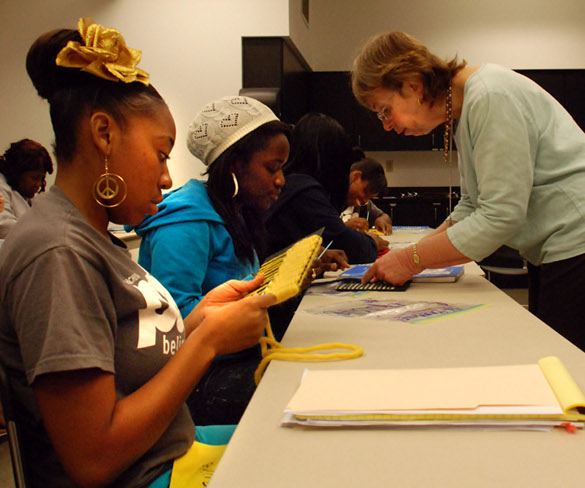
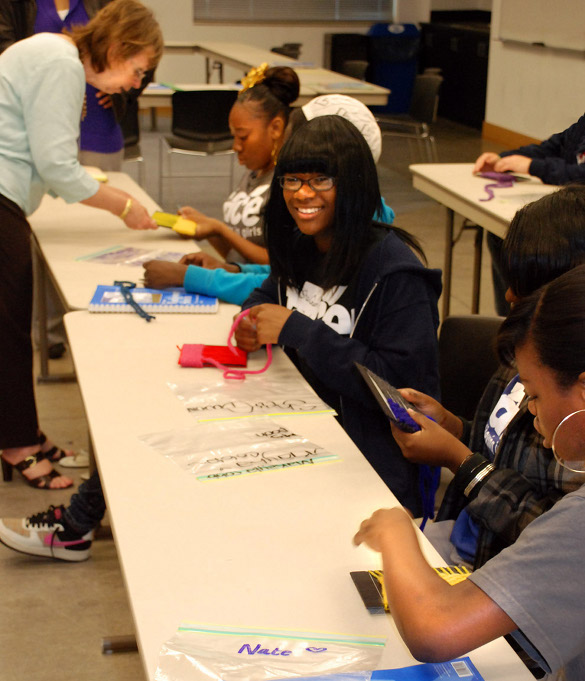
And finally, education. Through the arts, children learn to solve problems creatively, finish what they start, evaluate the quality of their work, discuss complex concepts with others, and then enjoy visible, public recognition for good work and personal growth. Due to the recession, the arts have been cut from all district elementary schools this year. Gadsden Arts is working with area theatrical and music groups to provide art programs in the schools this year, in addition to existing programs and services for school children. The arts are critical to education – they are also therapeutic, and fun!


 Culture Builds Florida