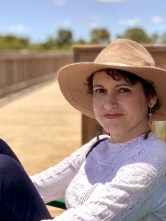
 Each year, the regional arts agency South Arts awards a State Fellowship to an artist in each of its nine member states: Alabama, Florida, Georgia, Kentucky, Louisiana, Mississippi, North Carolina, South Carolina and Tennessee. The Southern Prize is awarded to one of these nine artists and South Arts also awards one finalist. This year’s finalist is Florida’s Fellow, Amy Gross, a mixed media artist living in Delray Beach. We asked Amy to tell us a bit about her journey and why Culture Builds Florida.
Amy Gross:
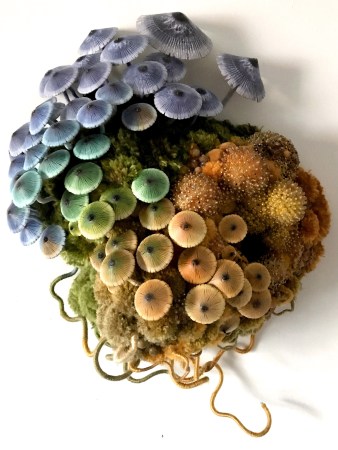
Iris Mushroom Biotope by Amy Gross
One thing I have discovered is that a path only seems to make sense when you turn around and look back at it. As a teenager, one of my favorite songs featured the line “How did I get here?” suggesting a randomness that was very appealing at the time. But now, when I ask myself that kind of question, much of it can be answered by this one fact: I moved to the state of Florida.
I was born and grew up on Long Island, New York, halfway between the ocean and New York City. My father was a painter and a textile designer, my Mom a lover of books and music. I never had to argue a case for being an artist, and because my dad was raising a family of four as an art director, it was proven fact that you could make a life for yourself as a creative person. I majored in Fine Art at Cooper Union in Manhattan and studied everything I could get my hands on there: graphic design and painting, printmaking, calligraphy, sculpture. I graduated into the terrifying New York City art world of the late eighties and early nineties, and being a shy person, wilted immediately. And realized that surviving was going to be for me like it was for everyone else on Earth, I set about finding something I could do well and make a living from.
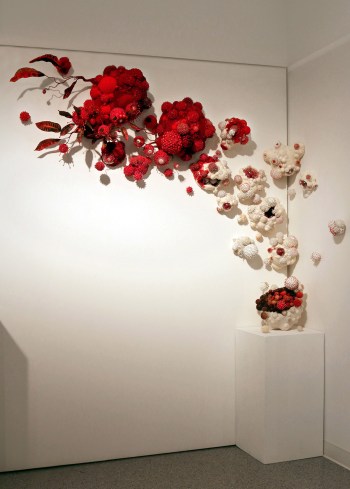
Spora Mutatus by Amy Gross
So I became a textile designer like my Dad, expanding into surface design as time passed: children’s bedding, baby blankets, slumber bags and rugs, plush toys, dolls, magic show stages, beach towels. I freelanced for over twenty years, working with Sesame Street and Disney and Warner Brothers, Elmo and Winnie the Pooh and Bugs Bunny. I painted at night for a long time, but the ideas I had about what kind of artist I was morphed and changed. I would only answer to the title “designer,” which is unfair to every graphic artist out there, and which only applied to my own confusion of identity. I had a lot of unformed assumptions about what kind of personality made interesting art, thinking I had some of the elements but not enough to justify sharing my work with anyone outside my family. I kept sketchbooks and journals, but they were for me alone, and I felt almost liberated by the loss of the labels I had stuck onto everything creative when I first left art school. I figured that I had chosen my path.
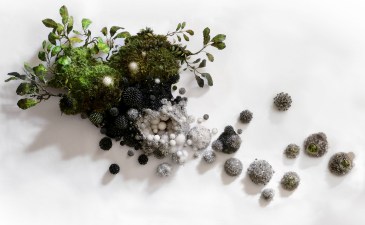
Silver Bees, (h.miserablis), Adapting by Amy Gross
Then I moved to Florida. My extended family had lived here since the seventies, so I assumed that it would be known territory. I was wrong. In the almost twenty years I have lived here, Delray Beach and South Florida have been so multilayered I’m still discovering it. In New York I was always on the periphery of the art community, but once here I was almost immediately welcomed into the creative world. Museums held talks where the artists were right there in front of me, answering my questions. Studios were opened up, galleries had exhibits by people that might be too much of a risk in more expensive places.
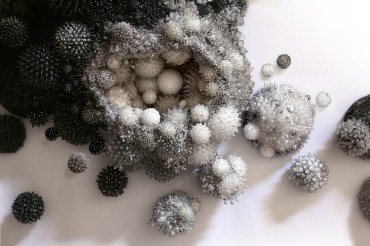
Silver Bees, (h.miserablis), Adapting, detail, by Amy Gross
Within months I was standing on the sidewalk in Lake Worth next to my favorite artist, a person I was too in awe of to speak to. But imagine – I could have, if I had worked up the nerve. And I became friends with working artists from places all over the world, interesting people bringing experiences to their work that I had known little about. There was an openness, a generosity that I wasn’t used to, a camaraderie that suggested that competition was not the only motivation that made you want to work hard.
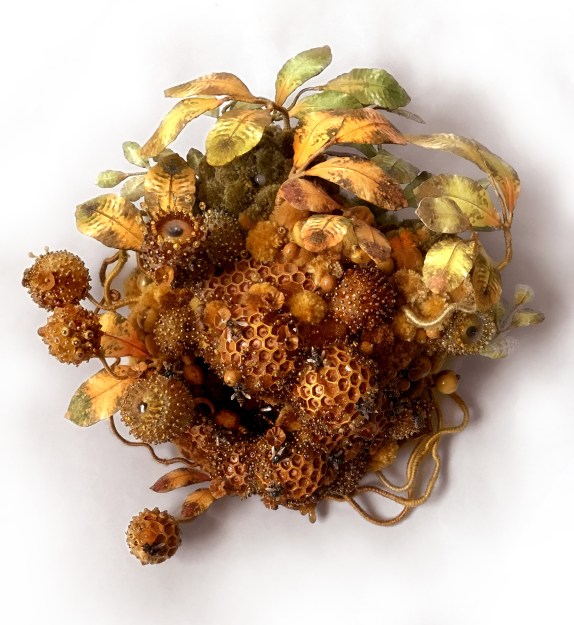
Brood Comb Biotope by Amy Gross
I became excited about the prospect of being an artist again. The landscape here fascinated me, the constant and accelerated growth, the tension between the natural and the man-made, the battle between the native plants and the invasive foliage, the adaption and symbiosis that weaves itself into every story here. Plants tangle and overwhelm any structure that isn’t constantly managed, rainforests thrive in between gated subdivisions. Water turns solid from duckweed, strangler figs squeeze palms, reptiles sleep in your drain pipes. I vitally needed to describe these collages of elements, to combine them with my own life experiences and mix the things I could see with what I could not. I started making my embroidered canvases and later, fiber sculptures to describe my fascination with this strange environment and turn this awe into metaphors that tell a story of a human’s experience within it.
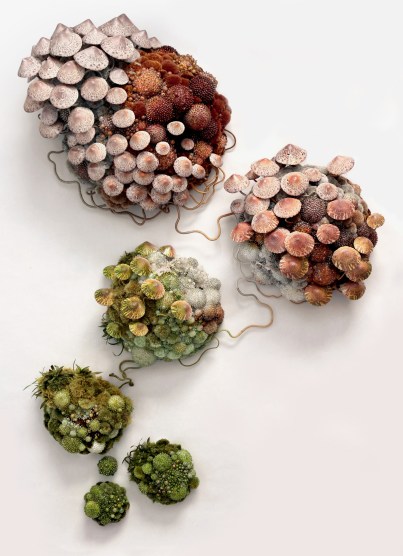
Mycorrhiza by Amy Gross
Florida’s creative inclusiveness was a very important factor in my finding a place for what I do in the outside world. This is why Culture Builds Florida. My mentors in Palm Beach County encouraged me to go beyond my earliest ambitions, to push my boundaries. And my most recent experience, being chosen as the 2019 Fellow for the State of Florida for the South Arts Southern Prize, was an affirmation I did not imagine or expect. My process is primarily a solitary and internal one; I make things now from an inner conviction and I still look up and am surprised that what I do has a life outside of my studio. So when I found myself in a room celebrating art making with South Arts, the Florida Division of Cultural Affairs and the myriad sponsors, I was floored. I was surrounded by people who are deeply invested in the arts and the lives of art makers, who understand its value and what it can do for the community. Their gift of support and its translation into precious time to work made me even more grateful that I get to do what I love to do. It took me a while to get to the place where I could meet them all, and their affirming “Yes!” will stay with me wherever my work goes next.
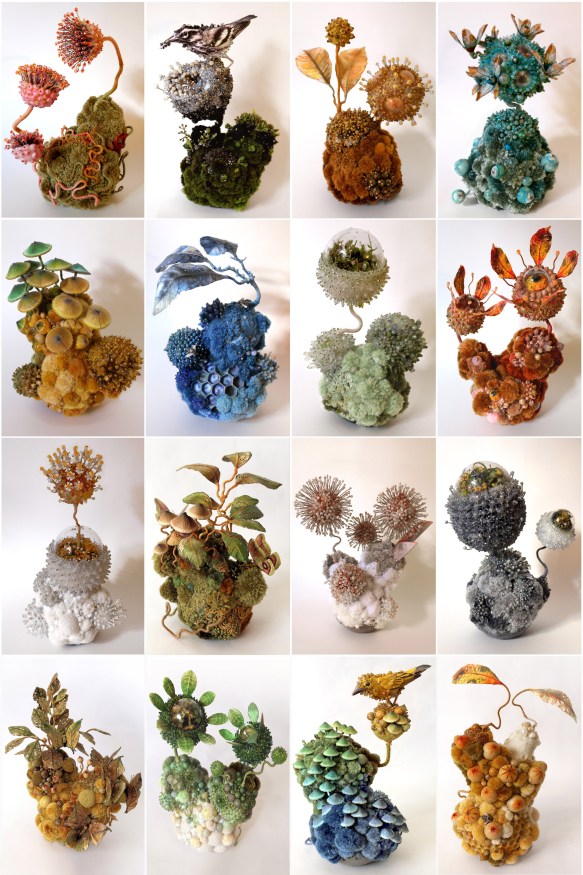
Collection by Amy Gross

 At 58 years old, the
 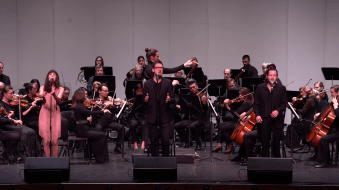 Beginning in 2016, the symphony began experimenting with crossover concerts that blended classical music with other genres; indie rock, electronica, jazz and Latin. As artistic trust continued to develop between the symphony and its audiences and our community expressed more “classical curiosity,” the symphony became more artistically confident in its ability to expand its horizons and establish a new concert series called Brave New Music. Not exactly Pops, though featuring popular music – and not exactly classical, though always featuring classical repertoire, this series is designed to encourage dedicated, knowledgeable classical music enthusiasts to examine familiar works through a new lens and to remove classical music’s historic intimidation factor for audiences that are not ordinary classical music consumers.
 Ultimately, this is a way to demonstrate the relevance of classical music to new patrons of the arts and to lead classical audiophiles on a musical journey that begins in familiar territory for them. In addition to the music these audiences experience, these concerts provide educational opportunities through guest artist and conductor Q&A sessions, to meet our orchestral musicians to gain their perspective on these concerts, pre-concert lectures and social gatherings. The best, most beautiful part is that it brings both of those audiences together; spanning generations, socioeconomic and cultural strata, forging relationships among them. It has been said that music is the greatest social network. That’s what we for envision Brave New Music. The Southwest Florida Symphony is honored that Brave New Music can serve as the cornerstone of that network in our community.
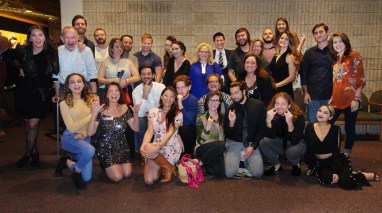 Brave New Music initiatives have included jazz arrangements of Mussorgsky’s Pictures at an Exhibition created and performed by Israeli jazz pianist, Yaron Gottfried and Bach – Jazz fusion arrangements created and performed by pianist Matt Herskowitz. Upcoming Brave New Music programs include an evening of Beethoven v. Coldplay, featuring original electronica – classical compositions and visionary arrangements by Maestro Steve Hackman. This concert culminates the Southwest Florida Symphony’s 58th season with a fusion of Beethoven’s Symphony No. 3 and tunes by British pop band, Coldplay, on Saturday, May 4th. The orchestra commences its 59th season with a screening of the classic thriller film, Psycho, with live orchestral accompaniment on Friday, October 25th and Saturday, October 26th, then closes its 59th season with a celebratory program of tolerance and joy – Symphabulous! A Symphonic Drag Show features nationally known drag performer Chris Weaver. We have every expectation that this innovative programing will enlighten and bring audiences together and will inspire other orchestras to do the same.
 Kimberly: The children are definitely the best part of the job — just witnessing how the arts can transform a child’s life. We see time and time again that there’s something about the arts to reach children in ways nothing else can. The arts stay with them for life and it is really a privilege to witness.
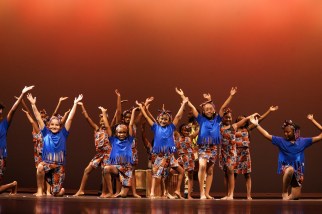 Right now, it is especially important to make sure everyone understands how vital the arts are when it comes to issues of mental health. It’s so tough to be growing up today and I really feel that it is more important than ever that children be able to utilize the arts as a means of self-expression. I think anyone who watched the powerful performance by the Marjory Stoneman Douglas theatre students at last year’s Tony Awards is aware of just how important the arts can be when facing complex challenges.
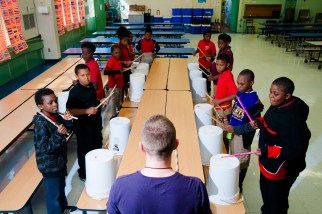 The first is that we teach children, so we provide arts learning to children who need it the most. That will always be the heart and soul of what we do. The Cathedral Arts Project also provides professional development for local artists, educators, and school administrators. The third bucket is advocacy. We spend a lot of energy on advocacy, working to broaden the relevance of arts education in the minds of families, policymakers, and business leaders. This goes hand-in-hand with what I said earlier, that caring about public education means caring about arts education.
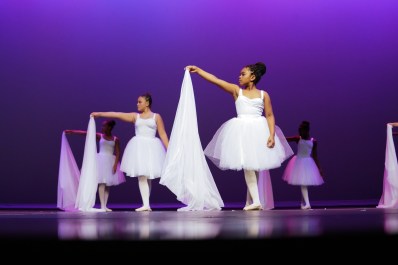 Kimberly: It goes back to our mission statement. I truly believe that we are enriching the quality of life here for generations to come. The latter part of that statement is easy for us to sometimes gloss over, but the transformative effect that our work is having on a child’s life will have ripple effects for generations to come, in countless ways.
 Kimberly: I think that culture really is what sets us apart as a state. Culture draws visitors to come and have experiences that they can’t have anywhere else. Culture is what draws companies to relocate their communities and it’s why people want to live here. I think it is culture that joins all of us to work here together, regardless of how different we might be. I believe that arts and culture provide opportunities for each of us to feel like we belong and to understand each other and really build one another up.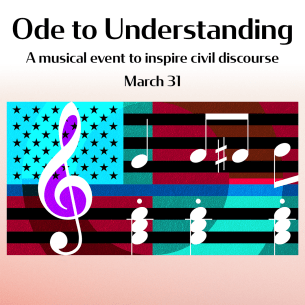
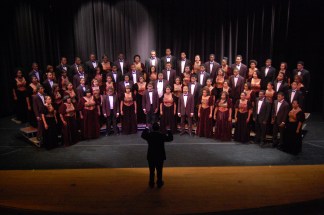 Presented by Leon County Government, the “Ode to Understanding” project brings together the forces of the Tallahassee Symphony Orchestra, The Village Square, the Florida A&M Concert Choir, and the Morehouse College Glee Club to create a profound community event that will open hearts and inspire civil discourse.
 The concert’s second half will present Beethoven’s beloved Ninth Symphony, a fitting expression of humanity, brotherhood, bonding and equality. Beethoven’s Ninth is a life-affirming masterpiece whose joyful message has inspired millions of people worldwide since its premiere in 1824. Through partnerships with local government, other arts organizations, and community members, the event underscores the importance of community to transcend division.
 Division of Cultural Affairs (DCA): Tell us a little bit about yourself.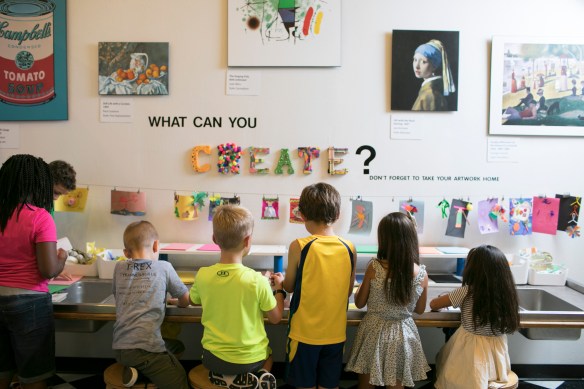
 Founded in 1986 as the result of a movement to create a children’s museum by the Junior League of St. Petersburg, Great Explorations maintains a significant presence in the Tampa Bay area and nationwide. A member of the Association of Science-Technology Centers and the Association of Children’s Museums, Great Explorations was the first mid-sized children’s museum to receive accreditation from the American Alliance of Museums. It is the only accredited children’s museum in Tampa Bay and one of fewer than a hundred accredited children’s museums nationwide. Great Explorations is committed to upholding museum standards of excellence through its work with children and families in the St. Petersburg community and beyond.
 Since its founding, Great Explorations has remained steadfastly committed to education through a variety of avenues both inside the museum and out in the community. We provide S.T.E.A.M. based educational exhibits and programs daily on the museum floor for visitors and school field trip groups. Our Museum InReach field trips provide elementary-aged children with opportunities for unrestricted self-guided “purposeful play,” providing a unique multi-sensory approach to the traditional classroom subjects taught in school. As funding permits, Title 1 schools and nonprofits are granted free field trips and bus vouchers to ensure students access to our museum; and for many of these students, it is their first visit to a museum in their lifetime.
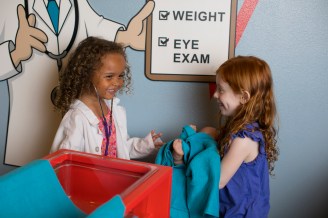 Our educational programming for school-aged children extends to summer camp opportunities as well as after school programming that not only provides homework assistance but extends learning opportunities beyond school hours in our nurturing, enriching and fun environment. Our community outreaches also allow us to take our educational programs mobile, bringing hands-on interactive S.T.E.A.M. activities directly into the most at-risk communities, providing access to high-quality, fun, educational experiences to those that are unable to access these programs at the museum due to monetary or transportation barriers.
 After consulting with the Center for Autism and Related Disabilities, Great Explorations launched “Great Connections” in January 2014. The goal of the program was to provide a less crowded and stimulating time for families of children with special needs to explore the museum. We provide extra staff for increased safety and supervision and a “cool down room” for children who need a break.
 We are thankful to be one of many organizations that have begun to offer sensory-friendly experiences. It has always been our goal to represent a more inclusive environment that might encourage families to feel more comfortable participating in other museum programs like camps, Parents’ Night Out, and special events, opening the door to a more inclusive experience for all families at all times. We are thrilled to say that we have witnessed this to be the case since the program’s inception. Many families continue exploring the museum even after we open to the general public, and many speech and occupational therapists use our “child-sized world” as a safe place for therapy during standard operating hours.
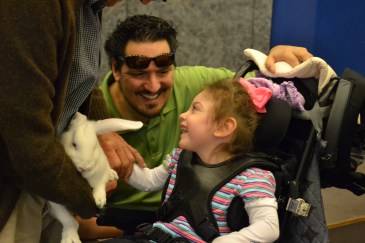 In the five years since its launch, Great Connections has been a huge benefit to our community because it connects people. It connects family members to each other through interactive engagement fostered by play, it connects families to other families facing similar challenges, and it connects families to services and support from local organizations. We hope to continue to adapt to the needs of the community and to represent the holistic benefits of providing inclusive environments that celebrate the diversity of our community’s children.
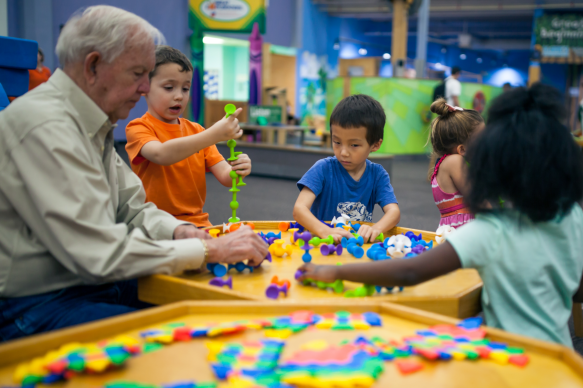 Great Explorations is also committed to engaging differently abled adults. In 2017, the museum was approached by three women, now affectionately known as the “Brain Dames”, about being involved in an ongoing program that would provide experiences that could benefit adults with memory loss. In partnership with AARP and the “Brain Dames”, as well Great Ex’s Director of Community Initiatives, Lael Arango, we launched “Memory Monday” in 2018.
 Memory Monday is unique in that it goes beyond providing a social experience or a “keep Grandma occupied” experience by presenting high-quality activities that enrich and engage participants. For example, the
 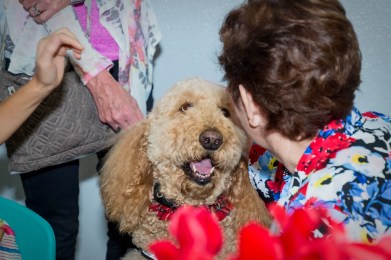 Memory Monday benefits the community by reminding people with memory challenges that their brains are still able to learn and that they are still able to enjoy new experiences. We have also created numerous partnerships with organizations that aren’t necessarily on the front lines of serving families with memory loss, bringing diverse organizations together to serve a growing population in a unique and creative way.
 In 2012, we were “reborn” as Arts Alive Nassau and started offering three programs: a dulcimer class, an elementary school band, and a visual art class. Originally, we worked with three elementary schools and provided the classes after school. Over the past six years, we have grown to providing 20 after school classes and two classes with the ESE program during the school day. We are now a presence in each of the nine elementary schools in the county. The schools don’t charge us anything for the use of the space and we are able to offer our instruction free of charge, in exchange. It’s a wonderful relationship because finding space and getting kids on location is often a problem. Through our partnership, the instruction happens right where they are and it has worked very well.
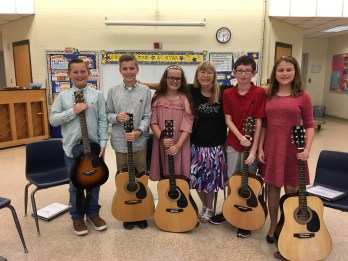 Jane: We offer music lessons, violin, ukulele, band… one of the elementary schools has both a brass ensemble and a drumline. We still offer our dulcimer classes as well as visual arts classes in painting, drawing, and puppetry. We also have a great partnership with a theater company in South Carolina, the Baillie Players, that has helped us produce musicals at Callahan Elementary School for the past five years. This year they are doing “Snow White”. The teacher at Callahan has all the music, scripts, choreography and casts the show and then our partner company will come down to coach the kids and bring the sets, costumes, and props. There are usually 40-50 students involved and it’s such a wonderful thing for the children. In Callahan, which has a population of around 1,300, the community members and families come out in droves to see the children perform– even the mayor usually makes an appearance! It’s a great event not only for the students involved but for the community, as well.
 Jane: Each year, close to 600 students are involved in our activities. Currently, we have 255 students in our classroom-based programs. We’d love to be able to reach more students but are limited, like many organizations, by our budget.
 It’s definitely seeing the children’s faces. When they get excited and they’ve just learned how to play something, they are so proud of themselves. I think that arts education presents the opportunity for children to find out who they are inside because to me, that’s what the arts give us. They allow children the opportunity to find out who they are through creativity. To see the awakening that takes place in every student and the self assurance and self esteem that comes from learning that they can perform and create in front of people is just amazing. I think that the arts are wonderful because you can have so much fun while you’re learning.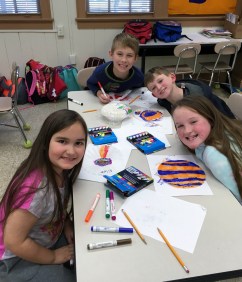
 Culture Builds Florida