Culture In Florida: November

Culture In Florida

By Bob Evans & Tim Storhoff

With so much going on across the state of Florida in the world of arts and culture, we have decided to add a monthly feature to the Culture Builds Florida blog. By looking back at some of the cultural events and news stories that occurred each month, we hope that Culture In Florida will help show our state’s wonderful diversity, spotlight the organizations and artists that contribute so much to our communities, and stress the comprehensive benefits of arts and culture to Florida’s economy and quality of life.

Between political elections and the Thanksgiving holiday, November has been a busy month for Floridians. In a proclamation, President Barack Obama announced that November would be National Native American Heritage Month, and November 23 would be Native American Heritage Day. Various events featuring Native American art have been held across the state as a result. Additionally, First Lady Michelle Obama designated two Florida communities as Preserve America Communities: Bonita Springs and Flagler County. This designation will help bring an increased focus to these communities and draw visitors to their events. Over in Collier County, there were over 100 events as part of their “Celebrate the Arts Month,” which was designed to promote the area’s arts community and involve more residents and visitors in cultural activities.

The city of Bradenton has also been busy this month. Bradenton’s Riverwalk is working on rebranding itself as one of the “top riverfront communities in the nation in order to boost tourism.” With events like ArtSlam and the upcoming inaugural Bradenton Blues Festival, it’s well on its way. Headlining for the Bradenton Blues Festival is Grammy Award nominee Ruthie Foster, as well as Louisiana Music Hall of Fame inductee Kenny Neal and Southern Hospitality, led by Bradenton Beach resident Damon Fowler.
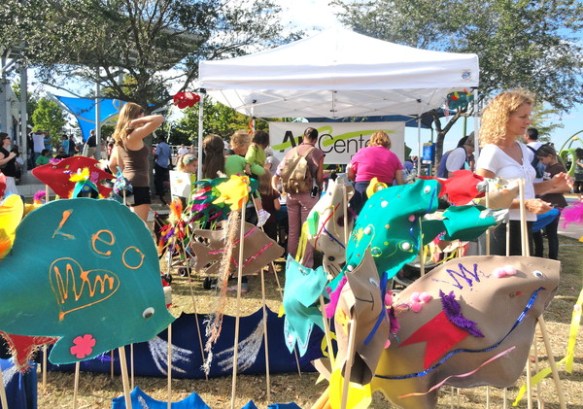
Visitors enjoying Bradenton's third annual ArtSlam this month. Photo courtesy of http://bradenton.patch.com

Visitors enjoying Bradenton’s third annual ArtSlam this month. Photo courtesy of http://bradenton.patch.com

A number of events were held to celebrate Arts and Health Month. From The Society for the Arts in Healthcare website, “Arts & Health Month is a time to host awareness-raising events and heighten media attention for [the] field.” Shands Hospital in Gainesville was host to three events to raise awareness and promote the healing process. The Musicians in Residence duo of Danielle DeCosmo and Cathy DeWitt have been playing music for patients, and Writer-in-Residence Barbara Esrig helped create oral histories with patients, families, and staff. A therapeutic paper-making workshop was also held, taking personally significant pieces of fabric and turning them into works of art.

November has also been a month of beginnings and openings. Artists in Hernando have a new gallery in which to exhibit their work thanks to a generous offer by newly-elected County Commissioner Nick Nicholson. Key West is in the middle of its inaugural Key West Film Festival, screening at the historic San Carlos Institute and the Tropic Cinema until Sunday, December 2nd. Over in Santa Rosa County, the Imogene Theater officially reopened, featuring an original play by local playwright Shay Moran.

Students in Florida have so many opportunities to experience and participate in arts and cultural activities year round, and this month was no different. Janie Howard Wilson Elementary students hosted artist Ruby Williams, who spoke about being successful, as well as her life as an artist. Thanks to a generous donation by Gibson Law Firm in Lake Wales and Miss Ruby herself, the students received two paintings for the school’s art collection. Seminole State College of Florida’s interior design students had the opportunity to decorate the Leu House Museum based on important figures in Central Florida history, such as Orlando Mayor Buddy Dyer, philanthropist Harriett Lake and former Florida Lt. Governor Toni Jennings. The display will run through December 31st. Palm Beach County high school students have the chance to win cash awards, thanks to a banned book essay contest hosted by the West Palm Beach Library Foundation. In conjunction with its upcoming exhibition, “Banned and Burned: Literary Censorship and the Loss of Freedom,” students will discuss in their essays how a banned book has influenced them, and why they feel that it should be protected. Essays must be 500-1,000 words and should be submitted by December 31st.
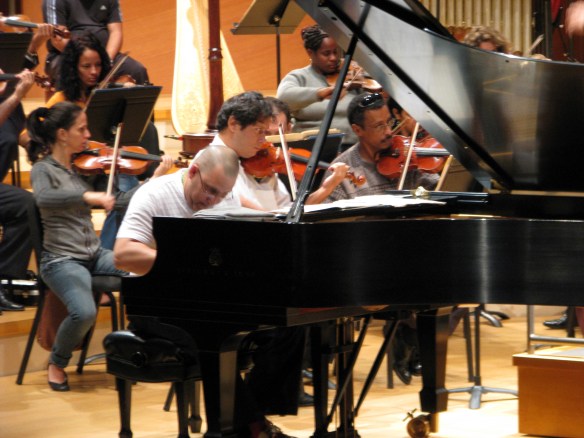
Ignacio “Nachito” Herrera rehearsing with the National Symphony Orchestra of Cuba. Photo provided by Tim Storhoff.

Ignacio “Nachito” Herrera rehearsing with the National Symphony Orchestra of Cuba. Photo provided by Tim Storhoff.

There were many events across the state of Florida that showcased the state’s diversity and functioned as cultural exchanges with other nations. One major newsworthy occurrence was the National Symphony Orchestra of Cuba concluding their first tour of the United States with multiple performances in Florida. The orchestra visited Daytona Beach, St. Augustine, Naples, St. Petersburg, Fort Pierce, and West Palm Beach during the month of November. Tim Storhoff, an Arts Consultant with the Florida Division of Cultural Affairs, attended multiple performances on the orchestra’s tour, and you can listen to his talk from the Kravis Center about their musical selections at the Arts Radio Network. HistoryMiami is featuring a somewhat related exhibition about the guayabera shirt’s evolution through Cuba, Mexico and the United States. “The Guayabera: A Shirt’s Story” runs through January 13. The annual Accidental Music Festival in Orlando also featured an exchange with the Symphonic Orchestra of Guanajuato, Mexico.

Upcoming in December:
Art Basel Miami Beach and its many satellite events run from December 6th through the 9th, featuring local young artists like Juan Fernando “Buddah Funk” Gomez. There will also be holiday music events going on throughout the month across the state, and as we approach New Years be on the lookout for Viva Florida 500 events, like this Wall of Florida History exhibit in Leesburg and the newly rechristened Gran Naranja kicking off 2013 in Miami.

Culture Builds Florida Has a New Ally

When George Byfield, President of Lakeland-based Comet Group Inc., attended the launch of Culture Builds Florida in Tampa 2011, he came away inspired to create a new type of online publication.

Byfield saw – instantly – an incredible synergy in the mission of Culture Builds Florida with that of the new niche publication he envisioned.

“I came away inspired to create an exciting online magazine that would not be limited by the traditional print publishing model of City, County or Region,” Byfield says. “I envisioned a new type of publication about Florida…connecting people in the arts and culture, travel and leisure, farm and ranch, and nature/wildlife arenas, along with commerce and conservation. We’re calling it Art and Gator. And our goal is to position Florida as the premier arts and outdoor-lifestyle destination for discerning travelers and residents alike.”

Even while still at the launch ceremony, Byfield was already discussing with officials the ways in which his new publication could help Culture Builds Florida meet its objectives.

“Culture Builds Florida was speaking to the exact same audience that we’re aiming for,” Byfield says, “an upscale, influential audience very much involved in both the arts and nature. An audience that realizes there’s so much more to our state than just the great theme parks…and that vibrant cultural and natural amenities play a vital role in our state’s economic growth.”

The arts are big business for Florida. Our state’s diverse cultural offerings attract travelers by the millions to art shows, festivals, special events, and certain types of businesses – energizing the Florida economy for all of us.

Toward that end, Art & Gator (www.artandgator.com) is already a VISIT FLORIDA small-business partner, sharing content and looking into creative ways of enticing travelers to spend a few extra days here.

“More than 65 percent of Florida’s visitors participate in either cultural or nature-based activities while they’re in the Sunshine State,” says Chris Thompson, President and CEO of Visit Florida. “This fact establishes Art & Gator as a key travel planning resource to our visitors. By raising the awareness of these vital market segments, Art & Gator and our partners will serve as a catalyst for economic growth and environmental sustainability.”

Art & Gator is an upscale lifestyle publication, geared toward those who appreciate our state’s cultural institutions and artists, its natural wonders, and the movers and shakers who propel its cultural, sustainable and economic engines.

Initially conceived during the launch of the Culture Builds Florida campaign, the online publication Art & Gator will promote Florida’s diverse cultural offerings to travelers and residents alike. Image used by permission of Art & Gator.

“Our big theme parks are great,” Byfield says, “and they bring people here from all over the world. But we’d like to show discerning travelers and residents that there’s a lot more to our state, as well. And to show them the part that interesting Floridians are playing in enhancing our state’s economic, social, and artistic climates.”

Toward that end, Byfield has assembled a talented core of writers, as well as experienced salespeople who will sell both ad space and special memberships.

Art & Gator is offering a wonderful opportunity for Florida’s cultural organizations to get their messages out…many of which are now overlooked by travelers from outside the state (and sometimes, from inside the state). The site will serve as a dynamic platform to market these organizations. And there are a variety of options to help these organizations publicize themselves to a niche group of travelers…who are looking for exactly what they’re offering.

“We want to be an effective resource for Florida cultural institutions,” Byfield says, “a genuine go-to source for Florida’s authentic cultural and natural travel experiences. And we want to bring them more business from both residents and travelers.”

Byfield has a distinguished background in publishing and tourism marketing, and brings a diverse and integrated approach to the direction of Art & Gator online magazine.

“I understand the challenges facing business and government right now, when it comes to contributing to the arts,” George Byfield says. “My own father refused to support my decision to study art. Where other trades are recognized and valued as “industry,” culture is often viewed as a hobby or a part-time vocation. It’s not necessarily driven by a bottom line, but by passionate people with a vision.

“However,” Byfield continues, “corporations have expanded, people have bought second homes, and families have changed lifestyles because of inspired journeys to cultural or natural destinations. Culture does more than just build Florida – it can sustain Florida’s Quality of Life for generations to come.”

The Division of Cultural Affairs is excited to partner with Art & Gator, which originated with the Culture Builds Florida launch and reinforces our campaign to develop awareness for Florida’s cultural community and the contributions arts and culture make to business and quality of life in our state. We encourage you to check out the publication, inform them about cultural events in your area, follow them on Twitter, and watch for an upcoming interview with Division Director Sandy Shaughnessy about Culture Builds Florida at artandgator.com.

Spotlight on an Arts and Humanities Halloween

By Tim Storhoff

As National Arts and Humanities Month comes to a close over the next week, we strongly encourage you to take some time out to appreciate the arts in your community. While you’re at it, you might as well enjoy some spooky Halloween fun! Today we are spotlighting a handful of events hosted by some Florida Division of Cultural Affairs grantees that will allow you to get into the Halloween spirit.

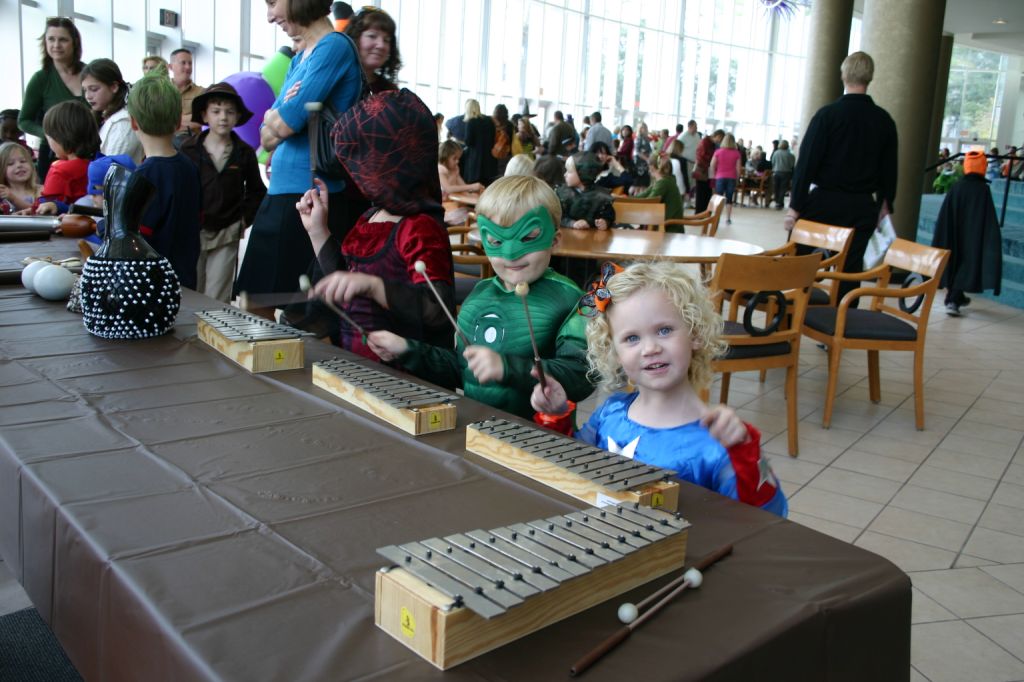
Superheroes enjoying the music instrument zoo at the 2011 Symphonic Spooktacular. Photo courtesy/used by permission of Jacksonville Symphony Orchestra.

If you’re in the Jacksonville area, the Jacksonville Symphony is having its Symphonic Spooktacular on Sunday, October 28. Pre-concert events including games and an instrument zoo start at 2:00 p.m., and the concert begins at 3:00. Kids are encouraged to wear their costumes for what should be a frighteningly fun musical afternoon. Paul Witkowski of the Symphony described the event saying, “Kids and families really love going to the Symphony for this annual event. It’s nearly a full house every year, celebrating Halloween, celebrating their creativity (with the creativity of their parents, of course) and kicking off the EverBank Family series.”

Under the direction of conductor Scott Gregg, the concert will include music from Harry PotterWilliam Tell Overture, Funeral March of a Marionette,andcomposer Gregory Smith’s A Major-minor Mystery. Dancers from Douglas Anderson School of the Arts will be featured in “Duel of the Fates” from Star Wars: The Phantom Menace. Make sure to bring the kids in their favorite costumes to join the ghouls and goblins of the orchestra and arrive early for the pre-concert activities. For more information and to purchase tickets, visit http://www.jaxsymphony.org.

Learning more about the orchestra at the 2011 Symphonic Spooktacular. Photo courtesy/used by permission of the Jacksonville Symphony Orchestra.

Theatre fans in the Tampa area looking for a Devilishly good time should check out The Screwtape Letters presented by the Fellowship for the Performing Arts at the Straz Center on Saturday, October 27 and Sunday, October 28. This touring theatrical adaptation of the C.S. Lewis novel has been widely praised, and its demon-rich plot will fit well into a Halloween weekend. Wilborn Hampton of The New York Times called the performance “a humorous and lively stage adaptation…the Devil has rarely been given his due more perceptively and eruditely…clever and satirical.” Terry Teachout of The Wall Street Journal said it was “One Hell of a good show!”

The play is set in an eerily stylish office in hell and follows the clever scheming of Satan’s chief psychiatrist, Screwtape, as he entices a human ‘patient’ toward damnation. The Screwtape Letters is still one of Lewis’s most popular and enduring works along with The Chronicles of Narnia, and it includes many of the theological themes and insights into human nature that his writing was known for. For more information and to purchase tickets, go to http://www.screwtapeonstage.com or http://www.strazcenter.org.

Max McLean stars as “Screwtape” in THE SCREWTAPE LETTERS. Tickets range from $29 – $89. Student tickets are available for $25 each; limit two per customer, at the Box Office. Valid ID must be presented. All ticket prices are subject to facility fees. To purchase tickets or for more information, visit http://www.ScrewtapeonStage.com. Photo courtesy/used by permission of the Fellowship for the Performing Arts.

Another fun Halloween-appropriate spectacle will be the Rocky Horror Show at the Delray Center for the Arts. If you have never experienced Rocky Horror live, it is more than a musical. It is an experience that you will not forget. This performance is presented by Entr’ Acte Theatrix, and they will have audience participation ‘survival kits’ available for purchase to those who want them. This show is an outrageous assemblage of the most stereotypical science fiction movies, Marvel comics, Frankie Avalon/Annette Funicello outings, rock ‘n’ roll of every vintage, and not for kids. The play (upon which the classic film The Rocky Horror Picture Show is based) has grown from an experimental production originally produced in a small London theatre in June 1973, to a cult phenomenon with fans world-wide.

Rocky Horror will be in the Crest Theatre at the Delray Center for the Arts from October 25 to November 4. So if you’re in the area, you should have a fun Arts and Humanities Halloween with Dr. Frank N. Furter doing the Time Warp again. Purchase tickets at http://delraycenterforthearts.org.

You should also check out the museums, galleries, and zoos in your area for some fun Halloween activities. Here are a few of those events organized by Division grantees:

  • Boo at the Zoo at the Brevard Zoo, Friday-Sunday, October 26-28 from 5:30 to 9:30 p.m. The Boo at the Zoo features a variety of activities for the whole family to enjoy including live stage acts, a special play area, a costume contest, Boo Choo train rides, a witch’s lair, a haunted trail, and trick-or-treating.
  • Halloween Nights at the Museum at the South Florida Science Museum, Friday October 26 from 6 to 10 p.m. This fun and educational event includes a costume contest, trick or treating, pumpkin decorating (and smashing!), and even cow eyeball dissection. For more information contact events@sfsm.org.
  • The Tallahassee Museum’s Halloween Howl, Friday and Saturday, October 26 and 27 from 6:00 to 10:00 p.m. Come out for a howling good time, which includes a haunted trail (and a not-so-spooky trail for younger kids), the haunted farm, carnival games, a costume contest, and live music.

These are only a few of the events going on over the next week, but whatever you do we hope that you will take out some time to appreciate the arts in your community during this last week of National Arts and Humanities Month. We also want to wish everyone a safe and fun Halloween!

How will you have an Arts and Humanities Halloween? Suggest additional events and opportunities in the comments below or as comments for this post on our Facebook page.

Art Talk: Division Intern Bob Evans

by Tim Storhoff

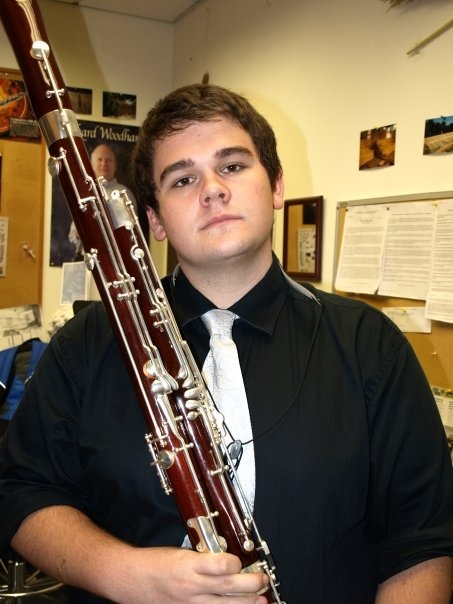
Bob Evans joined the Division of Cultural Affairs team at the end of August. Originally from Coxsackie, New York, Bob studied bassoon performance and music education at the University of South Carolina. He came to Florida State University in 2011 to pursue a Master’s degree in Arts Administration. As the Division intern through the spring, Bob will have the opportunity to participate in many of our different programs. He has already been working with Poetry Out Loud, the Florida Artists Hall of Fame, and some of our grant programs. I recently spoke with Bob about his background in the arts and the importance of the arts for the state of Florida.

Bob Evans with his bassoon. Photo submitted and used by permission of Bob Evans.

DCA: What are some of the earliest arts experiences you can remember?
Bob: I don’t remember many specific arts experiences in my childhood. I feel like they were so ingrained into everyday life for me that maybe I just took them for granted. My father is a painter who idolizes Dalí, so I recall many of his prints in our house, and everyone in my family sings well, even if it’s just with the radio.

In terms of a significant arts experience, I don’t recall anything sticking out until I was about 14. I’d been playing bassoon for a year and made it into a local youth orchestra. I was pretty nervous before that first rehearsal because I had never played in an ensemble with strings before, so I wasn’t sure what it would be like. We started with Ravel’s orchestration of Mussorgsky’s “Great Gate of Kiev” from Pictures at an Exhibition. I knew in that moment that I’d never be the same. That feeling of frisson when I heard those opening bars was what propelled me into a musical career. Of course, it was immediately dampened by my inability to read tenor clef and my complete lack of technical facility, but, thankfully, positive reinforcement trumps negative reinforcement.

DCA: You’re actively pursuing a degree in Arts Administration. What made you decide on a career in the arts?
Bob: Why does anyone decide on a career in the arts? The arts are important. They’re a basic human need essential for survival just as much as food, water, and shelter. Look at the creation of visual art and music in concentration camps during the Holocaust where, while fighting for their lives, people still produced powerful, meaningful art. I often think about that whenever I feel like I’m losing focus.

DCA: The Division of Cultural Affairs believes in the motto “Culture Builds Florida.” What do you think when you hear that phrase? Why do you believe arts and culture are important to our state?
Bob: I love hearing Culture Builds Florida! I wish we could adopt a “Culture Builds America” slogan. Imagine THAT on some bumper stickers! Culture Builds Florida says so much about what the arts can mean for a willing society. I know that in Florida, so much revenue comes from the arts: a single dollar’s investment can mean a return of 5 dollars! It’s amazing, but the trick is getting people to realize it. That’s another reason that I chose this career path. The arts mean business, not just here in Florida, but around the nation. I want to work to make sure that’s the case for a long time.

Spotlight on the Florida Artists Hall of Fame nominees, Part III

By Tim Storhoff and Ken Crawford

Today we are finishing our look at the nominees for the 2013 Florida Artists Hall of Fame. Earlier this week we looked at the 2013 musical nominees and visual arts nominees. Established by the Florida Legislature in 1986, the Florida Artists Hall of Fame recognizes persons, living or deceased, who have made significant contributions to the arts in Florida either as performing or practicing artists in their disciplines. These individuals contribute to Florida’s national or international reputation as a state with a sustained commitment to the development of cultural excellence. The Florida Artists Hall of Fame currently consists of over 30 inductees, including musician and performer Ray Charles, actor and director Burt Reynolds, writers Zora Neale Hurston, Tennessee Williams and Ernest Hemingway, filmmaker Victor Nunez, and visual artists Duane Hanson, Robert Rauschenberg and James Rosenquist. Read more about the program, nominating process, and view the full list of inductees at the Division of Cultural Affairs Florida Artists Hall of Fame page.

Here are the final six nominees for this year:

Gloria Jahoda: Writer – Tallahassee (1927-1980)
The author of novels and non-fiction works set in the early 20th Century in North Florida, including The River of The Golden Ibis, The Road to Samarkand, and Florida: A Bicentennial History,  was, according to her nominator Robert Holladay,“…a gifted writer, reporter and trained anthropologist with the soul of a poet.” She was often referred to as the Marjorie Stoneman Douglas of North Florida, since her work sought to celebrate and protect the wildlife and natural environment of this region. Her stories of the people of the Big Bend capture a moment in the natural history of the Gulf Coast.  Senator Bob Graham heralded her work in a state proclamation. When she died, the Florida Muscogee Creek Nation scattered her ashes in a ceremony normally reserved for Native Americans. Ms. Jahoda’s complete collection of writings, letters and research are contained in a collection at the Strozier Library at Florida State University. Her most well-known book, The Other Florida, pre-dates works that were published later by other writers, calling for environmental conservation and expressing a close connection to the land and waters of Florida.

Alexander Key: Writer/Illustrator – Apalachicola (1904-1979)
A nationally-known book and magazine illustrator, Alexander Key’s books set in North Florida celebrate the sensibilities of small towns along the Suwannee River and the Gulf Coast, particularly Apalachicola. He sold stories to the Saturday Evening Post and Colliers before beginning to write books. Mr. Key was inspired by local Apalachicola landmarks; weaving tales of local lore into books such as Island Light, The Wrath and the Wind, Suwannee River: Strange Green Land, and other novels. These were well-known by readers interested in stories written in a mythic style with a sense of folk history and inquiry into the natural world. He also wrote young adult science fiction and children’s books after he married and had children, including The Forgotten Door, and his popular Escape to Witch Mountain, which was made into a Walt Disney film in 1975, 1995, and again in 2009.

Adelia Malouf Samaha: Mixed Media – St. Petersburg (1929- )
A painter, multi-media expressionist and fabric artist, Adelia Malouf Samaha’s distinctive floral art in a variety of media have become widely known, as have her portraits in oil of prominent cultural figures in the state, including former Governor Charlie Crist. Her choice of media for floral compositions and special commissions has also included pastels, watercolors, pottery, silk screening and stained glass. She is a major supporter of the St. Petersburg Museum of Arts, teaches volunteer art classes in the Pinellas County Schools, and gives art instruction to disadvantaged young students at neighborhood centers throughout the county. Ms. Samaha is celebrated for her support of numerous charities. She donates work to many organizations and local causes. She and her husband have restored two historic buildings, one of which is listed on the St. Petersburg Historic Buildings List.

O.L. Samuels with Dana (carved wood, 2007)

O. L. Samuels:
Folk Artist/Sculptor – Tallahassee (1931- )
The Reverend O.L. Samuels is a well-known folk artist, largely untrained and unlettered, who began his life as a laborer, became a middle-weight boxer, and then pastor of two churches, before following his dream to become an artist while continuing to preach. His work: unusual wood carvings with a highly colorful ornamental and emotional content, has been much appreciated since he began creating those sculptural pieces in 1983. Rev. Samuels’ art is now widely collected in folk art museums, galleries and in many private international collections. These include the Smithsonian’s African-American Art Museum, the Harriet Tubman Museum, and the White House Collection. His life and work have also been documented in dissertations, films, and published works on the subject of American Folk Art. You can find his website at www.olsamuelsfolkart.com.

Mario Sanchez: Folk Artist/Sculptor – Key West (1908-2005)
Florida Folk Heritage 1991 Award Winner Mario Sanchez was a self-taught folk artist who documented his community’s cultural history in street scenes of the Key West and Ybor City Cuban populace which he witnessed for 96 years and characterized in imaginative painted carvings, paintings and drawings. One of his works was chosen by the Department of State as the image to celebrate Florida’s sesquicentennial in 1995. Mr. Sanchez is the subject of books, documentary films, television programs, and many research articles. His work is exhibited in many important collections. In his 75-year career, Mr. Sanchez produced over 600 works. In 2002, the American Museum of Folk Art recognized him as “the greatest living Cuban-American folk artist.” He was a man of the people and the neighborhood. He could always be found outdoors in his garden “studio,” greeting those who passed by as he worked, and sharing memories of early times as he placed these same images into his art. You can view some of his works and read more about him at the Key West Art and Historical Society page.

Buell Lee Whitehead: Printmaker/Lithographer – Fort Myers (1919-1994)
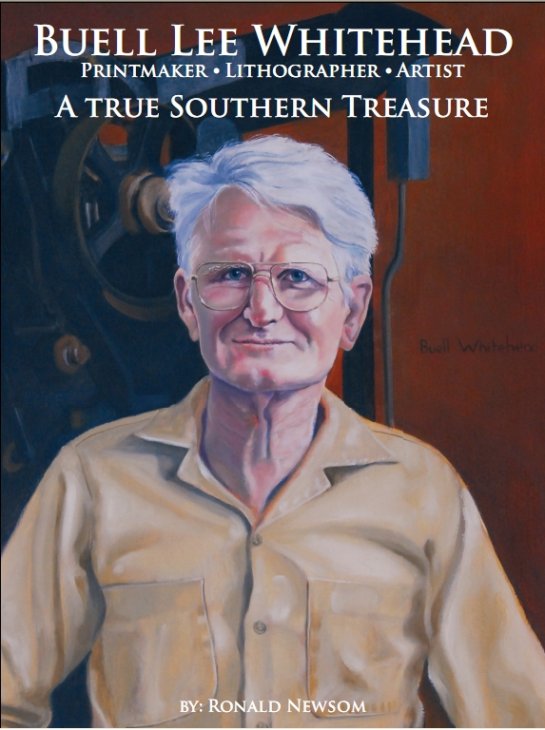
The artist Buell Lee Whitehead grew up in rural Fort Myers when that area was still the backwoods in the 1920s and 1930s. Cutting firewood for the money to go to college, he entered the University of Florida in 1938, and, following war service, graduated with one of the first Bachelor of Fine Arts degrees. His early work attracted so much attention that the University commissioned him to do the official portrait of the dean of the school. As an inspired painter, printmaker, lithographer and engraver, he lived most of his live in Southwest Florida; choosing the subjects of his stylized works from familiar surroundings. His art chronicles early 20th Century landscapes and community lifestyles from the perspective of the beginning citrus, sugar, timber and fishing industries of that area. Later, he was the first Florida artist who travelled the U.S. selling original lithographs from a press mounted on a flatbed truck that traveled with him. Whitehead was one of the nation’s earliest well-known printmakers. You can read more about Whitehead in Ronald Newsom’s book Buell Lee Whitehead: A True Southern Treasure or at www.buellwhitehead.com.

The 2013 inductees to the Florida Artists Hall of Fame will be announced later this year, and they will be inducted on March 20, 2013 during the Florida Heritage Awards in Tallahassee. We encourage you to visit the Florida Artists Hall of Fame wall on the plaza level in the rotunda of the Florida Capitol Building.

Spotlight on the Florida Artists Hall of Fame nominees, Part II

By Tim Storhoff and Ken Crawford

Yesterday on the Culture Builds Florida blog we spotlighted 2013’s musical nominees for the Florida Artists Hall of Fame. Today we will be featuring our visual arts nominees, who represent a variety of styles and backgrounds. Their work is exhibited throughout Florida and beyond. We encourage you to seek out their work and view it for yourself. In March it might be one of the following painters, photographers or sculptors who is awarded “La Florida” and added to the wall of the Florida Artists Hall of Fame in the Capitol.

The sculpture “La Florida” was created by Enzo Torcoletti and is awarded to all Florida Artists Hall of Fame inductees. This photo is from Robert C. Broward’s induction last year.

Romero Britto: Painter – Miami (1963- )
Romero Britto is a world-renowned Brazilian-American Neo-Pop artist, painter, serigrapher, and sculptor. He has lived in Miami since 1989. He combines elements of cubism, pop art and graffiti painting in his work, attracting collaborations with many corporate brands. His art has been exhibited in galleries and museums in over 100 countries. An outspoken and energetic philanthropist, Mr. Britto often serves as a benefactor to many varied causes. He has donated art and resources to over 250 charitable organizations. He serves on several boards of directors, including Best Buddies International, and St. Jude’s Children’s Research Hospital. He was recently named a founding inaugural benefactor of Harvard’s International Negotiation Program for peaceful conflict resolution. His desire to use his art to bring the international community together in peace informs his life. Mr. Britto has spoken about art and humanity at the World Economic Forum in Davos, and at many schools and institutions. His website can be found at www.britto.com.

Scherley Busch: Photographer – Coconut Grove (1945- )
Ms. Scherley Busch is one of Florida’s most respected photographers and photographic portrait artists, with exhibitions statewide and work held in private and public collections. Her work is published nationally in books and magazines. The artist is also known for unique photographic interpretations of landscapes through her hand-tinted “Dreamscapes” of Florida scenes. She is particularly appreciated for images documenting the Florida Women’s Hall of Fame and photographs of many of the state’s women of achievement.  Her artistic portraits of prominent Florida artists and leaders in many fields are widely appreciated. They celebrate the essence of extraordinary people who have transcended difficult boundaries in their lives to achieve success in arts, government, business and philanthropic endeavors. Ms. Busch often gives of her time to instruct young artists in her photographic technique, which seeks to find the subject in time and space in order to document the image at its most profound moment. You can visit her website at www.scherleybuschphotography.com.

Jennifer Chaparro creating a piece of chalk art. Photo by Craig C. Houdeshell. Image courtesy/used by permission of Jennifer Chaparro.

Jennifer Chaparro: Pastel Chalk Artist – N. Palm Beach (1962- )
Jennifer Nichols was born into an artistic family in Michigan and grew up in California before moving to Ohio. She pursued degrees and experience in painting and design while working in advertising and raising her two daughters. In Ohio, Ms. Chaparro served the Dayton Visual Arts Center, serving as their president and as a board member and contributing artist. In 1999, she moved to North Palm Beach with her daughters, and began participating in the Street Painting Festival at Lake Worth, the largest street painting event in the United States. This event launched Ms. Chaparro’s art career. She specializes in large 10′ x 10′ works, usually featuring the relationship between women and children. Now a well-known participant in the European street painter tradition, she received her Semplice Professional Certification in 2009, her Qualificato Certification in 2010, and her Maestro Certification in 2011. She frequently supports local community events with her participation. Learn more about her street painting and chalk art at http://www.amazingstreetpainting.com.

“Mystic Road Odessa, Florida” by Gregory Colvin. Image courtesy/used by permission of Gregory Colvin.

Greg Colvin: Photographer – Odessa (1954- )
Greg Colvin is a photographer-artist whose inspiration is found in the natural world. He uses the camera as a paintbrush, “…recreating visual sensations to share with others.” Mr. Colvin spends much of his time teaching others; also publishing many instructional articles. His images have been shown in galleries, juried exhibitions, outdoor art shows, schools and libraries. His work is included in the Tampa General Hospital permanent collection and Hilton Hotels. He was admitted into the Naples Museum of Art “Florida Contemporary Exhibit” in 2009. This year, he was commissioned by the federal government’s FCCPAC Art Project to create seven pieces for a new public building in downtown Orlando. He was also recently accepted into the Manhattan Arts International “Celebrating the Healing Power of Arts” juried exhibition in New York City. You can see more examples of his many photographs at his personal website.

Bruce Harold Cook: Painter/Mixed Media – Live Oak (1955- )
Visual artist Bruce Harold Cook creates colorful sculptures of native wildlife and whimsical outdoor scenes using natural materials, including wood and glass, which represent his vision of the ecological balance of Florida. His work is represented in Florida State Parks visitor centers, in galleries and private collections, and in public and corporate buildings. Mr. Cook is a frequent volunteer at many community art events. He has a particular interest in art therapy, devoting his time to serving the communities of vocational rehabilitation, juvenile justice, Hospice, and the Hibiscus Children’s Foundation. He is a five-year member teaching artist of the VSA Florida program for adults with disabilities. Mr. Cook pursues every occasion to help those with disabilities to use the arts as he does—as a positive way to overcome personal limitations.

Janet N. Heaton: Painter/Arts Advocate – West Palm Beach (1936- )
A visual artist known for her vivid connection to the inspirations of Nature, Ms. Heaton’s acclaimed watercolors and oils have won numerous awards and have appeared in many national and international shows and galleries. Her Florida landscapes and animal paintings hang in public and private collections, and have been featured at museums around the United States and the world. She has worked to gain wider recognition for Florida’s animal artists, gathering those artists in exhibits to express concern and raise funds for endangered Florida wildlife. Ms. Heaton is known for giving much of her time and artwork to advance the missions of community organizations such as the Friends of John D. MacArthur State Park, Palm Beach County Nature Foundation, Florida Watercolor Society, and the Society of Animal Artists. Ms. Neaton’s website can be found at www.paintingsofwildlife.com.

Ralph N. Hurst: Sculptor – Tallahassee (1918-2003)
As a renowned fine arts teaching professor at the Florida State University for 27 years, Ralph Hurst found great joy in assisting young artists develop their talents. Highlighting his esteemed FSU career were faculty grants allowing him to have a studio at the campus in Florence, Italy to continue his sculptural carving in alabaster and marble. The creator of thousands of artworks in his lifetime, his contributions to the arts community of Tallahassee continue to play a major role in the education of future artists. He and his wife established the Ralph and Jean Hurst Art Collection at Tallahassee Community College. The gallery serves as a permanent education tool for students at the college. The artist also played a vital role in founding the LeMoyne Center for the Visual Arts. His commissioned works can be seen at the Claude Pepper Center. Hurst’s sculptures and multimedia works are exhibited internationally, and in many museums and major galleries, including the Society of the Four Arts in Palm Beach, Florida Craftsmen in St. Petersburg, the Harmon Gallery in Naples, the High Museum in Atlanta, and the Metropolitan Museum of Art in New York. At www.theralphhurstgallery.com you can view an interactive version of the Ralph Hurst Gallery at Tallahassee Community College.

Richard Kelly: Painter – Vero Beach (1951- )
A popular and award-winning oil painter of images of the Indian River Lagoon and natural Florida scenes, Mr. Kelly was a student of landscape artist A. E. “Bean” Backus. He is a retired Fort Pierce firefighter, with a penchant for using art as a vehicle to compel people to better understand and respect the ecological environment of the Treasure Coast Region where he lives. His book, Treasured Waters, illuminates the beauty and history of the Indian River area. He frequently donates his time to teach art to seniors and young art students, and lends support to many local community efforts to preserve the natural environment. In 2007, he received the Florida Senate Medallion of Excellence commemorating his artistic visions of Florida’s natural beauty. His work can be seen in galleries throughout Florida, museums, and public buildings in the Treasure Coast Region. You can see more examples of Mr. Kelly’s work and order his book at Treasured Waters.

John Seerey-Lester: Painter – Osprey (1945- )
A world-renowned Florida wildlife and landscape painter, watercolorist, art teacher and animal rights advocate, Mr. Seerey-Lester is widely known for his up-close images of the Florida Panther, loggerhead turtles, wetland birds and other wildlife in natural habitat settings. He personally assists and contributes to local wildlife conservation on the Gulf Coast, particularly the protection of sea turtles and shore birds. The artist is very active in the Venice arts community as an art teacher and arts community fundraiser, greatly impacting the quality of arts instruction and arts support in that region. His worldwide reputation is based upon numerous national and international awards for his images depicting the forces of nature at work. The author of many of the books he illustrates, Mr. Seerey-Lester’s newest book of paintings and nonfiction writing, Legends of the Hunt, was published in 2010. View John’s art as well as art by Suzie Seerey-Lester at www.seerey-lester.com.

Image courtesy/used by permission of Jimmy Stovall.

Jimmy Stovall: Painter –  Fort Pierce (1951- )
Jimmy Stovall’s paintings reflect his interest in preserving the Florida he remembers as a young man. He is the last artist personally taught the Highwaymen painting style in Fort Pierce by Alfred Hair. Following his distress concerning Hair’s untimely death, Mr. Stovall temporarily gave up painting and moved to Tampa, and then migrated to Miami to work, where he began to paint again. Highwayman Artist Mary Ann Carroll contacted him in later years about photographer/author Gary Monroe, who was working on a book about the scattered group of artists. But the aftermath of Hurricane Andrew rendered the artist unreachable for Monroe’s early book interviews. Twenty-six of the Highwaymen were featured in The Highwaymen (University Press of Florida, 2001). Soon after that, Mr. Stovall returned to fulltime painting and to his home in Fort Pierce, where he still lives and works. Twenty-six Highwaymen were honored by induction into the Florida Artists Hall of Fame in 2004. View his work at www.thelegendaryhighwaymenartgallery.com.

“Sheepshead” by William A. Walker

William Aiken Walker: Painter
St. Augustine (1839-1921)
A regional genre painter of the Post-Reconstruction South, the artist William Aiken Walker dedicated his life to exploring Florida and the East Coast. An early iconoclastic figure, he was the only artist of that time to focus his talent on recording the Post-Civil War life of emancipated slaves, and the rapidly changing culture of Florida. Walker was a solitary wanderer who spent many years alone exploring the backwoods, swamps, rivers and bays of the state, drawing and painting what he saw, which include the first and most comprehensive collection of Florida native fish images of the time. He roamed frontier Florida documenting the flora and fauna, town scenes, fishing communities, railroad construction, and early homesteads around him. Prior to the Civil War, he briefly worked in Cuba as a photographer then served as a cartographer in the Confederate Army before beginning his long artistic exploration of Florida, where he remained until his death in 1921. The Flagler Museum and the Museum of Florida History have collected rare series’ of Walker paintings. The book William Aiken Walker: In Florida (2003) is available from Eaton Fine Art.

Laura Woodward: Painter – Palm Beach (1834-1926)
Florida’s most important Nineteenth Century woman artist, and one of the earliest and greatest publicists of our state’s image as a “tropical paradise,” Laura Woodward changed the course of history in Florida by influencing Henry Flagler’s choice of resort location with her ideas and naturalistic paintings of the Palm Beach area. She enlivened awareness about Florida before the time of color photography by exhibiting her works widely, thus enticing tourism to the state. Prior to moving to Florida, Ms. Woodward was an acclaimed Hudson River School Artist and among the most distinguished of American women artists painting at that time. She was also one of the very first professional artists to paint natural plein air images in the wild areas of the Everglades. Her important role in the development of the state is now taught in history classes at Florida colleges. Laura Woodward’s inspired dedication to the Florida landscape, and her legacy as a tireless advocate for women artists in this country, survive her. You can learn more about her and see some examples of her art at the Edward and Deborah Pollack Fine Art website.

Laura Woodward, “Red Hibiscus,” watercolor, collection of Edward and Deborah Pollack. Image courtesy/used by permission of Edward and Deborah Pollack.

Read more about the program and all previous inductees at the Division of Cultural Affairs Artists Hall of Fame page. Check back tomorrow as we profile the remaining 2013 Florida Artists Hall of Fame nominees.

Spotlight on the Florida Artists Hall of Fame nominees, Part I

By Tim Storhoff and Ken Crawford

The Florida Artists Hall of Fame recognizes persons, living or deceased, who have made significant contributions to the arts in Florida either as a performing artist or practicing artist in an individual discipline.  Established by the Florida Legislature in 1986, the Artists Hall of Fame is not only the highest arts award, it is the most prestigious honor that can be bestowed upon an individual in the State of Florida.

Induction into the Hall of Fame is a very prestigious honor—the highest bestowed on an artist by the State of Florida. It is intended for those professional Florida artists who are fully advanced in their careers, have made a significant contribution to the arts in this state, and have received some national or international recognition through their achievements. Inductees typically demonstrate outstanding initiative, excellence among peers, and a profound artistic commitment throughout their lifetime. Visit the official Florida Artists Hall of Fame page for more information on the nomination process and for a complete list of previous inductees.

Twenty-seven artists have been nominated for the 2013 award. As we prepare for the upcoming meeting of The Florida Council on Arts and Culture where they will vote on these nominees, we will be spotlighting them here at the Culture Builds Florida blog.

Today we will spotlight the nominees who have contributed to Florida’s musical culture as recording artists, folk musicians, dancers, and conductors. You will recognize some of these individuals as world-famous performers while others made their contributions to artistic life in Florida outside of the limelight. Below you will find short biographies of the musical nominees, links, and some videos of their performances.

Pat Boone: Singer/Actor – Jacksonville (1934- )
Charles Eugene “Pat” Boone was a successful pop singer during the 1950s and early 1960s. Born in Jacksonville and raised in Nashville, Tennessee, he sold over 45 million albums, had 38 Top 40 hits and appeared in more than 12 Hollywood movies. Boone’s attractive talent as a singer and actor, which combined with his old-fashioned values, contributed to the popularity of early rock and roll. Mr. Boone is also the author of a number of inspirational books, including his No. 1 bestseller in the 1950s, Twixt Twelve and Twenty. In the 1960s, he focused on gospel music and is a member of the Gospel Music Hall of Fame. He continues to perform, but concentrates mostly on his current role as a motivational speaker and conservative political commentator in California. Mr. Boone still visits Florida annually. To read more about Pat Boone today and hear some of his music, visit www.patboone.com.

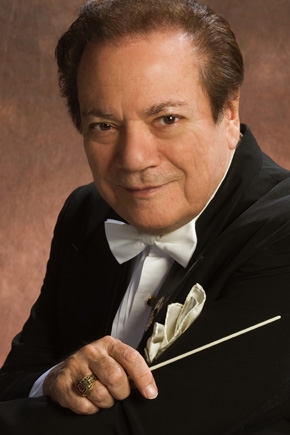
Maestro Brooks-Bruzzese. Image courtesy/used by permission of the Symphony of the Americas

Dr. James Brooks-Bruzzese: Symphony Conductor – Ft. Lauderdale (1940- )
Maestro James Books-Bruzzese is the esteemed Artistic Director of the Symphony of the Americas in Fort Lauderdale. A Florida resident for nearly 50 years, the Maestro’s world–class artistic skills and award-winning reputation have called him to represent Florida by conducting major orchestras worldwide. His 24 audio recordings represent the beauty of classical literature, and are also testaments of inter-cultural cooperation among the world’s best known concert artists. Dr. Brooks-Bruzzese is particularly devoted to bringing the heritage of classical music to young people. He mentors students in inner-city and rural Florida schools. In that capacity, Dr. Brooks-Bruzzese established a very successful youth orchestra in Broward County and helped build bridges between continents by bringing his South Florida music education programs to youth in South America. He has been recognized by Florida’s elected officials, presidents, heads of state and dignitaries all over the world for his dedication to art and education. Learn more about Dr. Brooks-Bruzzese at his personal website and at the Symphony of the Americas.

Vassar Clements: Musician/Recording Artist – Kissimmee (1928-2005)
One of this country’s best-known fiddlers, Floridian Vassar Clements was an icon of American music. Though self-taught, his technical musicianship and gifted jazz stylings made him the most-requested sideman in the history of country music. His signature pieces, “Lonesome Fiddle Blues,” “The Kissimmee Kid,” and “Hillbilly Jazz” recall his rural Florida roots. A Grammy Award winner, Mr. Clements toured with many major stars and performed on more than 2,000 recordings, including sessions with Bill Monroe, Stefane Grappelli, Paul McCartney, Bob Dylan, Jerry Garcia, Jimmy Buffet, Tom Petty and countless others. His work on the Nitty Gritty Dirt Band’s “Circle Be Unbroken” record is the stuff of legend. Popular banjo player Béla Fleck has been known to say in the studio when asking for a cleaner, more pronounced fiddle sound that, “It needs more Vassar.” A creative artist on every level, Mr. Clements was also a great violin teacher. Though he enjoyed a demanding touring schedule into his later years, he nevertheless made time for the development of young artists into strong instrumentalists. Always emphasizing dedication to his instrument, he believed that all professional musicians are responsible for transferring the love of their art, as well as their technique, to the next generation. You can read more about Vassar Clements at his website and check out the video below of him playing “The Kissimmee Kid.”

Gloria Estefan: Singer/Recording Artist – Miami (1957- )
Prominent singer, recording artist, and international star Gloria Estefan has lived in Miami for most of her life. Emigrating from Cuba as a child, Ms. Estefan followed her dream of becoming a professional singer. In 1968 she began her career as a lead singer for the Miami Sound Machine, a popular local Miami band performing at night clubs, festivals and cultural events. Now a Grammy award-winner several times over, Ms. Estefan enjoys a worldwide reputation as a prominent recording artist and film actor. In addition, her contributions to the Florida community include many hurricane relief concerts, AIDS research benefits, and her well-known advocacy work to strengthen Florida boating safety regulations. In addition to a demanding performance and recording schedule, she contributes time and resources to many cultural events. Ms. Estefan frequently champions the importance of arts education for young people. Her artistic and financial contributions to enhance the education of Miami students through the experience of music is well known. You can follow Ms. Estefan on twitter with the handle @GloriaEstefan.

Robert “Bobby” Lord: Recording Artist – Jensen Beach (1934-2008)
An award-winning country music artist and performer, Robert “Bobby” Lord was a popular singer and television show emcee with a long history of Nashville entertainment success in the 1950s and 1960s. His well-known efforts to expand Florida tourism by promoting the state wherever he traveled made a significant difference to the state’s tourist industry at that time. He left the music industry in 1969 at the top of his career to devote more time to his family. Mr. Lord then became a hotel resort developer and business leader, bringing many recreational developments to the Treasure Coast. He frequently performed for community benefits, hospitals, and local fund drives throughout South Florida. His support of student ensembles still continues after his death with significant financial commitments enabling the further education of young artists in the schools, local choruses, and music clubs of Martin County. You can hear him performing with Patsy Cline in the video below.

Tom Petty:  Musician/Recording Artist – Gainesville (1950- )
Thomas Earl Petty was born and raised in Gainesville. In 1961, his uncle brought him to the set of Elvis Presley’s movie Follow That Dream filming in Ocala. This compelled him to begin taking guitar lessons, and he dreamed of being a rock star while working as a groundskeeper at the University of Florida. He soon established a group of local like-minded musicians. Petty and his band began to attract attention under the name of Mudcrutch. Based on local acclaim, they were asked to record two demos of Petty’s compositions at Criteria Studios in Miami, which launched their career. Tom Petty & the Heartbreakers now perform at the largest concert halls, have sold more than 60 million record albums, and are members of the Rock and Roll Hall of Fame. As a songwriter and performer, Tom Petty is a leading figure on the contemporary music scene, and is one of the most recognized and sought-after musicians in the world. His achievements include the “hometown pride” he still engenders throughout Florida for his continued support of various community fundraising efforts. His website is www.tompetty.com.

Yanis Pikieris: Dancer – Miami (1958- )
The long performing and directing career of Principal Dancer Yanis Pikieris includes dancing with major companies such as Ballet du Nord, Ballet Nacional de Caracas, and the Miami City Ballet. He founded two dance companies in Miami, Juegos Del Arte and Maximum Dance. He traveled the world, staging his work and the dance work of other choreographers. His interest in mentoring young dancers is well known. Mr. Pikieris’ dedication to dance education led him to also found the Miami Youth Ballet as a Florida training ground and performing company for tomorrow’s ballet stars. In addition, he serves as a judge in the Presidential Scholars in the Arts program. His ongoing dance staging commitments and frequent role as a contest judge continue to strengthen his international reputation. While providing a bridge for South Florida dance artists to interact with the principal dancers of South America, he still makes his home in Miami, where the school he founded with his wife, the Mencia-Pikieris School of Dance, is located.

Dr. Henry L. Porter: Singer/Music Educator – Sarasota (1948- )
Pastor, singer, choir director, producer and teacher Dr. Henry L. Porter was born and raised in Sarasota, where he is founder and leader of Sarasota’s Westcoast Center for Human Development. A Yale Doctoral Fellow who served as an African Missionary, he has been invited to perform at the White House. He founded the Westcoast Gospel Choir in 1964, performed around the country, and was inducted into the Gospel Music Hall of Fame in 2003.  He recorded 17 record albums and has written more than 2,500 songs. Bishop Porter’s commitment to youth and to creative development resulted in his establishment of a K-12 Christian school in Sarasota that has graduated over 500 students; providing young artists a performing arts platform. His Florida prison ministry has brought gospel music sessions to inmates in the state for more than 30 years. He received a commendation from former Governor Jeb Bush in 1999, and the Governor’s Points of Light Award in 2002.

Frank Thomas: Folk Balladeer/Songwriter – Lake Wales (1943- )
Frank Thomas is known as the Dean of Florida Folk Music. He has received the Florida Folk Heritage Award, Jullian Prescott History Award, Florida Historical Society Golden Quill Award, the Stetson Kennedy Foundation Fellow Man & Mother Earth Award, and a state resolution honoring him from former Governor Lawton Chiles, who personally gave a pair of his “walkin’ boots” to Mr. Thomas following the Governor’s campaign trek across Florida. Frank Thomas’s original Florida songs have been performed for decades in every part of the state and in a public radio series. His reputation includes being the patriarch of balladeers at the state’s annual heritage celebration, the Florida Folk Festival, where, as host of the Suwannee River Gazebo Stage, he showcases the state’s finest songwriters. A seven-generation Floridian from a family of farmers and cowmen, his songs are firmly set in the rural history of the land and people of this state. A longtime friend of the Seminole Tribe, he is one of the few invited to remote Tribal gatherings to share songs and stories with native elders. Eminent author and Artist’s Hall of Fame inductee Patrick D. Smith refers to Frank Thomas as…”the unequivocal heir to the soul of Florida folksong.”

We will be covering the rest of the 2013 Florida Artist Hall of Fame nominees throughout the week!

Spotlight on Folklife: Batá Drummer Ezequiel Torres

by Tim Storhoff

This week, master Afro-Cuban drummer and drum builder Ezequiel Torres will travel from Miami to Tallahassee with his ensemble in order to highlight the relationships between batá drumming, dance, and the Orisha religion. His two-day residency in Tallahassee is sponsored by the Florida Folklife Program and the Center for Music of the Americas at Florida State University.

Ezequiel Torres. Image courtesy/used by permission of HistoryMiami.

Torres was born in Havana, Cuba in 1955 to a musical family, and in his teens he began working as an apprentice to some of the city’s master drum makers and players. Soon he was performing batá in ceremonies and started experimenting with creating the drums himself. By the late 1970s, Torres was teaching percussion at Havana’s Escuela Nacional de Arte and was the musical director for dance classes at the prestigious Escuela Nacional de Instructores de Arte.

The batá is an hourglass-shaped, two-headed drum based on an African prototype. Batá drums are always played in sets of three during religious ceremonies. These ceremonies are part of the Orisha religion, also known in Cuba as Santería, Regla de Ochá, or Lucumí. Dating back to the arrival of African slaves in Cuba, it is a syncretic religion based on West African Yoruba traditions that added associations with Catholic saints to its numerous deities. In religious ceremonies, each of these deities or orishas has their own rhythm played on the batá drums as well as sung vocalizations and specific dance movements. Torres and his ensemble will be demonstrating these at their performances and workshops in Tallahassee.

Since arriving in Miami in 1980, Torres has been an important part of Florida’s traditional music scene. He is recognized as one of the top batá drummers, drum-builders, and beaders in the country. In addition to performing regularly in Florida, he has performed in Houston, Chicago, and Los Angeles. Torres has worked with the Florida Folklife Program in various ways after he arrived in the United States. In addition to teaching, performing, and receiving various honors, he was interviewed for the Music from the Sunshine State radio program. You can download or listen to his interview and performance for folklorist Bob Stone on that program here. He has also been a featured artist at the Florida Folk Festival, and you can view his ensemble performing part of a song for the orisha Eleguá at the 2012 festival in the video below.

Blaine Waide, State Folklorist and head of the Florida Folklife Program, described Torres’s history with the program and part of the purpose of this trip, which includes his first performance in the state capital:

The Florida Folklife Program has been working with Ezequiel Torres for several decades.  He has participated in our Apprenticeship Program as a Master Artist six times, passing his expert knowledge of the Afro-Cuban batá drumming tradition to seven apprentices.  In 2008, we recognized him with a Florida Folk Heritage Award, and he is the most recent Floridian to win a National Heritage Fellowship from the National Endowment for the Arts, which he received in 2010. Given his many notable contributions to maintaining a living Florida tradition in his South Florida Cuban community, we are excited to introduce him to new audiences in North Florida, and the state capital, where he will be able to share his knowledge and exceptional artistry with a public audience, along with local school children and graduate students at Florida State University.

The Florida State University College of Music’s Center for Music of the Americas is co-sponsoring Mr. Torres’s visit as well as coordinating his workshop at FSU. The director of the Center, Dr. Denise Von Glahn, said about this first collaboration with the Florida Folklife Program:

The Center for Music of the Americas at Florida State University is excited to be partnering with the Florida Folklife Program and Mission San Luis in bringing master Afro-Cuban batá drummer and drum-maker, Eqezuiel Torres, to Tallahassee for a two-day artist residency.  Mr. Torres’s visit exemplifies the goals of the Center, which include encouraging scholarship, performance, and the dissemination of musics found throughout the American Hemisphere, by reaching out across the university and our larger North Florida community.

On Thursday, September 6, Mr. Torres and his ensemble will give a free public performance and presentation in the Mission Room at Mission San Luis from 7-8:30 PM. On the morning of Friday, September 7 there will be a performance and student workshop at Ruediger Elementary School, and that afternoon from 2:30-4:30, he will give a student drumming workshop in Lindsay Recital Hall in FSU’s Kuersteiner Music Building, which is free and open to the public. For more information on this event and others, follow the Florida Folklife Program on Facebook at http://www.facebook.com/FloridaFolklifeProgram. For an additional interview with Ezequiel Torres as well as a video, check out the National Endowment for the Art’s profile of him as a 2010 National Heritage Fellow.

Spotlight on Central Florida: Summer Arts Camps

by Jennifer BonnerInterim Director, Orange County Arts Education Center

Jennifer Bonner

As part of my job with the Orange County Arts Education Center located in Orlando, I collect and publish the listings of summer camps from local arts organizations in our annual Arts Summer Camp Guide.  This year I went one step further and visited the Arts Summer Camps listed in the guide. Hello summer!

It was wonderful – absolutely like being a kid again! This summer I’ve seen 270+ summer camps.  Let me rephrase.  270+ summer ARTS camps in Orange, Lake, Osceola and Seminole counties. The arts opportunities available to the next generation of Central Floridians are thriving, and I was lucky enough to peer into that world for just a short while.

From ancient Egypt to Hungary, from improv to Brazilian martial arts and drumming, I was transported throughout the world through the power of the arts. The joy I felt KNOWING this was happening in my area cannot surpass the joy students were feeling learning and absorbing a tremendous amount of information disguised as “fun.”

As an arts educator I have always been haunted by the “fun” aspect of my area subject (theatre, in case you were wondering).  It’s “just for fun,” you get to “play around.” I will tell you now, not because of my own subjectivity, but because I saw it through the eyes of the students: “fun” is the best way to learn.  The arts are a model for all teaching.  This is especially true in the summer.

Where else, would you find the all of the majors of a college department spending their entire summer at school?  In.   The.   Arts.  Valencia College, the 2011 winner of the Aspen Prize for Community College Excellence, holds the Summer Dance Institute each summer for all dance majors and select high school students culminating in a performance at the end of the intensive.  These students receive no credit.  They are simply there to better themselves, to learn and grow.  Led by Department Chair Dr. Suzanne Salapa and Artistic Director Lesley Brasseux Rodgers, the Intensive creates a wonderful atmosphere.  And that atmosphere seems to be contagious.

There is also an “Acting Gym” which takes place every Saturday from 1-3 p.m.  Used as his student enrichment hours, Professor John DiDonna is continually amazed that over 30 students show up every Saturday including the summer, and that participation figure is growing weekly.

Mennello Museum of Art Summer Printmaking Camp. Image submitted and used by permission of Jennifer Bonner.

All of the large arts organizations in our area have summer camps.  The Orlando Repertory Theatre alone has over 50 summer camp offering for students.  The Orange County Regional History Center brings history alive with their artistic process.  Students – ranging from 5 years of age through middle school – learn about ancient Egypt through maps, mummification and the painting of hieroglyphs.  The Orlando Shakespeare Theater is teaching Shakespeare, make-up, history and costuming through an innovative “Zombie Shakespeare” camp.  Crealdé, a local visual art center, has a finely tuned model.  Each students enrolled moves through drawing, painting, sculpture and photography.  I don’t know about you, but when I was a kid, I had none of these options!

Here’s the wonderful thing about this area: it isn’t just the large arts organizations that have camps. There are literally hundreds of camps run by individuals or small arts organizations I mean, a first-timer trying out theatre might be intimidated by the word Shakespeare (although as a theatre person myself, I can promise you that he is very friendly).  Summer Drama Camp, a camp that has just begun running year-round starting this year, is a one-woman operation.  Focusing on a production, students are also taught responsibility, character and the business side of theatre.  Magic Curtains Productions, run by a husband and wife team, taught the basics of theatre to those that have never been on the stage before and those who have been in the program since its inception.  The innovative Lego camp, iBrick Academy run by James Jones, a technology teacher in Orange County Public Schools, along with his son, has three different locations, including LEGOLAND Florida.  Students are taught through the STEAM process (Science, Technology, Engineering, Arts and Math) using innovative and creative ideas to create windmills, cars and robotic bugs.

Words of the day and research materials at the Mennello Museum of Art Summer Printmaking Camp. Image submitted and used by permission of Jennifer Bonner.

And while most of the camps are geared towards the preK-12 years, there are even a few for the adults and the professionals.  The Art and History Center Maitland offers workshops and classes all summer specifically geared to adults and the newly opened Starving Artist Studios has adult classes in ballroom dance and ballet, as well as private instruction and group classes in theatre, music and dance for professionals.  The Orlando Ballet’s Summer Intensive serves a diverse body of participants, ages 7 through adults. Orlando Ballet also offers adult walk-in classes for those in the community who just want to try it!  Capoeira Brazilian Pelourinho teaches a form of martial arts that incorporates music and dance has level for all ages, including special “Mom/Dad” classes following the youth classes so the students and parents can experience the art together.

There are so many more that I could mention, so many more that I visited and am in awe of.  Each with their own strengths.  Each with their own approach to learning.  Each with their own fun.  Being a kid again this summer couldn’t have been more fruitful.  Thanks for the arts fun Central Florida!

Spotlight on Florida City’s ArtSpring

by Carol Cohan

After waiting outside for nearly an hour, the guests, permitted to carry only a car key and driver’s license, were buzzed in four at a time.  They removed watches and bracelets, walked through a metal detector, passed through the searching rooms and came into the visitors’ room of the Homestead Correctional Center.  The occasion: ArtSpring’s graduation presentation of A Midsummer Night’s Dream.

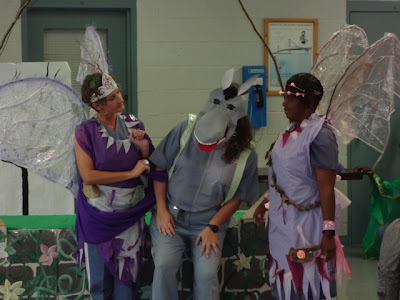
With just paper and paint, and whatever found objects the inmates could scrounge up, this gray, dismal space had been turned into Ancient Athens and a nearby forest. Wearing costumes fashioned out of  paper and disposable table cloths, women incarcerated for crimes ranging from drug possession to embezzlement to murder became the very believable Duke of Athens, Bottom, Puck, and other characters of Shakespeare’s well-known comedy. Just as this play transformed prison inmates into Shakespearean characters, so the ArtSpring program transforms hardened, defensive offenders into caring, feeling members of a community.

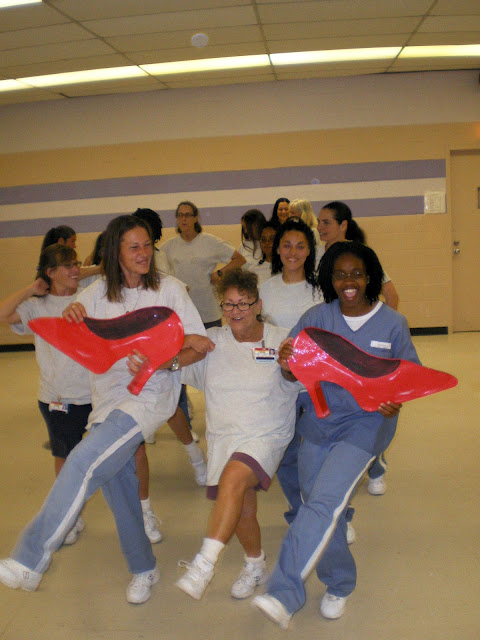
ArtSpring in action. Photo submitted and used by permission of ArtSpring.

The principal vehicle is the ArtSpring Inside Out program, a three to four month program for women offenders that incorporates dance,  creative writing, visual arts and, the core component, movement.  The program, which operates in Tampa-St. Petersburg, Broward and Ocala as well as in Miami-Dade and which reaches 600 women in prison and girls in juvenile detention each year, is based on the belief that the arts can transform individuals and strengthen communities. “Movement is key especially in the beginning,” says Leslie Neal, a former dancer who developed the program in 1994 and still directs it.  The women, almost all of whom have suffered physical or sexual abuse, come into the program self-conscious.  Their self-expression has been stifled. They have locked away their feelings as a way of surviving, and movement helps them to open up.

Early on, Leslie has the women walking around the room.  Initially they are cautious, often walking in a circle like cattle.   She encourages them to take individual pathways, to slow down or speed up. Gradually they begin to loosen up. Sometimes they start to skip and play, almost as though recapturing the freedom of childhood. They notice their breath and their heart beat. They begin to open up. They become more vulnerable. They become more aware of who they are.

Leslie has them examine their walk very carefully. What is unique about your individual walk, she asks. What happens to your body if you walk on your heels? On the sides of your feet?

Reflection is an important companion component. At the end of each exercise, the women explore how they felt during it, what they learned from it. From this early walking exercise, the women discover that if they change their walk a little bit, the rest of the body adjusts in response.  As they continue to walk and talk and explore, walking becomes a metaphor:  If you make one big mistake in life, others are likely to follow.  From this observation comes a homework assignment: How has this metaphor operated in your life?  Perhaps you hung out with the wrong guy. He got you into drugs, and that’s how you became engaged in crime.

“There is always one class that is epiphanous,” Leslie says.  Sometimes it’s something that a participant has written or a story she has told that strikes a chord with the others, and they realize they are not alone. Perhaps one woman says, “In this exercise I was reminded of my childhood. My mother was never there for me.”  And all of a sudden, other participants’ experiences begin to emerge.

The approach is therapeutic. When a participant shares her work, only positive feedback is allowed.  The women are protected from the kind of criticism that rips people and their work apart.  As a result, trust and safety are reinforced, self-esteem grows. At the same time, ArtSpring teaches its participants to look honestly at themselves and recognize how they have to change their behavior to succeed in society. It teaches them that they are deserving, that they have a sense of self, that they are cared for, that they are valuable human beings who have something valuable to give to the world. So when they are hit with a lot of stress, they can hold on to these concepts.

Marsha Frasier, sentenced to 12 years for kidnapping and robbery but free now for 5, credits ArtSpring with giving her the insight, tenacity and mental skills she has needed to cope with a life outside prison she has found surprisingly difficult. As she looked forward to her release, she had envisioned putting her past behind her and getting on with her life.   But she has found that her past follows her everywhere, and she feels very isolated. Although she has a good job as an accounts manager, she feels she will never fit into society because of the changes that occurred while she was away and because she can never regain what she lost.  Yet, she says, “ArtSpring allowed me to look at issues that are difficult for me to not only acknowledge but accept them, and then the courage to get through tough days.”

In addition,  ArtSpring teaches personal responsibility.  The program is voluntary, but women who sign up are required to commit to the class. They must attend, do the work of self exploration, look within and discover their dark places, and then share those with others.  For many of the women, this is the first time they’ve committed to anything.

The program also promotes respect, cooperation, and cultural understanding. The class brings together a mix of people who probably would not choose each other as friends.  In class, everyone has to work together, even if they don’t like each other. In the process, inmates who have had issues or confrontations with other inmates learn to let their animosities go during class and build group trust.  One of the women observed, “We come from all different walks of life.  We put all that aside.  We have a union and an understanding of each other.”

By providing individuality and humanity in the prison environment, which seeks to obliterate those qualities, ArtSpring is a lifeline to the inmates.   As another offender put it, ArtSpring enables them to feel free even though they are in prison. Understandably, once they have experienced the program, they don’t want to quit.  So over the years, the faculty has devised several follow-up courses in specific disciplines.   A singer songwriter teaches a music class. There are classes in visual arts and creative writing. A Midsummer Night’s Dream was the culmination of the advanced theater course – two hours a week for 25 weeks.

The value of the ArtSpring experience quickly became apparent during a talkback after the performance. The cast recounted how the prisoner playing Puck was put in lock-up just days before the performance, and the cast worried she would not be released.  How would they cover this key role?  They decided to divide her part among all of them and make a Puck mask that each substitute would wear so that the audience could keep track.  This kind of teamwork would ordinarily be unheard of.

One cast member said, “I can’t tell you how much ArtSpring has changed me.  I don’t get into trouble anymore.”

Another, a woman sentenced to life for murdering her husband, said, “I’m not getting out of here.  But whenever new girls come in, I encourage them to take the program because I know it will make life better for them on the outside.  And it makes me feel good to know that I can help them.”

To illustrate the enormity of what ArtSpring accomplishes, Leslie tells of a former offender who appeared so developmentally delayed that she would not be able to manage the class.  To everyone’s surprise, she blossomed as she gained confidence in class.  Now living in New England, this young woman is happy and gainfully employed.  She insists she would not have been able to achieve this success without the class.

The women who participate in ArtSpring use what they learn in class when they talk with their children and other loved ones, and so the program has a positive impact the participants’ families and communities. And when the staff sees the change in the women, especially in the context of their theater performance, the warden and guards alter the way they relate to the women.  Thus, ArtSpring, in a very small way, is changing the system.

Most impressive is the recidivism rate among those who have participated in ArtSpring classes for at least a year.  Whereas the typical rate of recidivism is 60% after 2 years, among ArtSpring participants it is zero.

ArtSpring operates with an administrative staff of three: a full time executive director and an administrative assistant, who is an ex-offender, in addition to Leslie. The Miami-Dade program also includes seven artist teachers.  The $250,000 annual budget is derived from public funding, private foundation grants, corporate and private donations, and support of the Seminole Indians. Finding additional resources is their biggest challenge. With more money and more teachers, they could provide additional classes and reach more women.