Spotlight on Technology Integration at Palm Beach Opera

by Ceci Dadisman, Director of Marketing & PR, Palm Beach Opera

Image courtesy/used by permission of Ceci Dadisman.

Ceci Dadisman is the Director of Marketing & PR at Palm Beach Opera. She manages all aspects of the company’s technology and new media projects, including social media, website, iPhone app, and live web streaming. She has brought Palm Beach Opera to the forefront of the social media and new technology realm proving that companies of all sizes and budgets can do great things in the world of digital marketing. Ceci holds a B.M. in vocal performance from West Virginia University.

You may think that opera and technology don’t go together, but the arts are quite perfect for integration with all things digital.  Here are 5 things that we use regularly that enable Palm Beach Opera to get the word out about what we do and further engage our audience.

1.    Website – Everyone knows that having a website is imperative to any arts organization.  However, a website is only as good as how well it is managed and the quality of information contained within. A few years ago, Palm Beach Opera switched from a traditional CMS (content management system) to WordPress, an open-source CMS.  This small change has revolutionized how we are able to manage our website.  You may have heard of WordPress.com which is a free web-based blogging platform but WordPress can also be used to create and manage a website on your own server.   Any website is a kinetic entity that should be updated often to reflect upcoming events and using a web-based open-source CMS like WordPress allows us to do that quickly and easily from any computer or device with an internet connection.

Wordpress site from Palm Beach Opera. Image courtesy/used by permission of Palm Beach Opera.

2.    Website Analytics – Website analytics are nothing new, with most people utilizing the powerful platform of Google Analytics to monitor website activity.  (If you don’t look at your website stats at least a couple times per week, I highly recommend that you do.  What you see will most likely be quite eye-opening.)  In addition to the standard analytics, we use two other sites that give incredibly useful information: Chartbeat and Crazy Egg.  Chartbeat shows real-time analytics so that we can see how many people are on our site at any given time and their activity as it happens.  This ability can be especially useful to track traffic after an enewsletter or other email communication has gone out to ensure visitors are visiting the intended pages.  It also is great for monitoring traffic during any kind of web promotion or contest.  You will be able to immediately see if conversions aren’t occurring as intended and make the necessary changes.

Chartbeat from Palm Beach Opera. Image courtesy/used by permission of Palm Beach Opera.

CrazyEgg is a fantastic site that gives you heatmap data for any page on your website.  In the past, heatmaps were available to only large for-profit companies because of the high cost.  With Crazy Egg, heatmaps are now available to all and the cost is very minimal.  Studies have shown that there is a very high correlation between eye movement and mouse movement and that is how Crazy Egg is able to give this sort of data.  Heatmaps will show you where people are looking (and clicking) on any page of your website.  This is especially useful in optimizing your homepage and landing pages throughout the site.  When used in conjunction with an easily-updatable website, necessary updates can be made quickly and easily to improve performance.

Chartbeat from Palm Beach Opera. Image courtesy/used by permission of Palm Beach Opera.

3.    Social Media Management – At Palm Beach Opera, we use Facebook, Twitter, Flickr, and YouTube as our main social media platforms.  (It is important to remember to only be on the social media platforms that work for your organization.  Don’t feel pressured to be on too many if they don’t make sense or you don’t have time to manage them all.) It can be tough to keep up with multiple platforms especially if your organization has a small staff or the responsibility falls to one person only.  To help with this, we use Sprout Social to manage social media activity.  Sprout Social aggregates the activity on our social media profiles so that it can be seen in one place making it much easier to manage.  It also gives stats and data so that you can have useful demographic information about your friends and followers as well as statistics about activity and engagement levels.  Sprout Social is very nonprofit friendly as they offer a $9/month plan that will fit most organizations’ needs plus a 50% nonprofit discount.

Sproutsocial Social Media Management from Palm Beach Opera. Image courtesy/used by permission of Palm Beach Opera.

4.    Mobile – When we debuted our iPhone app a few years ago, Palm Beach Opera was one of the first arts organizations to have an app but now being mobile-friendly is becoming more and more important.  We were able to build our app using InstantEncore’s platform and it is very cost-effective.  It may not make sense for every organization to have an app but you do need to make sure that your website is mobile-friendly.  More and more people are surfing the web using a mobile device and, whether it is on a phone or with a tablet, arts organizations need to be ready and keep up with the trend. If you happen to be using open-source CMS to run your website, there are a variety of plugins that will create a mobile version of your site quickly and easily.
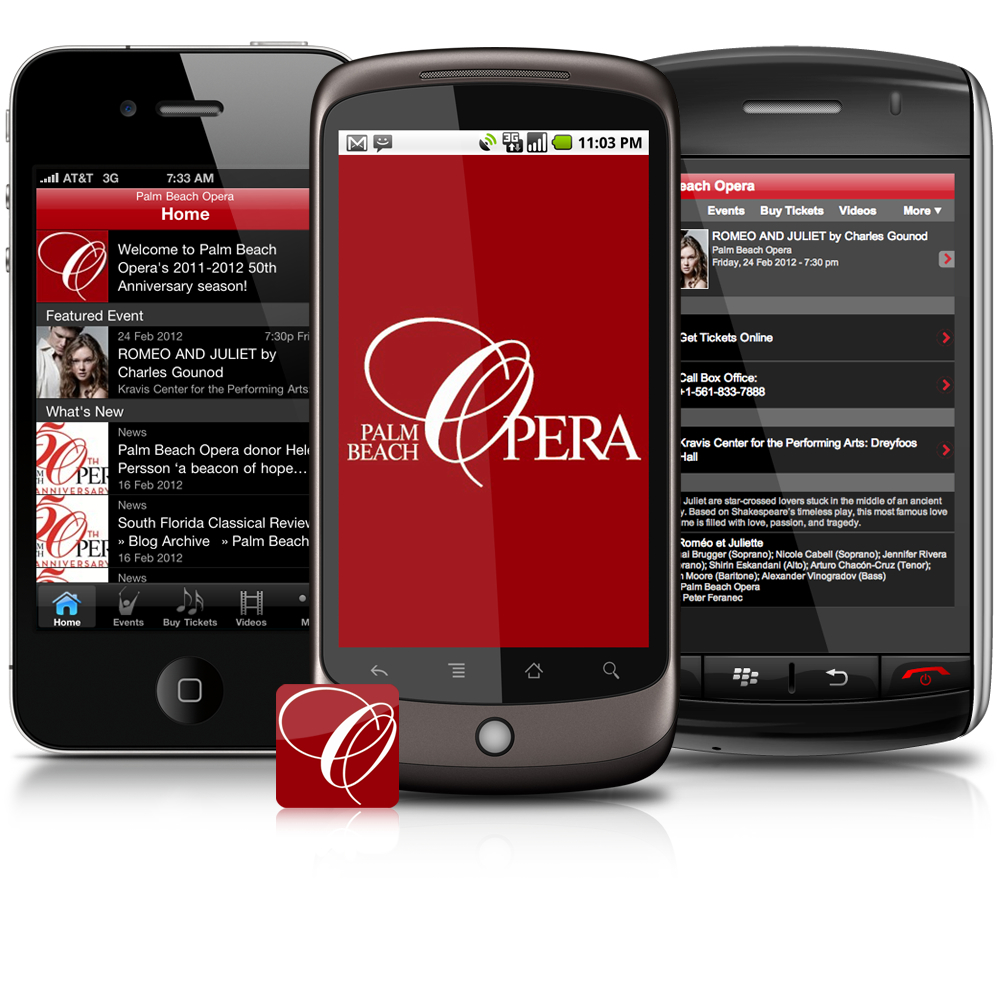
Palm Beach Opera app. Image courtesy/used by permission of Palm Beach Opera.

Also, sites utilizing responsive design capabilities will do this automatically for you.  The first step is to view your site using a smartphone or tablet to see what it looks like.  Is all of your content visible?  Does the navigation function?  Is it easy to move around the site?  If the answer to any of these is “no,” you will want to put a plan in place to improve the mobile viewing experience as soon as possible. You never know, your next ticket purchase may come from someone viewing your site on an iPad or Kindle Fire!

Responsive design examples from Palm Beach Opera. Image courtesy/used by permission of Palm Beach Opera.

5.    Tweet Seats  – There has been a lot of attention on tweeting during performances recently giving cases both for and against it.  There is no one way to do tweet seats, and they might not be appropriate for your organization depending on your venue or programming.  We decided to try it out this past season not for our regular performances, but rather for our final dress rehearsals.  We offered a small amount of seats to the dress rehearsal to people who signed up on our website who are active on Twitter with the understanding that they would tweet about what they were experiencing during the show.  They were encouraged to be honest and use their own voice in their tweets and to give any thoughts or feelings that they had.  The first event went very well and word started to spread and soon we had a great number of ticket requests for subsequent dress rehearsals.  We were lucky to attract people who wouldn’t be considered “opera-goers” and many of those who came to tweet had never been to an opera before.  Coincidentally, we also attracted some members of the media at local TV stations, which resulted in additional media coverage for the opera.  Based on the success of the events this season, we plan on continuing to offer tweet seats in future seasons to bring opera to members of the community at large.
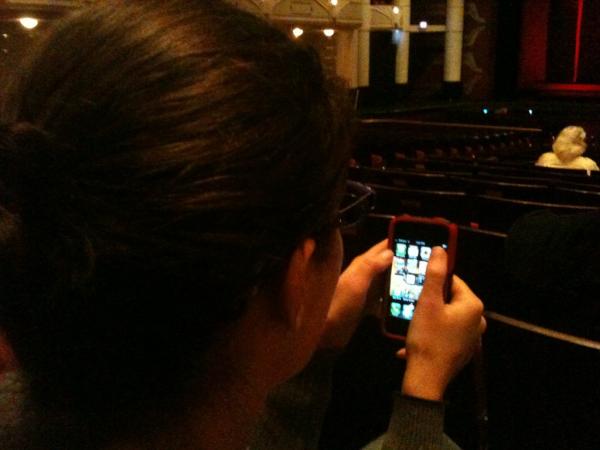
Tweet seats at Palm Beach Opera. Image courtesy/used by permission of Palm Beach Opera.
Spotlight on Ricou Browning

by Jennifer Hoesing

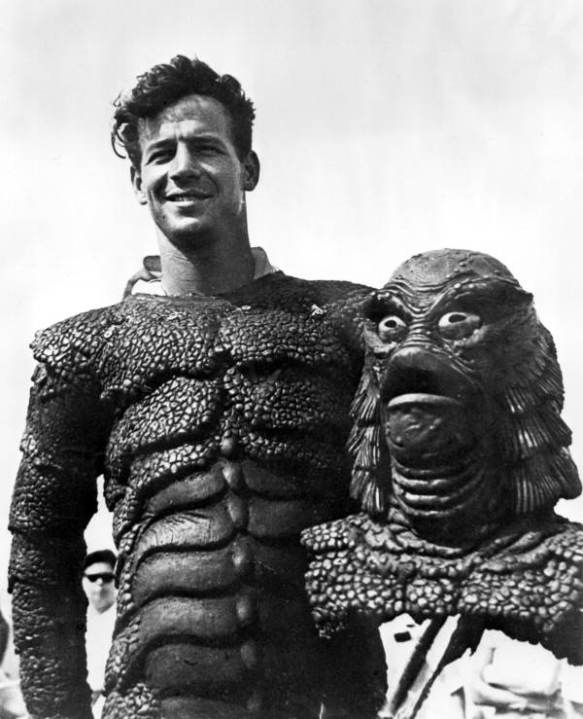
Ricou Browning as the Creature From the Black Lagoon

Ricou Browning in his movie costume during the filming of Creature From the Black Lagoon at Wakulla Spring, Florida. Image from the State Archives of Florida.

An early icon in Florida films, Florida Artists Hall of Fame inductee Ricou Browning wrote, acted, directed and designed many of the most popular movies and television series shot in the Sunshine State. These films included Creature from the Black Lagoon, Flipper, Seahunt, Gentle Ben and others. A penchant for underwater stunt work came from his years in the 1940s as a “merman” swimmer at Wakulla Springs, Weeki Watchee, and Silver Springs.

He pioneered the field of underwater motion picture photography, beginning with his work at the legendary Ivan Tors film studio in Miami — the only major studio to have originated in Florida. Among his many honors, Mr. Browning became President of Ivan Tors Studio and in 1968 was elected to head up the newly created Florida Motion Picture and Television Producers Association.

Once he began working in film, he never stopped. From directing some of the most daring underwater scenes ever filmed in James Bond’s Thunderball in 1966, directing underwater scenes in Caddyshack in 1980, to coordinating marine stunts in an episode of Boardwalk Empire in 2010.

Spotlight On Robert C. Broward

by Jennifer Hoesing

Robert C. Broward

The work of architect and Florida Artists Hall of Fame inductee Robert C. Broward has literally changed the face of Florida.

He began his career in 1949 as an apprentice to Frank Lloyd Wright during the construction of Florida Southern College, and his work as an author continues to this day. In sixty-one years of architectural practice in Florida, Broward has produced diverse designs including small homes and chapels, as well as large warehouses, office buildings, churches museums, movie theaters, high-rise buildings, oceanfront residences and corporate headquarters.

His love of nature, particularly in Florida (where has been a lifelong resident), inspired his organic architectural methods. In his work, design and sustainability parallel a commitment to environmental stewardship. Methods of building, materials, site conditions, orientation to the sun, rain and other natural phenomena were major considerations in Broward’s work. In just one example, he often designed rainwater collection to create spilling effects as a decorative and sonic element, celebrating frequent rainstorms in Florida.

Unitarian Church, Jacksonville, 1965. Image courtesy/used by permission of Robert C. Broward.

As a teacher, mentor and author, Broward contributed to architectural scholarship by influencing the careers of two generations of architects. He taught for four decades in academia as Adjunct Professor of Design at the University of Florida. He wrote the definitive scholarly work on Henry John Klutho’s Jacksonville structures. Now in its second edition, the book features of 500 photographs of the early twentieth century architecture that revived a city ravaged by fire. Broward published in numerous magazines, books and newspapers, and an entire issue of a national architectural journal was devoted to his work.

In 2011, Broward was elevated to the prestigious American Institute of Architects (AIA) College of Fellows, the highest designation in the architectural profession. In February 2012, he was inducted info the Florida Artists Hall of Fame during a ceremony at the Jacksonville Historical Society. His prolific career has produced a legacy of outstanding architecture throughout Florida and beyond.

Spotlight On Jacksonville Comedy from The Florida Memory Blog

by Katrina Harkness, blogger for The Florida Memory Blog

Portrait of Oliver Hardy

Portrait of Oliver Hardy from The Florida Memory Project

You might not think of the words Jacksonville and comedy together. But in the early years of American movies, Jacksonville, Florida, experienced a brief turn in the spotlight as one of the hubs for filmmaking on the east coast.

The Vim Comedy Company, based in Jacksonville and New York, was one of several film studios operating in the Jacksonville area in the first three decades of the 20th century. Before going out of business in 1917, it employed such stars as Oliver “Babe” Hardy, Ethel Burton, Walter Stull, and Kate Price, as well as Swedish-born director Arvid Gillstrom.

Oliver Hardy began his film career and rise to international fame in Jacksonville, first at the Lubin studio, then with Vim and his own production company, and finally with the King Bee studio, which took over Vim after its repeated financial troubles.

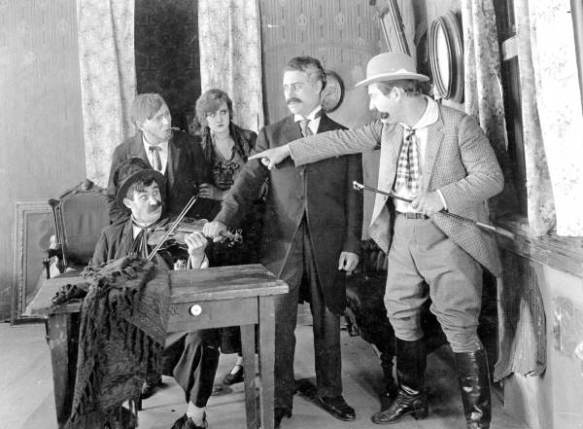
Motion picture scene from "Strangled Harmony"

Motion picture scene from "Strangled Harmony," from The Florida Memory Project

Hardy, Price, and many of the other Jacksonville actors made permanent moves to Hollywood soon after the political atmosphere in Jacksonville turned against the movie industry due to accusations of fraud, ties to political corruption, and fear of endangering the public welfare with elaborate stunt sequences staged without city approval. The film Bouncing Baby shows stunts shot in the streets of Jacksonville.

Motion picture scene

Motion picture scene from The Florida Memory Project

In a recent episode of the TV show Downton Abbey, Mrs. Hughes was surprised that Carson knew who Theda Bara was. Who was Theda Bara and what was her connection to Florida?

Today’s post features content from The Florida Memory Blog. The blog, launched earlier this month, makes resources from the State Library and Archives of Florida available to the public and encourages the study of Florida’s rich history and culture.

Spotlight On: Faces of HIV

by Jennifer Hoesing

We Make the Change, a statewide campaign designed to increase the awareness of HIV/AIDS and its impact on communities throughout Florida, is using art to tell the story of Floridians living with HIV. Faces of HIV uses larger-than-life portraits, journal entries and interviews to explore the effects of stigmas, the personal relationships, and care issues associated with being HIV-positive.

The Faces of HIV mobile exhibit truck

It’s all part of a mobile art exhibit traveling the state.  The exhibit truck takes to the streets today at the Florida State University College of Medicine. The exhibit stops tomorrow at Tallahassee’s Governor’s Square Mall before traveling to Orlando, Miami, Jacksonville, and Tampa later this year.

“We need to eradicate stigmas,” said Thomas Liberti, Chief of the Bureau of HIV/AIDS for the Florida Department of Health, in a press release. “The Faces of HIV project allows people from across the state to experience real-life stories of inspirational and courageous individuals who have shared their difficulties, battles, and triumphs.”

Visit the Faces of HIV website to view photos, read journal entries and see videos from the participants.

Spotlight On PACE Center for Girls/Harn Museum Collaboration

by Jennifer Hoesing

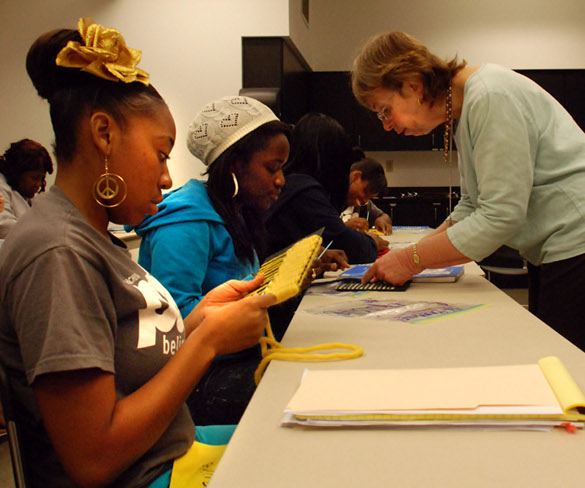
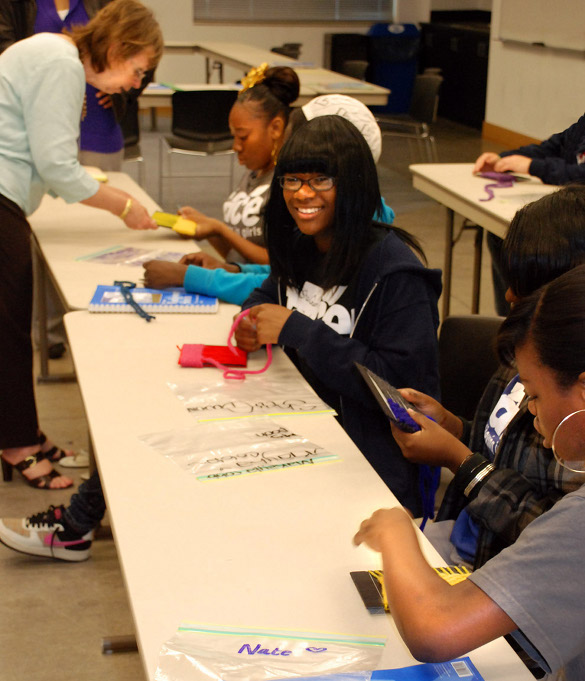
Everyone benefits from art. That’s the sentiment behind a project that connects at-risk girls from PACE School for Girls and the Harn Museum in Gainesville.

“We were thrilled to offer this program again because it aligns art with the students’ existing educational goals and the Harn’s mission to bring the university’s resources to the community as the community’s art museum,” said Rebecca Nagy, Harn Museum of Art director.

The Harn Museum, a previous Division of Cultural Affairs grantee, was awarded a matching grant from the National Endowment for the Arts to continue the partnership with PACE through 2012. In 2011, Harn Museum staff members visited PACE five times, and the PACE students visited the Harn Museum five times. The girls learned about the role of museums in society, art, history, artists and world cultures by linking exhibitions to popular culture.

“The girls gain a wider perspective by learning what artists do in the creation process, understanding other cultures, and meeting role models through working with interns, volunteers and staff,” said Bonnie Bernau, education curator of community outreach at the Harn.