The Cathedral Arts Project is an arts education organization serving the children of Northeast Florida by providing access to instruction in the visual and performing arts. It was founded in 1993 by a small group of individuals from St. John’s Cathedral wanting to provide arts instruction to underserved and at-risk youth. We chatted with CAP’s President and CEO, Rev. Kimberly Hyatt, to learn more about the organization and about her career as an arts leader in Florida.
Division of Cultural Affairs (DCA): How long have you lived and worked in Florida?
Kimberly: This summer will be 23 years. I came to Florida in 1996 and have been with the Cathedral Arts Project since 2002.
DCA: Tell us about your work with the Cathedral Arts Project. What is the best part of your job?
 Kimberly: The children are definitely the best part of the job — just witnessing how the arts can transform a child’s life. We see time and time again that there’s something about the arts to reach children in ways nothing else can. The arts stay with them for life and it is really a privilege to witness.
DCA: What are some of the challenges involved with leading this organization?
Kimberly: When leading any institution there are always challenges to overcome and we try to see these as opportunities to solve. One challenge would be the fact that there are so many children in our community who would benefit from an arts-rich education. Continuously trying to serve these children while maintaining the standards of our programming is definitely a challenge — to balance growth with maintaining quality.
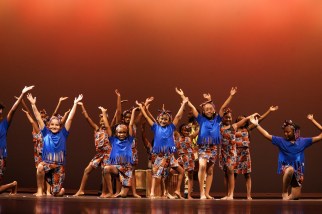 Right now, it is especially important to make sure everyone understands how vital the arts are when it comes to issues of mental health. It’s so tough to be growing up today and I really feel that it is more important than ever that children be able to utilize the arts as a means of self-expression. I think anyone who watched the powerful performance by the Marjory Stoneman Douglas theatre students at last year’s Tony Awards is aware of just how important the arts can be when facing complex challenges.
Getting everyone to understand that if you care about public education, you must care about arts education is also particularly challenging. We’ve been able to move the needle a great deal here in Jacksonville, but it is so important that everyone learns how impactful an arts education can be. We know what the arts are capable of achieving and we want to make them the top of everyone’s minds.
DCA: How has the organization evolved over the years?
Kimberly: When I came the budget was small, under $100,000. It was a fledgling ministry of the local cathedral that had just recently become a standalone nonprofit organization. Now our budget is over $2 million and growing — so we’ve definitely evolved in that way. This has allowed us to grow from being a small organization serving just a few children to a more complex organization that serves many more children, working collectively with others for systemic change. Today I tend to put our work into three buckets.
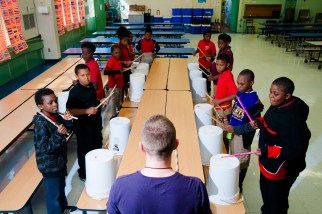 The first is that we teach children, so we provide arts learning to children who need it the most. That will always be the heart and soul of what we do. The Cathedral Arts Project also provides professional development for local artists, educators, and school administrators. The third bucket is advocacy. We spend a lot of energy on advocacy, working to broaden the relevance of arts education in the minds of families, policymakers, and business leaders. This goes hand-in-hand with what I said earlier, that caring about public education means caring about arts education.
For a program that started out serving just 10 kids in an afterschool dance class, we’ve grown tremendously. We directly impact more than 1,000 students each year through our afterschool and summer programs but are able to serve many more through the various facets of our programming. Over the years, more than 28,000 children have been enrolled in our programs.
DCA: Which counties or areas does your organization serve?
Kimberly: We serve all of Duval County, which has over 129,000 students enrolled in public schools.
DCA: In your opinion, what is the greatest contribution the Cathedral Arts Project makes to the community?
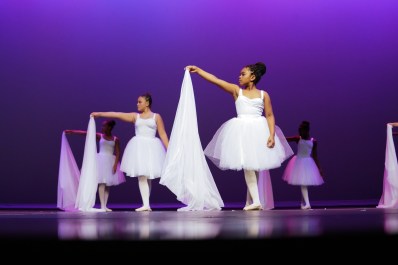 Kimberly: It goes back to our mission statement. I truly believe that we are enriching the quality of life here for generations to come. The latter part of that statement is easy for us to sometimes gloss over, but the transformative effect that our work is having on a child’s life will have ripple effects for generations to come, in countless ways.
DCA: What do you think of when you hear “Culture Builds Florida”? Why are the arts and culture important to our state?
 Kimberly: I think that culture really is what sets us apart as a state. Culture draws visitors to come and have experiences that they can’t have anywhere else. Culture is what draws companies to relocate their communities and it’s why people want to live here. I think it is culture that joins all of us to work here together, regardless of how different we might be. I believe that arts and culture provide opportunities for each of us to feel like we belong and to understand each other and really build one another up.
The Division thanks Rev. Kimberly Hyatt and the CAP team for their participation in this interview. To learn more about the Cathedral Arts Project, visit their website: https://capkids.org/.

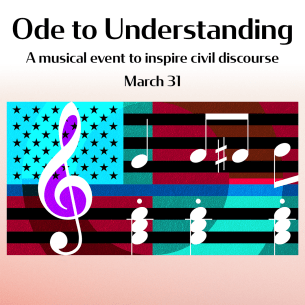
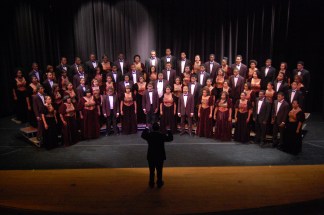 Presented by Leon County Government, the “Ode to Understanding” project brings together the forces of the Tallahassee Symphony Orchestra, The Village Square, the Florida A&M Concert Choir, and the Morehouse College Glee Club to create a profound community event that will open hearts and inspire civil discourse.
 The concert’s second half will present Beethoven’s beloved Ninth Symphony, a fitting expression of humanity, brotherhood, bonding and equality. Beethoven’s Ninth is a life-affirming masterpiece whose joyful message has inspired millions of people worldwide since its premiere in 1824. Through partnerships with local government, other arts organizations, and community members, the event underscores the importance of community to transcend division.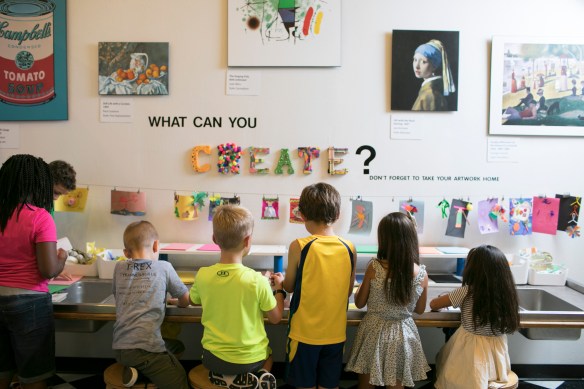
 Founded in 1986 as the result of a movement to create a children’s museum by the Junior League of St. Petersburg, Great Explorations maintains a significant presence in the Tampa Bay area and nationwide. A member of the Association of Science-Technology Centers and the Association of Children’s Museums, Great Explorations was the first mid-sized children’s museum to receive accreditation from the American Alliance of Museums. It is the only accredited children’s museum in Tampa Bay and one of fewer than a hundred accredited children’s museums nationwide. Great Explorations is committed to upholding museum standards of excellence through its work with children and families in the St. Petersburg community and beyond.
 Since its founding, Great Explorations has remained steadfastly committed to education through a variety of avenues both inside the museum and out in the community. We provide S.T.E.A.M. based educational exhibits and programs daily on the museum floor for visitors and school field trip groups. Our Museum InReach field trips provide elementary-aged children with opportunities for unrestricted self-guided “purposeful play,” providing a unique multi-sensory approach to the traditional classroom subjects taught in school. As funding permits, Title 1 schools and nonprofits are granted free field trips and bus vouchers to ensure students access to our museum; and for many of these students, it is their first visit to a museum in their lifetime.
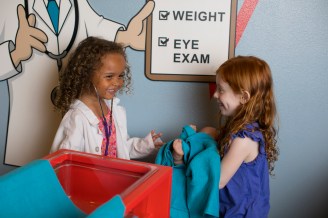 Our educational programming for school-aged children extends to summer camp opportunities as well as after school programming that not only provides homework assistance but extends learning opportunities beyond school hours in our nurturing, enriching and fun environment. Our community outreaches also allow us to take our educational programs mobile, bringing hands-on interactive S.T.E.A.M. activities directly into the most at-risk communities, providing access to high-quality, fun, educational experiences to those that are unable to access these programs at the museum due to monetary or transportation barriers.
 After consulting with the Center for Autism and Related Disabilities, Great Explorations launched “Great Connections” in January 2014. The goal of the program was to provide a less crowded and stimulating time for families of children with special needs to explore the museum. We provide extra staff for increased safety and supervision and a “cool down room” for children who need a break.
 We are thankful to be one of many organizations that have begun to offer sensory-friendly experiences. It has always been our goal to represent a more inclusive environment that might encourage families to feel more comfortable participating in other museum programs like camps, Parents’ Night Out, and special events, opening the door to a more inclusive experience for all families at all times. We are thrilled to say that we have witnessed this to be the case since the program’s inception. Many families continue exploring the museum even after we open to the general public, and many speech and occupational therapists use our “child-sized world” as a safe place for therapy during standard operating hours.
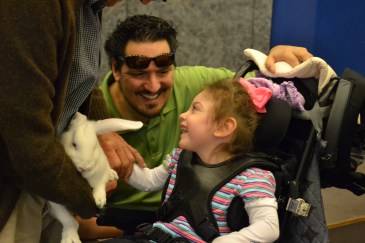 In the five years since its launch, Great Connections has been a huge benefit to our community because it connects people. It connects family members to each other through interactive engagement fostered by play, it connects families to other families facing similar challenges, and it connects families to services and support from local organizations. We hope to continue to adapt to the needs of the community and to represent the holistic benefits of providing inclusive environments that celebrate the diversity of our community’s children.
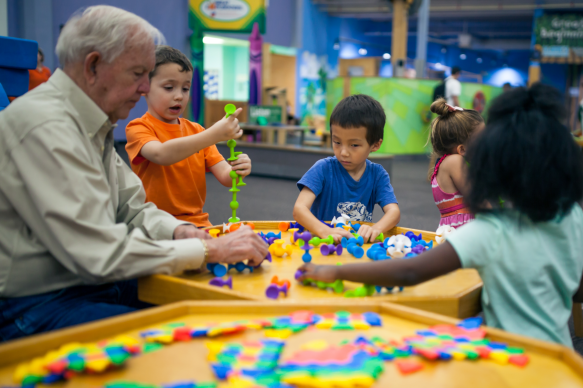 Great Explorations is also committed to engaging differently abled adults. In 2017, the museum was approached by three women, now affectionately known as the “Brain Dames”, about being involved in an ongoing program that would provide experiences that could benefit adults with memory loss. In partnership with AARP and the “Brain Dames”, as well Great Ex’s Director of Community Initiatives, Lael Arango, we launched “Memory Monday” in 2018.
 Memory Monday is unique in that it goes beyond providing a social experience or a “keep Grandma occupied” experience by presenting high-quality activities that enrich and engage participants. For example, the
 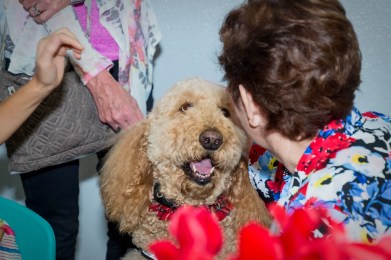 Memory Monday benefits the community by reminding people with memory challenges that their brains are still able to learn and that they are still able to enjoy new experiences. We have also created numerous partnerships with organizations that aren’t necessarily on the front lines of serving families with memory loss, bringing diverse organizations together to serve a growing population in a unique and creative way.
 In 2012, we were “reborn” as Arts Alive Nassau and started offering three programs: a dulcimer class, an elementary school band, and a visual art class. Originally, we worked with three elementary schools and provided the classes after school. Over the past six years, we have grown to providing 20 after school classes and two classes with the ESE program during the school day. We are now a presence in each of the nine elementary schools in the county. The schools don’t charge us anything for the use of the space and we are able to offer our instruction free of charge, in exchange. It’s a wonderful relationship because finding space and getting kids on location is often a problem. Through our partnership, the instruction happens right where they are and it has worked very well.
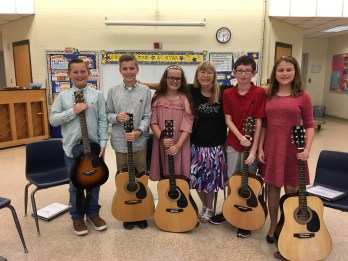 Jane: We offer music lessons, violin, ukulele, band… one of the elementary schools has both a brass ensemble and a drumline. We still offer our dulcimer classes as well as visual arts classes in painting, drawing, and puppetry. We also have a great partnership with a theater company in South Carolina, the Baillie Players, that has helped us produce musicals at Callahan Elementary School for the past five years. This year they are doing “Snow White”. The teacher at Callahan has all the music, scripts, choreography and casts the show and then our partner company will come down to coach the kids and bring the sets, costumes, and props. There are usually 40-50 students involved and it’s such a wonderful thing for the children. In Callahan, which has a population of around 1,300, the community members and families come out in droves to see the children perform– even the mayor usually makes an appearance! It’s a great event not only for the students involved but for the community, as well.
 Jane: Each year, close to 600 students are involved in our activities. Currently, we have 255 students in our classroom-based programs. We’d love to be able to reach more students but are limited, like many organizations, by our budget.
 It’s definitely seeing the children’s faces. When they get excited and they’ve just learned how to play something, they are so proud of themselves. I think that arts education presents the opportunity for children to find out who they are inside because to me, that’s what the arts give us. They allow children the opportunity to find out who they are through creativity. To see the awakening that takes place in every student and the self assurance and self esteem that comes from learning that they can perform and create in front of people is just amazing. I think that the arts are wonderful because you can have so much fun while you’re learning.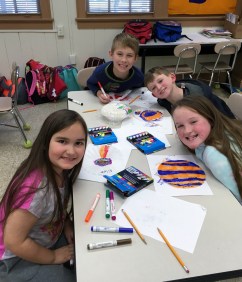
 Culture Builds Florida