Nilda Comas is a sculptor based in Fort Lauderdale. She was chosen by the Florida Council on Arts and Culture to create the new statue of Mary McLeod Bethune for National Statuary Hall, located within the Capitol in Washington, D.C. Dr. Bethune will be the first African American woman to represent a state in National Statuary Hall, and Nilda Comas is the first artist of Puerto Rican descent to create a statue representing a state.
Because National Sculpture Day was April 24, we thought she would be the perfect interview for our new Culture Builds Florida video interview series. We spoke to her via Zoom from Pietrasanta in Italy, where she is currently working on the sculpture.
Alejandro Rodriguezfrom the National Endowment for the Arts
The National Endowment for the Arts’ Musical Theater Songwriting Challenge is a national contest for high school students presented in partnership with the American Theatre Wing, in collaboration with Disney Theatrical Productions, Concord Theatricals and National Music Publishers’ Association’s S.O.N.G.S Foundation. The goal of the program is to engage the musical theater field in nurturing the next generation of songwriters. Winners are paired with a professional theatrical coaching team consisting of a mentor and music director to hone the student’s original song into a Broadway-ready composition. Their song is then recorded by Broadway musicians and vocalists in New York City. Final songs are distributed on streaming music platforms and compiled into a songbook created by Concord Theatricals.
One of the 12 winning songs is by Floridian Alejandro Rodríguez, a Colombian composer/performer. He graduated Cypress Bay High School in Weston and is currently pursuing a degree in Music Composition at Florida State University. Rodríguez has been doing musical theatre and music since he was in elementary school, participating in various musical productions in and out of school, as well as taking voice, piano, acting, and dance lessons. He is currently writing a musical called My Elijah, a gay love story set in Europe during World War II. Some of his music for My Elijah can be heard on his recently released EP “Songs from My Elijah” on most streaming platforms. Alejandro’s winning song, “Days from Long Ago,” is taken from My Elijah. He would like to thank the NEA & American Theatre Wing for this incredible opportunity as well as his family and friends for their endless support.
The Division of Cultural Affairs would like to thank Alejandro for answering a few questions about himself and his art.
How long have you lived in Florida?
I was born and raised in South Florida, near Fort Lauderdale. My whole family is Colombian and they moved to Florida two years before I was born.
What got you started in theatre?
When I was 7 years old, I started taking voice lessons at Broadway Kids Studio in Davie, FL and was introduced to the amazing beauty that is Musical Theatre. I remember the first musical theatre song I ever sang was “Mister Cellophane” from the musical Chicago. Then a few years later, I saw my first musical which was the Broadway tour of Wicked and that basically formed my love for theatre and Broadway.
How did you find out about the Musical Theater Songwriting Challenge? What was the process of preparing and applying like?
I was doing the show 35mm at Broadway Kids back in February 2020 and my director forwarded me an email about the Songwriting Challenge and told me that I should apply. At the time, I had recently released an EP on all streaming platforms of a few songs from the show I’m currently writing, My Elijah, as part of my sister Valentina’s college senior thesis. “Days from Long Ago,” was on that EP and so I decided to submit that song. I submitted the track, the score, and the storylines of the song and the show, and how the song fits into the show. I only found out about the competition about a week before the deadline but thankfully the application process was quite simple. The NEA extended the deadline due to the pandemic, so I didn’t hear from them for about five months. Then in August, I got an email saying that I advanced on to the final round of judging and then about a month later, I got another email saying that I was selected as one of the 12 national winners for the challenge. I didn’t think I had a chance at all of being selected since it was a national competition, but I’m so thankful to have this opportunity and for the whole experience.
What are some of your artistic influences? What are you currently working on?
Lin-Manuel Miranda is probably one of my biggest artistic influences as a Latinx composer and performer. He has not only created revolutionary and inspiring masterpieces such as Hamilton and In the Heights, but also starred in them, which is basically what I aspire to do. Before knowing about Lin-Manuel, I didn’t think it was possible for that to happen on Broadway, but I’ve seen that musicians like Sara Bareilles, Dave Malloy and Billie Joe Armstrong have gone on to perform in their shows. Other artistic influences include Amber Riley, Stephen Schwartz, Stephen Sondheim, Anaïs Mitchell, and Jessica Vosk. At the moment, I am currently trying to finish writing and composing My Elijah, as well as creating other works primarily for musical theatre.
In your opinion, what is your greatest work or moment that you’ve been a part of within your local arts community?
Yikes, do I have to pick just one? I think it would be either creating my EP “Songs from My Elijah” with my sister or performing in Spring Awakening at Inside Out Theatre Company in Sunrise, Florida. Probably the EP more because I was in Philadelphia with my sister, who produced and sang on the EP, and I got to work in a recording studio and meet so many phenomenal musicians and vocalists from my sister’s university.
Recording “Days from Long Ago” with Broadway theatre artists
What do you think of when you hear our motto “Culture Builds Florida”? Why are arts and culture important to our state?
It’s very self-explanatory when you see it. Culture is what makes a civilization, no matter where you go. Arts and culture play a key role in society and I think that without those things, what are we? Arts and culture not only entertains us, but also educates us, informs us, inspires us, and allows us to see things from different angles.
Is there anything you would like to add?
Check out “Songs From My Elijah” on all streaming platforms, follow @myelijah_musical on Instagram and @myelijah on Facebook and be on the lookout for my song, “Days From Long Ago,” on the upcoming #IWriteMusicals 2020 Musical Theatre Songwriting Challenge album!
On August 5, 2020, the Institute of Museum and Library Services (IMLS) and Alliance for Young Artists & Writers announced the 5 students comprising the annual class of their National Student Poets Program (NSPP). Isabella Ramirez, a student at West Palm Beach’s Dreyfoos School of the Arts, serves as the National Student Poet for the Southeast Region, which includes Alabama, Florida, Georgia, Kentucky, Mississippi, North Carolina, South Carolina, Tennessee, Virginia and West Virginia. During her year as National Student Poet, Isabella will serve the communities in the region and state during her year of service with activities such as conducting workshops, performing readings, and even leading training for community leaders. We spoke to Isabella about the journey that led her to this honor.
How long have you lived/been in Florida? I was born and raised in Florida, so I’ve lived here all my life!
What got you started with the literary arts and writing poetry? As a child, you could always find me with a book in hand or writing in a composition notebook, so in a way, the literary arts were something that I found myself naturally inclined to. I didn’t start getting serious about the literary arts however until I auditioned for Bak Middle School of the Arts as a communications major. There, I was exposed to creative writing, poetry, film, and journalism in an academic setting that allowed me to begin cultivating my interest in the communication arts. Interestingly enough, I spent much of my time in middle school and eventually high school as a student journalist way before I ever called myself a poet. Although I had always written poetry and appreciated the art form, I didn’t truly begin my journey as a poet until I joined the slam poetry team at my high school my junior year. From there, opportunities blossomed out of poetry, and I couldn’t be more grateful.
How did you find out about the National Student Poet competition? My first exposure to the National Student Poets Program was in 2019 when I attended the Scholastic Art & Writing Awards Ceremony held at Carnegie Hall as a gold medal recipient in journalism. The National Student Poets get to perform at the awards ceremony, so I saw the Class of 2018 perform their poems and was absolutely mesmerized. However, even with that, I didn’t know much about the program until the following year when I was named a national silver medal recipient in poetry, qualifying me for the National Student Poets Program.
What was the process of preparing and applying like? What are you looking forward to about the opportunity? The only way to be considered for the program is by receiving a national medal in poetry from the Scholastic Art & Writing Awards, which only about 400 works out of the original 20,500 received. From there, I found out I was one of 40 semi-finalists selected for the program, and I submitted an application with a portfolio of work and videos of myself performing that work. Then, in summer of 2020, I found out I was selected to be the National Student Poet for the Southeast Region of the United States. I was so happy; I had never imagined when I initially submitted my poetry to find myself in such an honorable position. There are so many exciting things that come with being a National Student Poet, but I’d have to say I’m most excited for engaging with my local communities through the literary arts and poetry to hopefully share my passion with others.
What are some of your artistic influences? What are you currently working on? I have a variety of artistic influences, but the main ones include other slam poets such as Olivia Gatwood and Melissa Lozada-Oliva and news/politics. Many of my poems are my reflections on socio-political issues and often my personal experiences with them, so the news tends to be one of the biggest influences on my poetry. Currently, I’m working on preparing slam poems for the upcoming Louder Than A Bomb Florida Slam Poetry Competition. As you can imagine, there’s certainly a lot to write about after living through 2020.
What do you think is the greatest moment that you’ve been a part of within your local arts community? One of the greatest events I’ve been able to be a part of within my local arts community was the Louder Than A Bomb (LTAB) Florida Slam Poetry Competition. The competition happened to fall in March of 2020, which was right when the United States began shutting down and life changed drastically due to the pandemic. My peers and the community were in much need of relief, and LTAB helped bring us all together. LTAB shifted the competition to online, and despite the virtual setting, I felt that the excitement and “hype” that exists at slam poetry competitions translated well online. It was a chance for me to get my poetry out there and watch live the Facebook comments and support from the slam poetry community pour in. I also had the chance to listen to other students’ poems and learn from my peers, which is my favorite part of slam poetry. During a time where many were feeling disconnected and lost, LTAB brought together the Florida community to share and connect through poetry.
What do you think of when you hear our motto “Culture Builds Florida”? Why are arts and culture important to our state? When I hear the motto “Culture Builds Florida,” I reflect on the impact arts and culture have as the foundation of our society. As someone who was able to tap into arts education in Florida early in my life, I cannot even express how enriching it has been to have access to the literary arts and gain invaluable life skills and opportunities from it. The arts exposes people to worlds that exist outside of their own and allows people to develop an empathy for others they wouldn’t have otherwise had. In a diverse state like Florida, this empathy and connection that the arts stimulate is necessary to building bridges across cultures. As a Latinx individual in Florida, the vibrant Hispanic culture that exists in Florida and presence of our arts has not only let me connect with others from my community, but further connect with my own identity. Arts and culture truly build Florida as the backbone of this state, and I couldn’t be more proud.
Thank you for chatting with us, Isabella. Is there anything you would like to add? If you would like to get in contact with me and discuss how I can serve your community as National Student Poet, you can email the program’s manager, Hannah Jones, at hjones-consultant@scholastic.com. For any news coverage requests, please email the program’s publicist, Kelly Forsythe, at kelly@forsythepr.com.
Founded in 1973, Florida Studio Theatre (FST) is a professional regional theatre located in downtown Sarasota and has grown to serve more than 230,000 live attendees each year. The largest subscription theatre in the state, FST has six core programs: Mainstage, Cabaret, Stage III, Children’s Theatre, Education, and New Play Development.
As Florida Studio Theatre was forced to close its five stages on March 15, FST is now down to a crew of about 30 people. Still, the theatre is moving forward, and is readily preparing to reopen in early 2021. In the meantime, Sarasota’s acclaimed contemporary theatre is continuing to find new ways to serve its loyal audience.
Michael Grieve and Heather Michele Lawler in NNPN Women in Playwriting Festival workshop performance of The Forest by Lia Romeo. Photo by Sarah Haley.
INVESTING IN THE BEST NEW PLAYS OF TOMORROW
Over the past seven months, FST has increased its investment in New Play Development. With funding assistance from the Paycheck Protection Program, FST launched a new artistic initiative: The Playwrights Project.
Development session of a new play by Jacqueline Goldfinger. Photo by Sarah Haley.
Playwright Collective Members Rachel Lynett, Jacqueline Goldfinger, and Mark St. Germain. Photo by Sarah Haley.
The Project employed 33 playwrights, sketch comedy writers, and musical theatre developers as full-time staff writers for eight weeks, each creating new work that will be considered for future production on FST’s stages.
But the creative process did not stop when the Project came to a close in mid-June.
Several Project artists have gone on to join FST’s Playwright Collective, a brain-trust of top tier playwrights from across the country, working closely with FST’s artistic staff to develop new work for the FST stage. More than a dozen new plays are currently in process and headed for Mainstage production.
THEATRE TRAINING GROWS ONLINE
One of the most significant ways that FST has been able to serve the community is through The FST School. Since May, students from as far as California, Connecticut, and Mexico have explored Acting, Theatre Writing, and Improvisation without leaving the comfort of home, thanks to FST’s new online classes.
Alexa Doggett leads a virtual movement class. Photo by Sarah Haley.
“I almost didn’t sign up, as I feared my creativity had been buried under the weight of the present day,” said past student Kate H. “But I’m glad I did. I spent this morning writing, instead of being glued to the news cycle.”
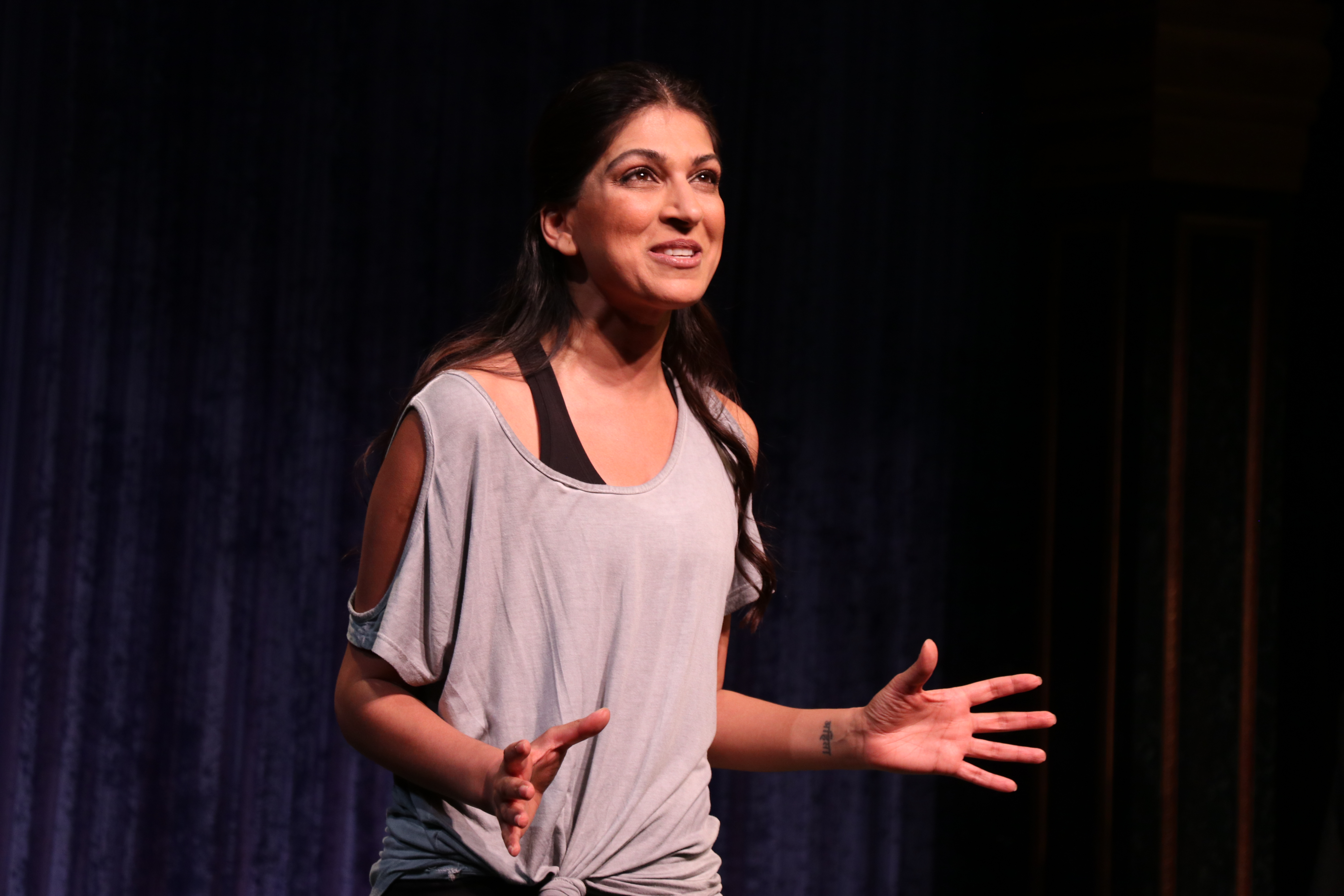
Minita Gandhi in NNPN Women in Playwriting Festival workshop performance of MUTHALAND by Minita Gandhi. Photo by Sarah Haley.
“My daughter has always had a knack for performing arts, but has had a hard time overcoming her shyness,” shared FST School parent Shaina N. “Since she started taking classes at FST, I’ve noticed an immense improvement in her confidence!”
Kate Alexander and Josh Ford lead virtual summer camp. Photo by Sarah Haley.
Also, in order to serve those who are doing so much to serve us, The FST School has expanded its scholarship program to include teachers, front-line workers, and their families as well.
THEATRE IN THE SCHOOLS
Logo for Arts Power’s Chicken dance. Photo from Arts Power.
FST is partnering with another Sarasota arts organization, Van Wezel Performing Arts Hall, to inspire young audiences through theatre with new virtual programming!
Logo for Arts Power’s Anne of Green Gables. Photo from Arts Power.
Instead of traveling within classes to FST and the Van Wezel to experience the magic of live theatre, elementary schools will have free access to two online musicals adapted from beloved children’s books: Chicken Dance and Anne of Green Gables.
In addition to these two streamed online musicals, FST is offering an interactive, virtual adaptation of its award-winning, arts-in-education initiative, WRITE A PLAY, to area schools entirely free of charge.
Now in its 30th year, FST’s WRITE A PLAY program gives students the example, tools, and inspiration to write plays of their very own.
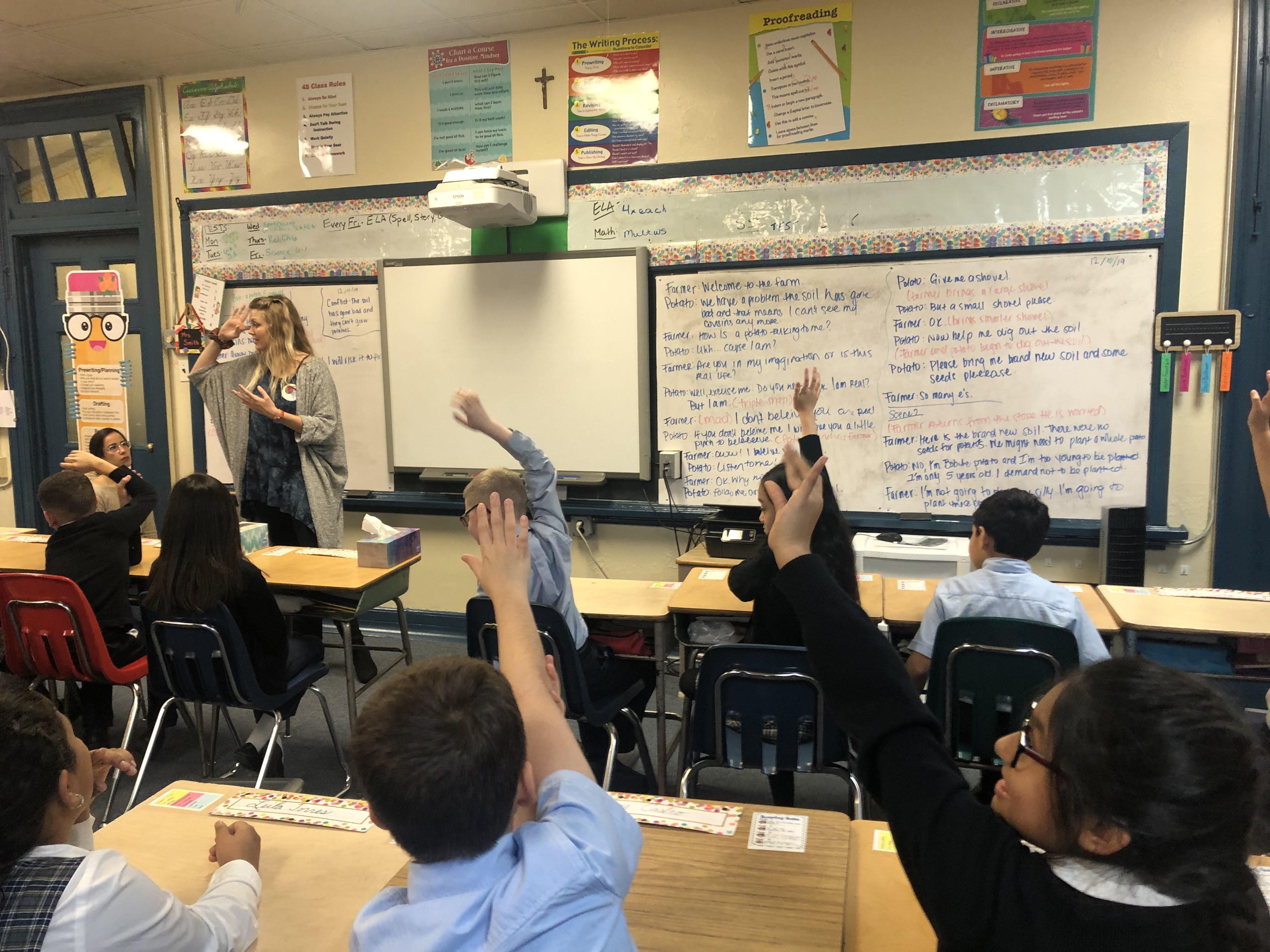
Denee Lortz leads a playwriting workshop as part of FST’s WRITE A PLAY program at Holy Name School in Camden, NJ. Photo by Caroline Kaiser.
Although just the ghost lights remain on in FST’s five stages, we know that this is only “intermission”. The curtain will rise again. And when it does, we can’t wait to see you there.
The Division thanks Florida Studio Theatre for their participation in this feature!
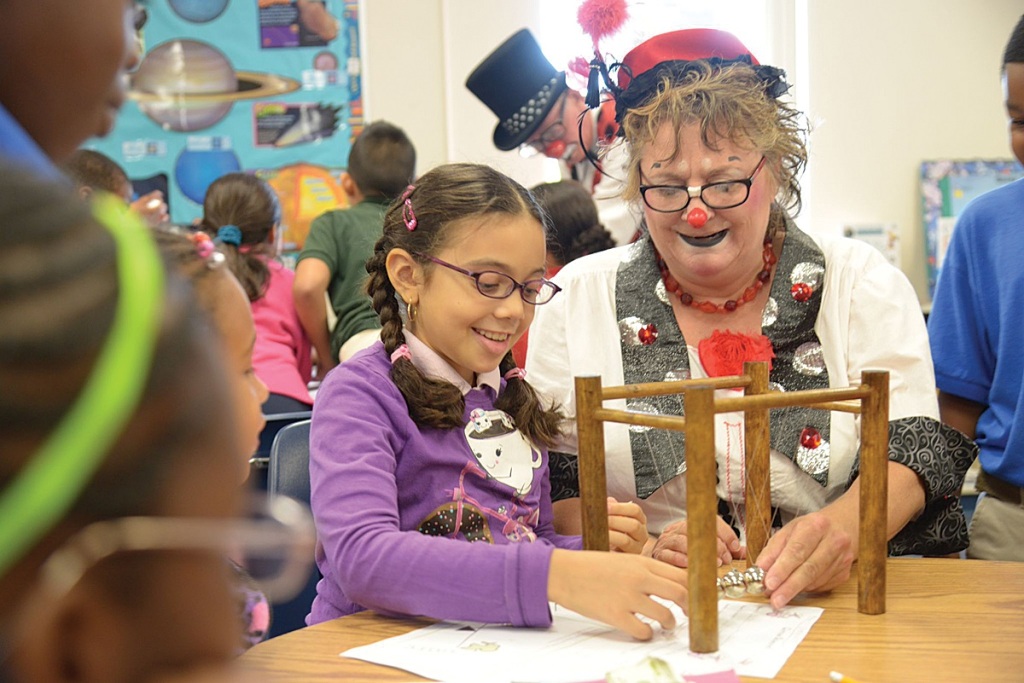
The Circus Arts Conservatory’s mission is to engage and educate students using unique and innovative learning programs, to measurably improve the quality of life for individuals in care facilities and to advance the extraordinary legacy and heritage of the circus. CAC’s mission underscores its commitment to sharing the entertainment, education, and enrichment that circus arts provide.
A Special Message from Circus Arts Conservatory: Regarding what is going on right now: Circus Arts Conservatory has pivoted its platform and moved online with CAC Connects. We are using new technology to promote our online performances and classes. CAC has been running summer camp on a much smaller scale this year with success while keeping the campers and staff safe and healthy. We are still optimistically planning for our ’20-’21 season, but we are being prudent and monitoring the situation.
Karen Bell
We sat down recently to chat with Karen Bell, a very talented artist and Professional Circus Clown with Sarasota’s Circus Arts Conservatory. Karen joined CAC in 2005 and has been instrumental in progressing CAC’s outreach programs and creating circus arts curriculum and education programs for the Conservatory.
Division of Cultural Affairs (DCA): Why did you choose a career in the arts?
Karen: I had no choice! The arts have been a part of me from my early childhood when I made my poor family watch me perform in the living room. Visual arts and performing arts both satisfy my inner self – I find that clowning is a way for me to bring all my talents together into one art form. I am able to create my own costumes and props, write my own material, choose my music and enjoy the audience’s laughter.
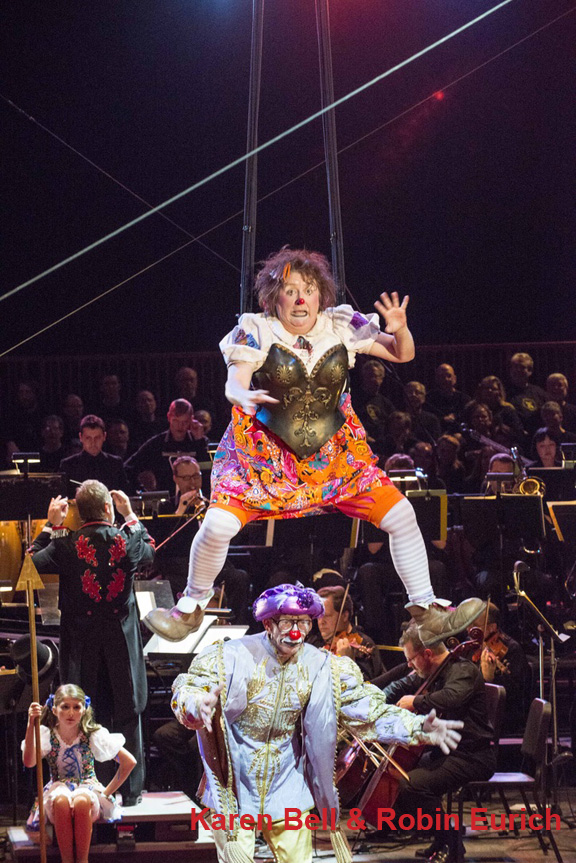
Circus Arts Conservatory’s Karen Bell & Robin Eurich performing – photo by Cliff Roles
DCA: How long have you worked in Florida?
Karen: I came to Florida in 1985 to attend Ringling Brothers Clown College. After that I was on the road but I still called Florida my home. I have been back full-time since 2005, when I began working for The Circus Arts Conservatory.
Karen Bell and Robin Eurich performing – photo by Cliff Roles
DCA: What is the best part about your job?
Karen: The best part of my job is working with people who are passionate about our mission.
“I have so much respect for Pedro Reis and Dolly Jabobs-Reis and their vision for the future of the @CircusArtsSRQ, as well as the future of #circus as an art form.” – Karen Bell
Clown-Week kicks off with Karen Bell and Robin Eurich – video produced by Richard Czina
Also, it’s great knowing that no two days will be alike. There is always something that comes up… and no two audiences are alike either, from students in the classroom to senior citizens to our circus audiences. I love working with our Sailor Circus Academy and working with the students that are a part of our Circus Arts Magnet program at Sarasota High School, and I am looking forward to the start of a new Magnet program with Sarasota’s Booker Middle School.
Karen Bell works with a student – photo by Daniel Perales
DCA: Tell us a little bit about your organization. What are you currently working on?
Karen: Since the beginning of the pandemic, performance has been, of course, discontinued. The Conservatory still wanted to finds ways to engage with our audience, so we introduced CAC Connects. Each day we publish content to Facebook, YouTube and Instagram. It is also on our website CircusArts.org.
Clowning Elements with Karen and Robin – video produced by Karen Bell
We are sharing everything from past circus performances, to educational videos for elementary students, and exercise classes with our Sailor Circus Academy coaches to keep our Sailor Circus students in shape. We also created an amazing live virtual performance called ‘One World Circus’ with professional, world class circus artists from around the world! What an incredible achievement for us – there were 1,700 people from all over the world watching the performance!
DCA: In your opinion, what is the greatest contribution that your organization makes to your community?
Karen: The CAC touches the lives of people from 0 to 100, and with our Education Program we teach physics, language arts and theater in classrooms across Sarasota, Manatee and Hardy Counties. It’s invaluable to work with middle and high school students through our Magnet program.
Karen Bell working with students at the Sailor Circus Academy – photo by Daniel Perales
Students from the Sailor Circus Academy benefit in many ways through the rigorous training program we provide, not only learning circus skills but learning life skills as well. We bring entertainment, memory stimulation and joy to senior citizens at their senior communities and, of course, during our performances of Circus Sarasota and Sailor Circus.
Robin Eurich and Karen Bell work with a student – photo by Daniel Perales
DCA: What do you think of when you hear “Culture Builds Florida”? Why are the arts and culture important to our state?
Karen: Art is not just important to Florida, but to the world! Circus has deep roots in Sarasota, first with John Ringling bringing the Ringling Bros’ Winter Quarters here and then other circuses followed suit. When Ringling came, his arrival also brought culture to Sarasota; he and his wife Mabel were great art lovers, and they would bring back famous pieces with them when traveling Europe which are now housed in the Ringling Museum. Many cultural arts programs followed soon after.
Slappy and Monday headlining at the Summer Circus Spectacular – video produced by Starfruit Productions
DCA: Is there anything you would like to add?
Karen: As the future is still questionable for the performing arts, we are continuing to be relevant. The CAC will be in schools teaching Circus Science virtually, and we will hopefully be bringing back our Sailor Circus students to start training in our newly renovated and well maintained arena. Our performances will happen again this year, but in what form we are not sure. But rest assured, we will continue to preserve the art of the circus!
The Division thanks Karen Bell and Circus Arts Conservatory for their participation in this interview. For more info about CAC and their programs, be sure to visit their website at www.circusarts.org. Also, be sure to check out more videos from Clown Week on their YouTube, Facebook and Instagram @ CircusArtsSRQ.
The Art and Culture Center/Hollywood presents contemporary gallery exhibitions, live stage performances, and award-winning education programs in the visual and performing arts at three unique facilities in downtown Hollywood. The Center’s mission is to cultivate creativity and the support of the arts in our community through education, innovation and collaboration.
A special message from Art and Culture Center/Hollywood’s Executive Director, Joy Satterlee:
“As the Art & Culture Center/Hollywood continues to adapt to the ever-changing conditions and difficult times created by Covid-19, it’s been extremely challenging but we – staff and Board members – are gratified that we are able to serve our community by adapting our exhibitions and programs.
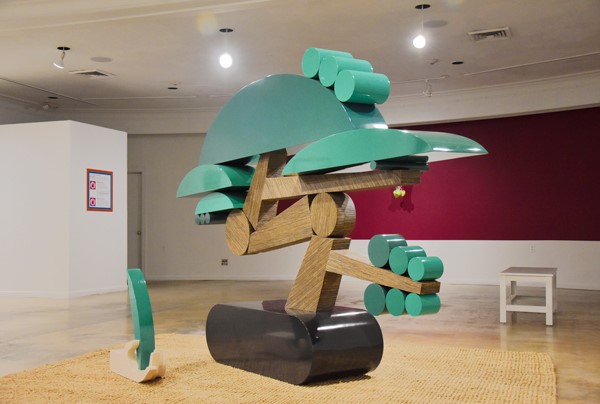
Time to Play Exhibition, Chris Bogia. (Photo credit Khami Auerbach)
On June 6, we opened our family-friendly summer exhibition Time to Play in our contemporary galleries, featuring works by eight national and South Florida artists. We adapted and revamped the exhibition to remove all the “high touch” and interactive components as well as implemented a series of safety protocols for visitors such as providing sanitation stations throughout the gallery, requiring all attendees to wear a face coverings and incorporating additional cleaning and sanitizing procedures by staff.
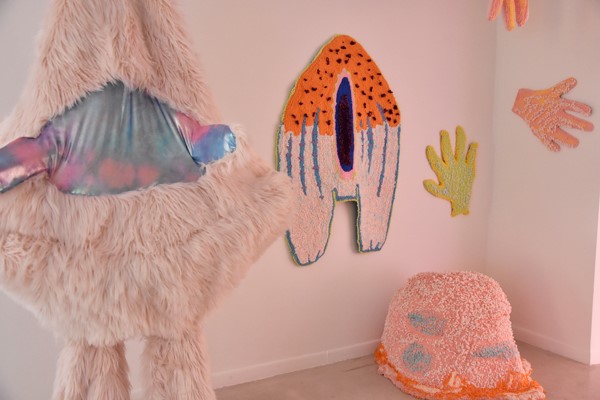
Time to Play Exhibition – Jen Clay (Photo credit Leo Sarmiento)
For this exhibition, our Curator Meaghan Kent created a series of stimulating art-making activities that are printed in the exhibit brochure for gallery and at-home play. Time to Play will remain on exhibit through Aug. 16. We are pleased we are able to re-open our galleries at 50 percent capacity, although we miss the groups who usually visit during the summer.
Art and Culture Center/Hollywood 2020 Summer Arts Camp
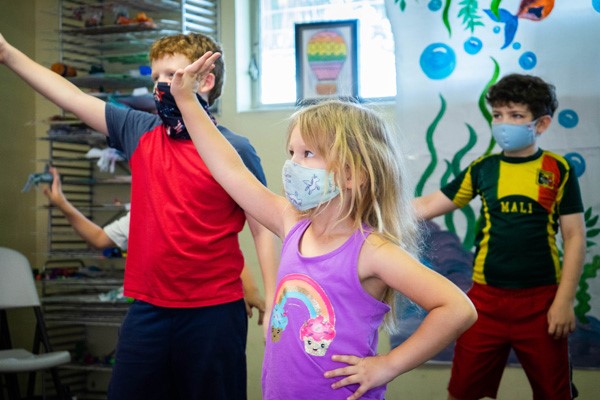
On June 15, we began our 2020 Summer Arts Camp for our Broadway Actors, Young Actors and Young Artists campers. We have greatly reduced our enrollment capacity to keep with CDC protocols (8 youth per camp). Additionally, we are requiring our campers, teachers and staff to wear face coverings plus maintaining strict and regular disinfecting of high-touch surfaces and shared equipment. We also take staff, teachers and campers temperatures daily and monitor symptoms.
Summer Arts Camp – Young Artists (Ages 6-12) – (Photo credit Khami Auerbach)
We have had very positive feedback from our camp families on all of the protocols we have implemented. Due to a number of reasons, we cancelled our summer camp for ages to 4 to 5 years old. We also have adapted our Arts Aspire leadership development program so it, too, can take place this summer.
Summer Arts Camp – Young Actors (Ages 6-12) – (Photo credit Khami Auerbach)
In addition, we are eagerly waiting to hear how Broward County Schools will structure the 2020/2021 school day so we may create and implement curricular and after-school programs for children and youth.
Summer Arts Camp – Young Actors (Ages 6-12) – (Photo credit Khami Auerbach)
The 500-seat Hollywood Central Performing Arts Center, which we manage, has been closed since March 17, and we are presently working with Broward County Schools to re-open this facility. Our current youth programs have been relocated and no other entities may rent/utilize our theater until we receive approval for individuals to be present at our theater. We have created re-opening guidelines and will be submitting these for the Broward County Administrator’s approval. We look forward to the theater reopening as quickly as possible — of course, in a safe manner.
The Art and Culture Center/Hollywood hosts a small virtual group lesson.
The re-opening of our programs and facilities, along with the return of staff to our administrative offices, has been a welcome change after being closed since March 16 for a total of 81 days. While schools and business were closed, we added online classes and virtual gallery tours to our website and social media platforms to serve and engage our constituents.
We realize that many other arts organizations are not open to the public and are also being creative by virtually engaging audiences. We look forward to having our entire arts community return to doing the work that enriches the lives of residents and visitors throughout South Florida and our State.”
We would like to thank Joy Satterlee and Art and Culture Center/Hollywood for giving us an update on the Center’s recent activities, and for the important work they do for the arts in their community.
*Interested in being featured on Culture Builds Florida? Please fill out this form HERE (Note: submission does not guarantee inclusion.)
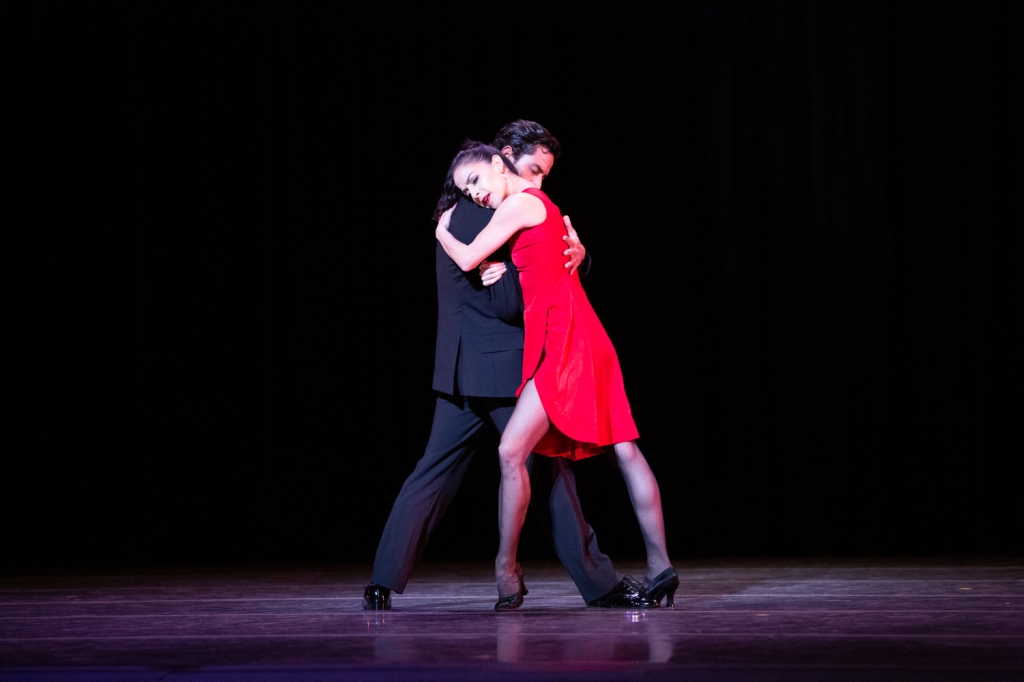
We sat down recently to chat with some of the Principal dancers at Miami City Ballet, and got an inside look into their world and activities with the company.
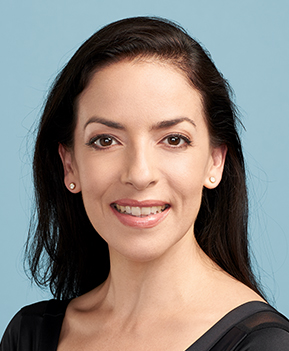
Katia Carranza graduated from the Escuela Superior de Musica y Danza de Monterrey in Mexico in 1996. She then joined Ballet de Monterrey as a soloist. In 1998, she joined Miami City Ballet as a corps de ballet dancer, was promoted to soloist in 2001, principal soloist in 2003 and in 2004 she was promoted to principal dancer. She left after the 2006-07 season to rejoin Ballet de Monterrey as a principal, but continued to dance with MCB as a guest artist for an additional six seasons. Carranza rejoined MCB full-time in 2017 as a principal dancer.
Katia Carranza
Division of Cultural Affairs (DCA): Why did you choose a career in the arts?
Katia: I started this career at a very young age. I didn’t really know that ballet was something I love. Little by little, I became more involved and it brought me so much happiness. I think that being able to do what you love is such a blessing.
DCA: How long have you worked in Florida?
Katia: (Laughs) I came here in August of 1998 for the first time, 23 years ago. I joined Miami City Ballet that year and it changed my life. I am from Monterrey, Mexico. I studied there and danced for one year at Ballet de Monterrey.
During my time there, I had an opportunity to compete in Jackson, Mississippi and that was when Edward Villella hired me, and I was here at MCB until 2007. From 2007 through 2017, I was dancing for both MCB and Monterrey, but I came back to Miami 4 years ago to dance here full-time. I feel like I am from here, and that I really grew as an artist here.
Katia: Being on stage, for sure. I enjoy having an opportunity to share what we do with so many people, with the audience. I feel like we can change their lives. I always hope that they leave the theater with a positive experience. That is the best part: sharing what we do.
DCA: Tell us a little bit about your organization. What are you currently working on?
Katia: The most important thing is keeping my body moving, until we can all dance onstage and together again. We normally rehearsed together for 8 hours a day, so it is super important to keep my body moving. It is something my body needs – it gives me energy and makes me happy, and so my body asks me to do it every day. I take different classes by Zoom, such as ballet and resistance training, and I use my pointe shoes a little bit every day. I must continue or else my feet and my ankles will become weak.
Katia leads leads a “Move with MCB” ballet básico class (en Español) on Instagram.
Plus, now that we have more free time, I get to teach, which I enjoy a lot. It’s important to continue to be motivated, for both myself and my students too. We all need to stay motivated so we can be on stage again when the time comes. But for now, I have this chance to teach and share with students in Mexico, Brazil, from all over the world. I love being able to share in this way.
DCA: In your opinion, what is the greatest contribution that your organization makes to your community?
Katia: I believe that the greatest contribution we offer is to the next generation of dancers with the various programs and training Miami City Ballet Company and School offer to children and young people. I believe dance can change lives, because it changed mine.
I think dance makes me a better person and gives me opportunities to learn about things that are important. I believe that dancers touch lives and help others, and that our work can have a positive impact on young people. That is the greatest contribution we give.
DCA: What do you think of when you hear “Culture Builds Florida”? Why are the arts and culture important to our state?
Katia: Florida is a special place because there are so many cultures here, and we are fortunate because we can experience the different cuisine, histories, and many things that are learned through arts and culture. It helps us all to be better people, and it is something we can share together.
This has been part three of a three-part Art Talk feature with some of Miami City Ballet’s Principal dancers. Thank you to Miami City Ballet and the artists for taking the time to share with Culture Builds Florida.
We sat down recently to chat with some of the Principal dancers at Miami City Ballet, and got an inside look into their world and activities with the company.
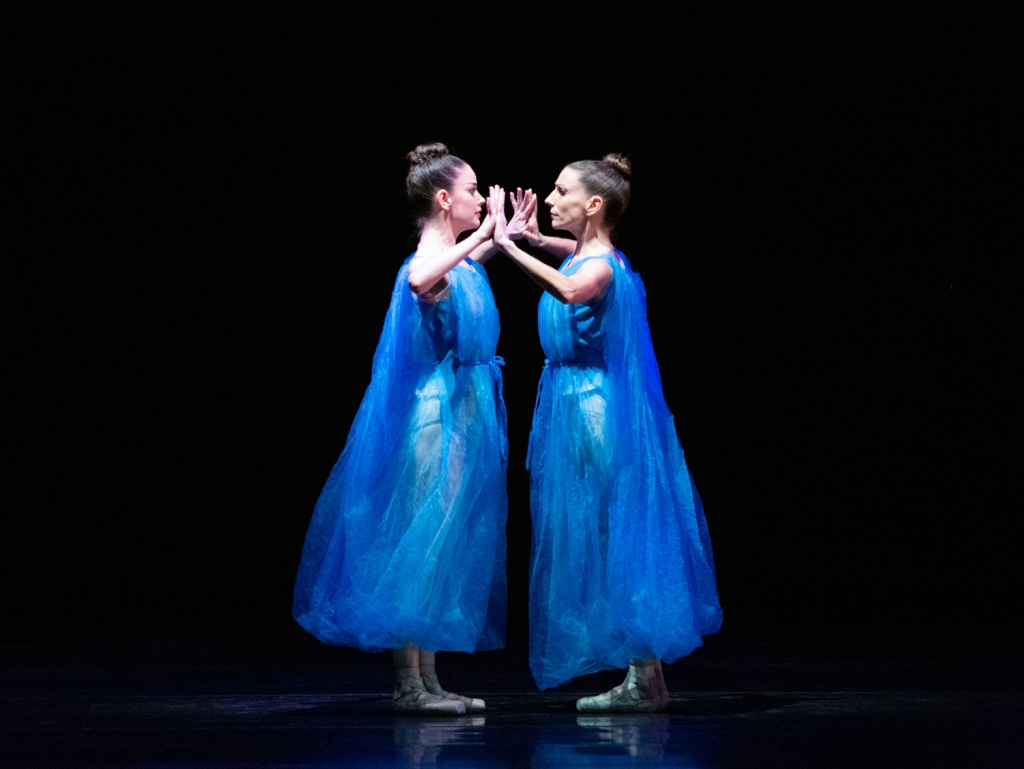
Jennifer Lauren is a native of Tuscaloosa, Ala. She began training in various regional schools and later with Royal Academy of Dance and the Alabama Ballet Pre-Apprentice Program.In 2007, Lauren joined Miami City Ballet as a member of the Corps de Ballet and was promoted to Soloist in 2011. In 2014, she was named one of Dance Magazine’s “Top 25 to Watch.” During her tenure with MCB, Lauren has been featured in principal and soloist roles. In 2017, she was promoted to Principal.
Jennifer Lauren
Division of Cultural Affairs (DCA): Why did you choose a career in the arts?
Jennifer: I really didn’t choose it. I was introduced to dancing when I was young and fell in love with it. Ever since then, I have been hooked! It is all I ever wanted and dreamed about.
Jennifer: I have been with Miami City Ballet for the last 13 years, and I joined the company in 2007.
DCA: What is the best part about your job?
Jennifer: The best part about my job is that I am doing exactly what I love to do. I am sharing my passion with so many people, including my company. Dancers are extremely close, and because we understand each other, there is this rare bond I have with my coworkers.
Jennifer: Lately, I have been working on my basic technique skills. With the extra time, it has motivated me to take a closer look at how I execute my work and how I can improve my craft and artistry.
I’ve also been teaching a lot of private lessons to ballet students, which keeps me aware of my own technique. I love sharing my thoughts and ideas with younger dancers. I am always open to accepting anyone who would like private lessons via zoom. 😊
Jennifer leads a “Move with MCB” ballet basics class on Instagram.
DCA: In your opinion, what is the greatest contribution that your organization makes to your community?
Jennifer: Our organization offers a place for people to forget their troubles and enjoy the art of ballet. We create an environment for around 2 hours, in which a person can completely relax and enjoy what they are watching. It stimulates imagination and creativity in people. The school is also an important start for children to begin to see the value of dancing, whether they grow up to be dancers or grow up to admire the art form.
DCA: What do you think of when you hear “Culture Builds Florida”?
Jennifer: Exactly that. Without culture, humans are not inspired. That is why we have the arts.
We all need to be inspired. We need to be moved by multiple forms of art and entertainment. Florida is full of amazing artists and Miami City Ballet is one of its gems.
DCA: Why are the arts and culture important to our state?
Jennifer: Without the arts and culture, we have no color in our lives. We need to be inspired and encouraged to open our minds and see what we can create. Going to see a ballet could inspire the next Barishnikov or Maya Angelou to break through.
This has been part two of a three-part Art Talk feature with some of Miami City Ballet’s Principal dancers. Tune in tomorrow at 8pm ET for our last candid conversation!
We sat down recently to chat with some of the Principal dancers at Miami City Ballet, and got an inside look into their world and activities with the company.
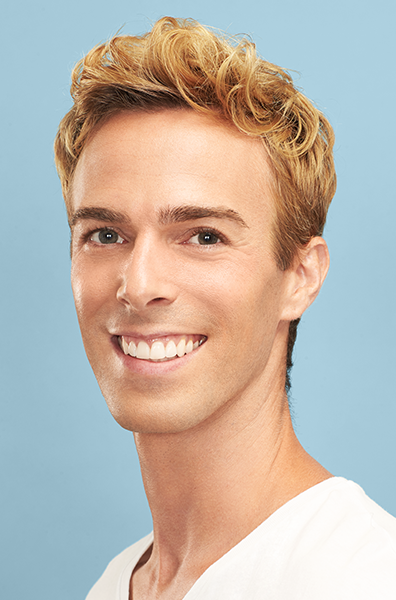
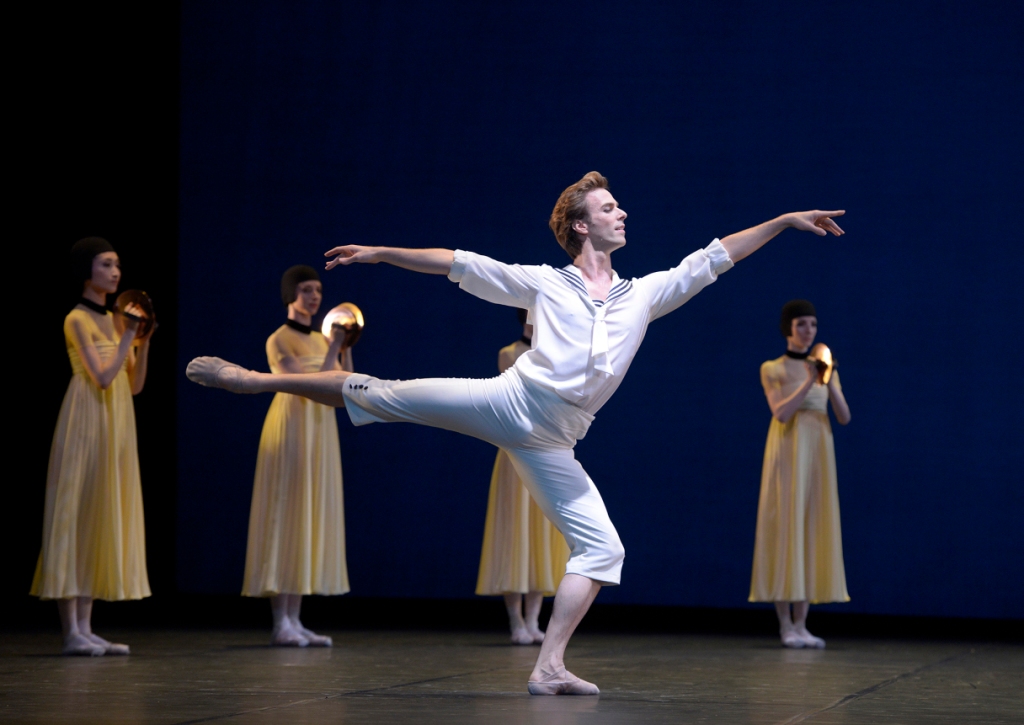
Rainer Krenstetter was born into a dance family in Vienna where he began his ballet training at the Ballet School of the Vienna State Opera. In 1999, he was accepted into the Royal Ballet School in London and continued his training there until 2000 when he became a corps de ballet member with the Vienna State Opera Ballet. In 2002, he joined the Staatsballett Berlin under the direction of Vladimir Malakhov and went through the ranks up to Principal dancer in 2013. He joined Miami City Ballet as a Principal dancer in November 2014.
Rainer Krenstetter
Division of Cultural Affairs (DCA): Why did you choose a career in the arts?
Rainer: My parents were dancers at the Vienna State Opera in Vienna, Austria, so I grew up in the theater and opera world. As a very young child, I loved going with my parents to spend time backstage — in the dressing room, in the make-up room, the costume department, being around everyone… I just fell in love with the atmosphere of the theater, of the opera.
That was my true passion — the atmosphere of the opera house… the smells, the dust, the different people. I thought, since my parents were dancers, that if I danced I could also be a part of the opera world. So, I danced.
DCA: Have long have you lived and worked in Florida?
Rainer: I started in November 2014. I remember arriving to Florida the day before I started, on November 1. When I landed at the airport, I was wondering… “What is going on here?”…Halloween is not so celebrated where I am from. Upon arriving at the airport I saw all the flight crew, baggage claim attendants, everyone on Lincoln Road and Miami Beach in these costumes. I thought, what is happening here?? Why is there a carnival? So that was my introduction to Florida.
DCA: What was it that attracted you to the United States, and to join Miami City Ballet?
Rainer: I was dancing in Europe from 2000-2014 with Vienna State Opera Ballet and Staatsballett Berlin. During that time, I was performing all over the world but mostly danced classical ballets such as Romeo and Juliet, Swan Lake, Sleeping Beauty, and Giselle. As an artist, I believe it is important to experience and learn as much as possible. Part of the reason I moved to Florida was to gain new experiences.
I have always been interested in the choreography of George Balanchine, but I did not get to dance as much Balanchine in Europe as I wanted to. In Berlin, when our artistic director would ask what works we wanted to perform at our gala, I would always ask to perform works by Balanchine such as Tarantalla, Tschaikovsky Pas de Deux, and Stars and Stripes.
When I found out that Lourdes Lopez, the artistic director of Miami City Ballet, was looking for a male principal dancer, I knew it was time to pack my bags and head to Florida, as I really wanted to learn more about the Balanchine style and have an opportunity to perform more of his works.
DCA: Tell us a little bit about your organization. What are you currently working on?
Rainer: While we wait until it is safe to perform on stage again in front of audiences, I am keeping busy with my classes, and I am doing a lot of teaching. I am also available for private lessons [contact Rainer via Instagram], and because we have time and the technology available, I can teach all over the world – even to Japan!
Rainer leads an intermediate “Move with MCB” class on Instagram (recording saved to Youtube)
DCA: In your opinion, what is the greatest contribution that your organization makes to you community?
Rainer: In every art form… ballet, visual art, theater, music… what we do is give inspiration to the community. At the venues we perform in throughout Miami, Broward, Palm Beach and Collier counties, I see our community’s reflection. We are open to the entire community in South Florida, not just for the people who can afford a $200 ticket, as we have accommodating ticket prices and opportunities for all audiences to enjoy our shows.
We are here for everyone, and that is what I love about Miami City Ballet. We are dancing for our community, and we see that reflection at our shows. It is very different from what I have experienced anywhere else.
DCA: What do you think of when you hear “Culture Builds Florida”? Why are the arts and culture important to our state?
Rainer: Well, Florida is famous for beaches, parties, Disney World, Harry Potter World… so there is this image of what Florida is. Right now, it is so important to show the other sides to Florida culture. I’m very happy that with the theaters we have in South Florida, these amazing arts centers that we get to perform in and where people and families can experience dance, theater, and opera with amazing artists. This is so important, to bring the arts to the community so they can enjoy, learn and experience many different cultures.
This has been part one of a three-part Art Talk feature with Miami City Ballet’s Principal dancers. Tune in tomorrow at 8pm ET for another candid conversation!
The 2019-2020 fiscal year marks the 50th Anniversary of the Florida Division of Cultural Affairs. Established by the Florida Legislature under the Department of State, the Division of Cultural Affairs has supported and promoted Florida’s diverse arts and culture community for 50 years. Since 1976, when the division was granted the authority to administer grants funded by the State of Florida and the National Endowment for the Arts, more than $787 million in grant funding has been distributed to every corner of the state in support of the division’s mission to advance, support, and promote arts and culture to strengthen the economy and quality of life for all Floridians.
Relationships are the cornerstone of any community, and the Division of Cultural Affairs has been lucky to have partnered with hundreds of supporters over its five decades. In this post, we will spotlight just a few of the people who have helped us support and celebrate Florida’s vibrant arts and culture community. Continue reading →



















 Culture Builds Florida